Kvass (or gira as it is called in Lithuania) is actually the first fermented drink I ever made when I was a kid. It was simple process I did not understand much of how that works, but results were satisfying. Now being a homebrewer and knowing intricacies of making beer gives a different perspective on making kvass.
Bread
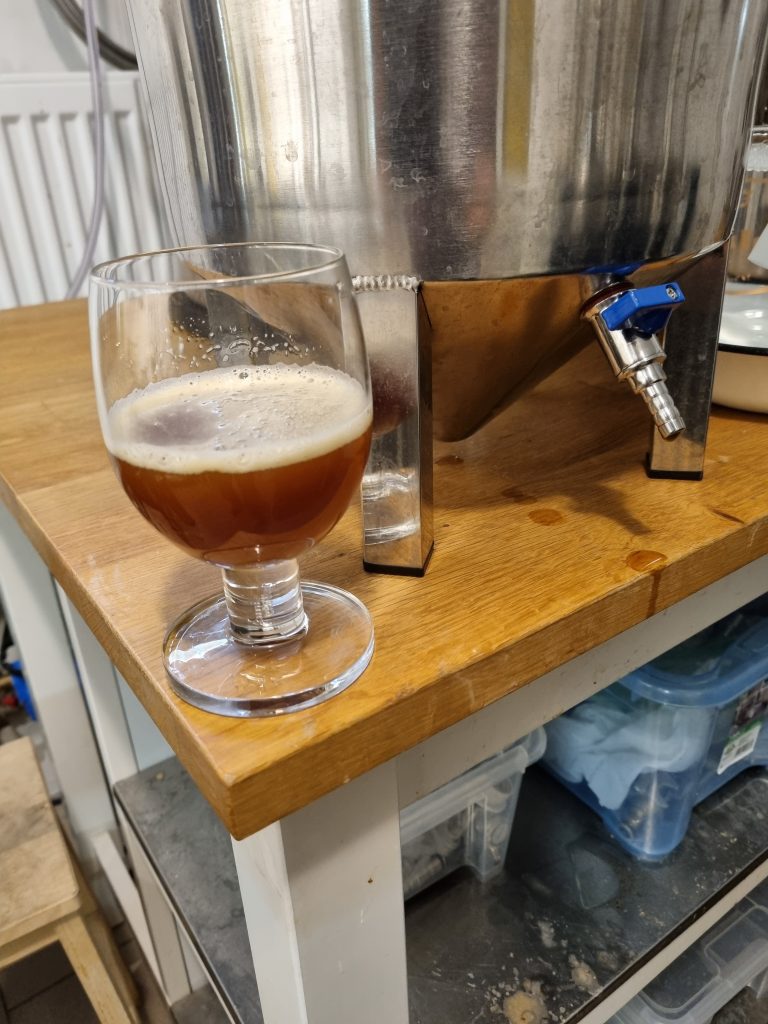
Use the bread you actually like. I buy black bread from Lidl. For this I used 4 kilograms (that is 8 loafs of bread). You cut it and put into the oven for drying at 120C-160C. The goal here is to evaporate the water quickly. The bread should not get black, it will taste bitter. Then I would bring 20L of tap water to a boil (boil for 15min to disinfect) and add dry bread. Close the lid and leave it for some 6 hours. Probably some 2 hours would be plenty enough, but you don’t want to be dealing with hot liquid when filtering. After liquid has cooled enough I would filter (separate bread from liquid) to a separate vessel. You will get 10L of resulting liquid, a half of what you added.
Fermentables
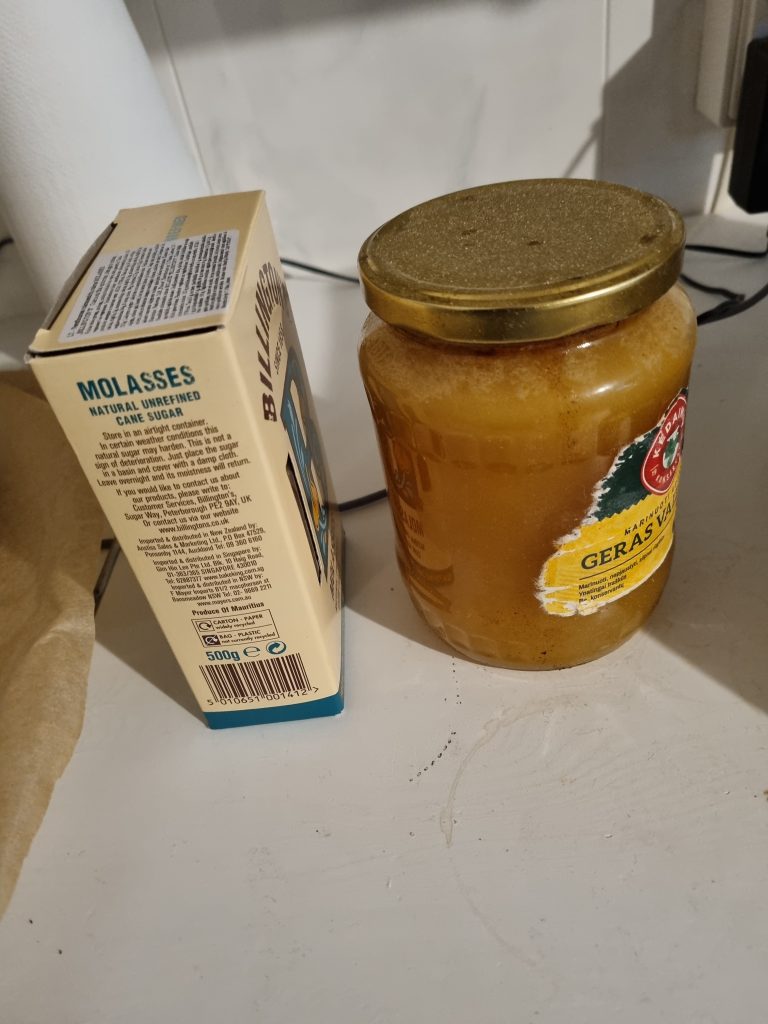
The “traditional” way is to just add table sugar. And it does simplify the process, you add another 10L of water to bring to about 20L total (the keg size is 19L), add sugar and boil again to disinfect the water. Then cool down to 30C and add yeast. But I don’t like adding regular table sugar. The honey is more interesting. The problem with the honey is that you do not want to boil it, but still need to pasteurize. So in my case I did it separately in a small vessel and then cooled and added it directly to the fermenter. I had a pack of molasses sugar so I added it too. 1kg of fermentables per 20L will get you to about 1.035 SG.
Yeast
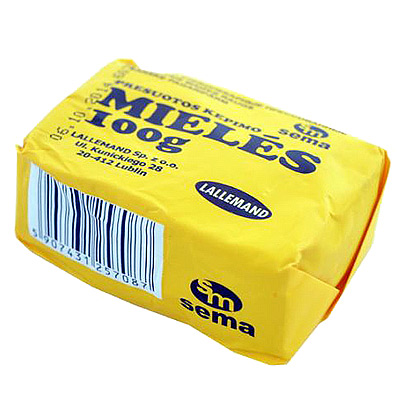
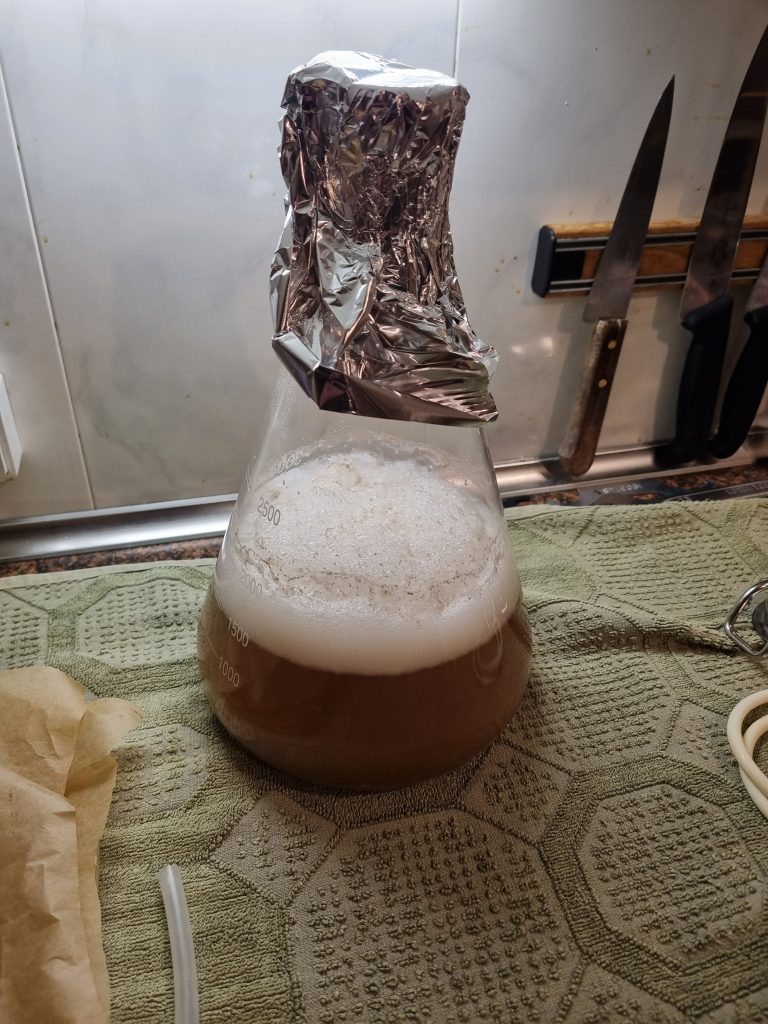
Baking yeast is preferred, but upper fermentation beer yeast would also work. I’ve noticed couple of baking yeast fermentation properties that has advantage over the beer yeast. If you provide a starter (which is optional) it begins fermentation very fast, but it’s not aggressive like it would be with beer at the same temperatures. The temperature I pitch the yeast is about 30C. Were starter really helps it does not allow wort to cool down and proper temperature is maintained even in colder ambient temperatures of the half-cellar. It ferments rather slowly and I would say consistently. Bubbling like a clock. I pitched starter in the evening and in 5 minutes I’ve already see active fermentation. When checking in the morning the bubbling rate was a bit quicker, but similar to what I’ve seen after pitching. The S.G. dropped from 1.035 to about 1.029, this is ABV 0.8%. The taste was moderately sweet and it had this specific mouthfeel and taste of kvass. And in spite of unfinished fermentation you have to halt it at this F.G. if you want kids to be able to drink this. I’ve racked it directly to a keg and pumped quite a bit of CO2 on top (for some carbonation) and put into a controlled freezer at about 2C. After two days I connected it to my kegerator and it was very foamy. I made it for Easter celebration so I could not wait much longer for foam to subside. My daughter tried it and said “I like this kvass” and she usually does not like those mass produced sweet kvass like drinks, so I guess it was success.
Recipe for honey kvass
Use 1kg of bread on 5L of water. Cut it and dry in the oven on about 120-160C. Soak the bread in a hot (boiled) water. Let it cool and then filter to another vessel. Add honey and bring the wort to about 70C, keep for 15 minutes for pasteurization. Cool to 30-35C and add the yeast, preferably wet baking yeast. Ferment over night in closed vessel which allows CO2 to escape. Rack to keg and coldcrash and keep it cold from now on. Longer periods of maturation probably will make it tastier.
Shouldn’t kvass have sour taste?
Have a clean process and it won’t be. But the lactobacillus is actually very welcome in kvass in moderate levels, however it complicates the process quite a bit. You basically have to “infect” the wort after transferring to fermenter. Probably just add some unwashed raisins directly to the fermenter, or pitch commercially available lactobacillus. Me I don’t want to infect my equipment with lactobacillus, so I try not to practice this very often.