Brewday (2022.02.07)
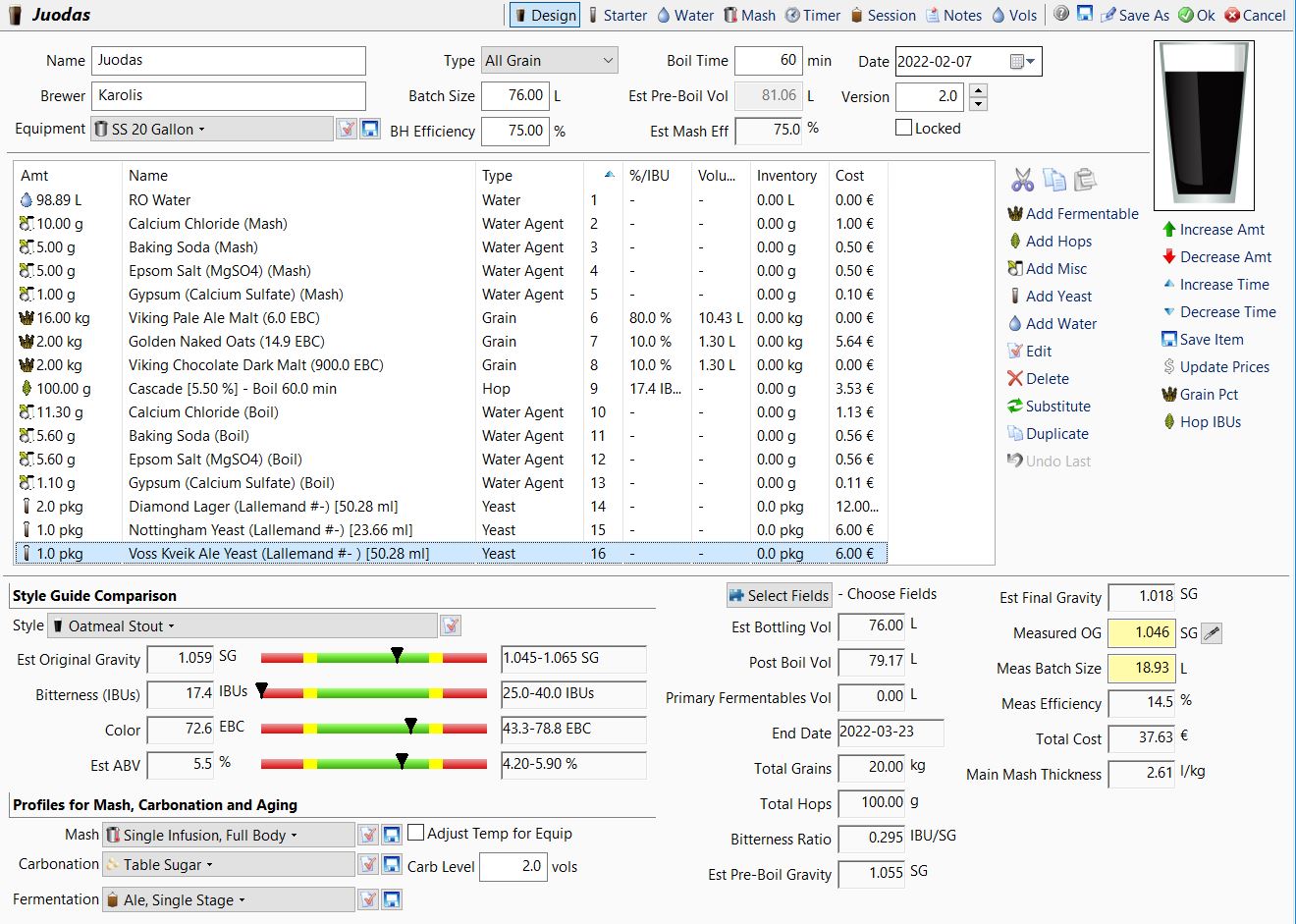
Stouts are one of my favorite styles to brew and I like them to be thick black, hence the name Juodas (Black). IMHO essential thing in recipe is correct proportions, actual ingredients can be substituted in most cases. This a recipe I was brewing for years with some variations. I hade some very good stouts, but being concise in brewing is the most difficult task, so good recipe and same ingredients might not always result in the same quality beer. Here is a recipe made with the BeerSmith software.
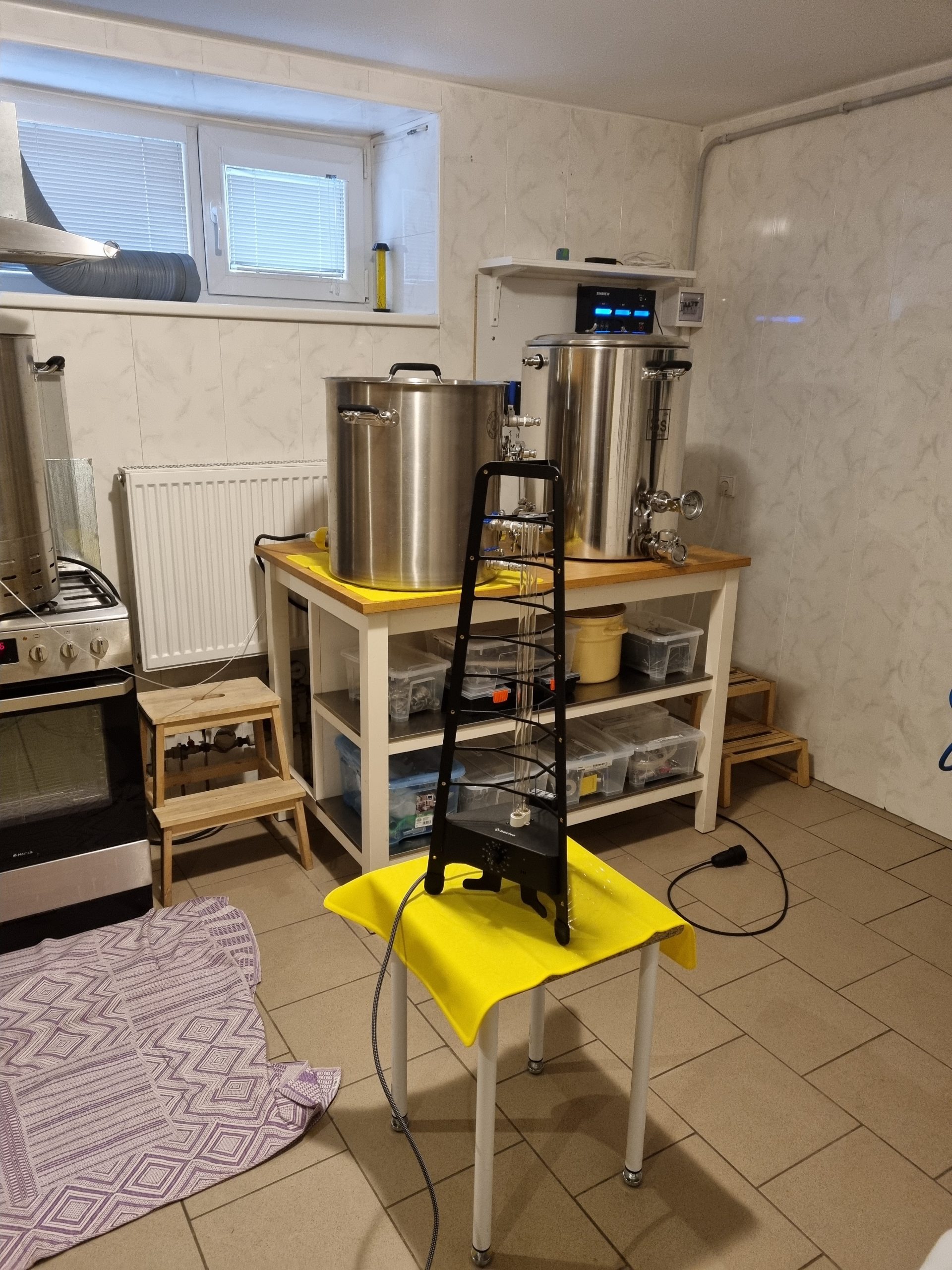
This is a first time I’m using this brewing setup. Naturally when using new equipment or employing some new process for the first time there got to be some mishaps…
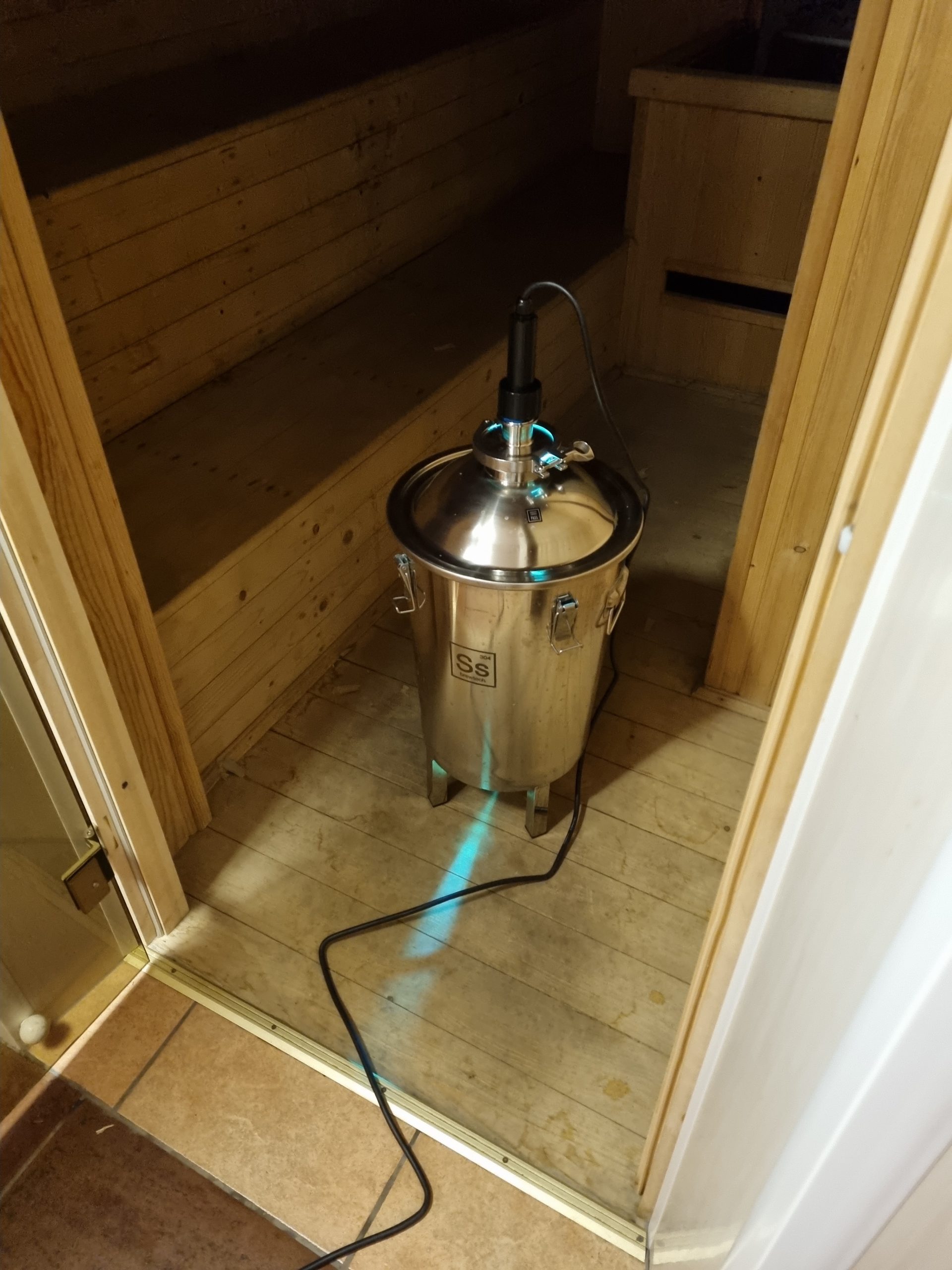
The first thing I do is taking additional sanitary measures and disinfect the room with UV light. Because the air does not circulate so well in my the sub-basement.
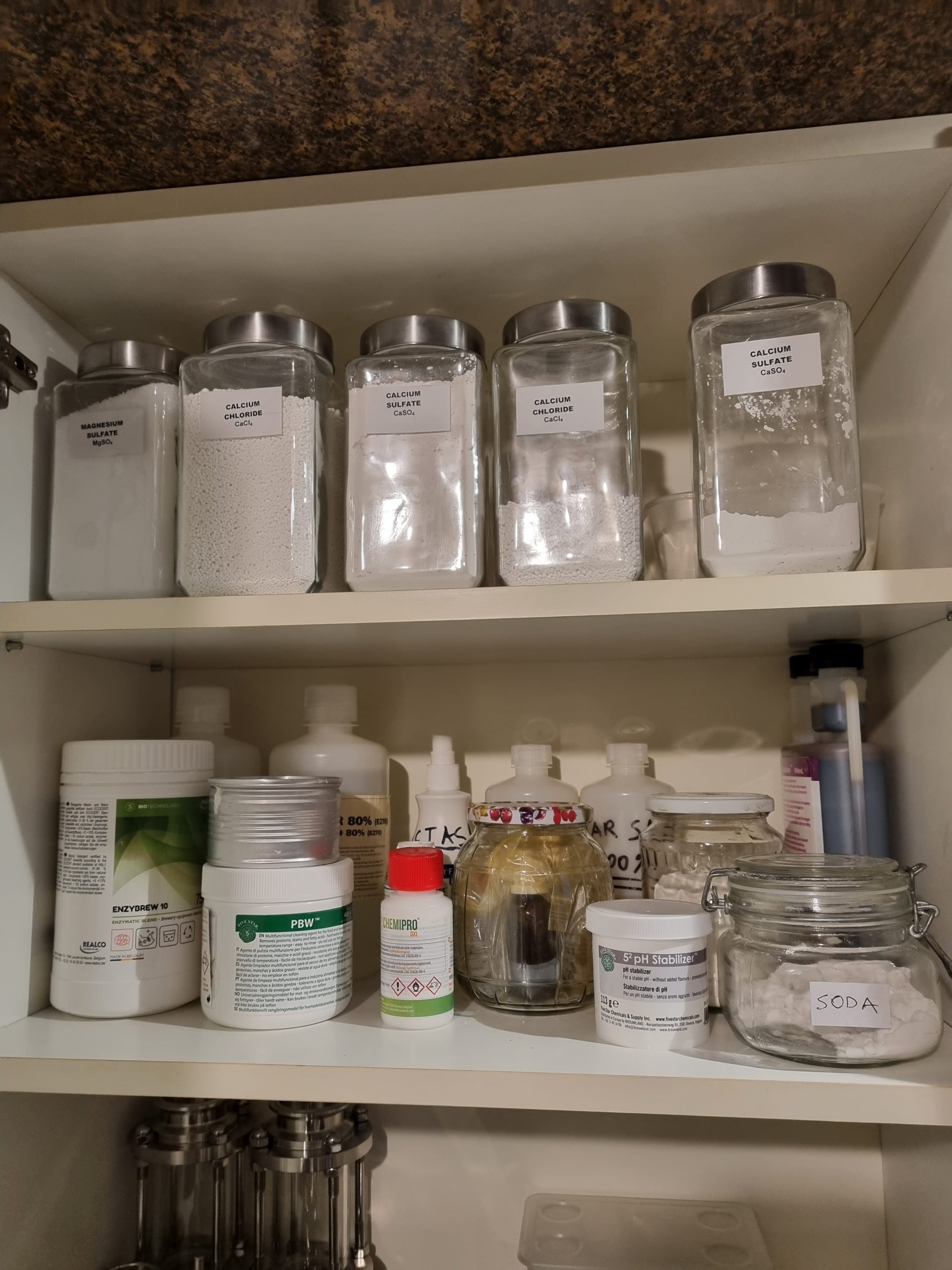
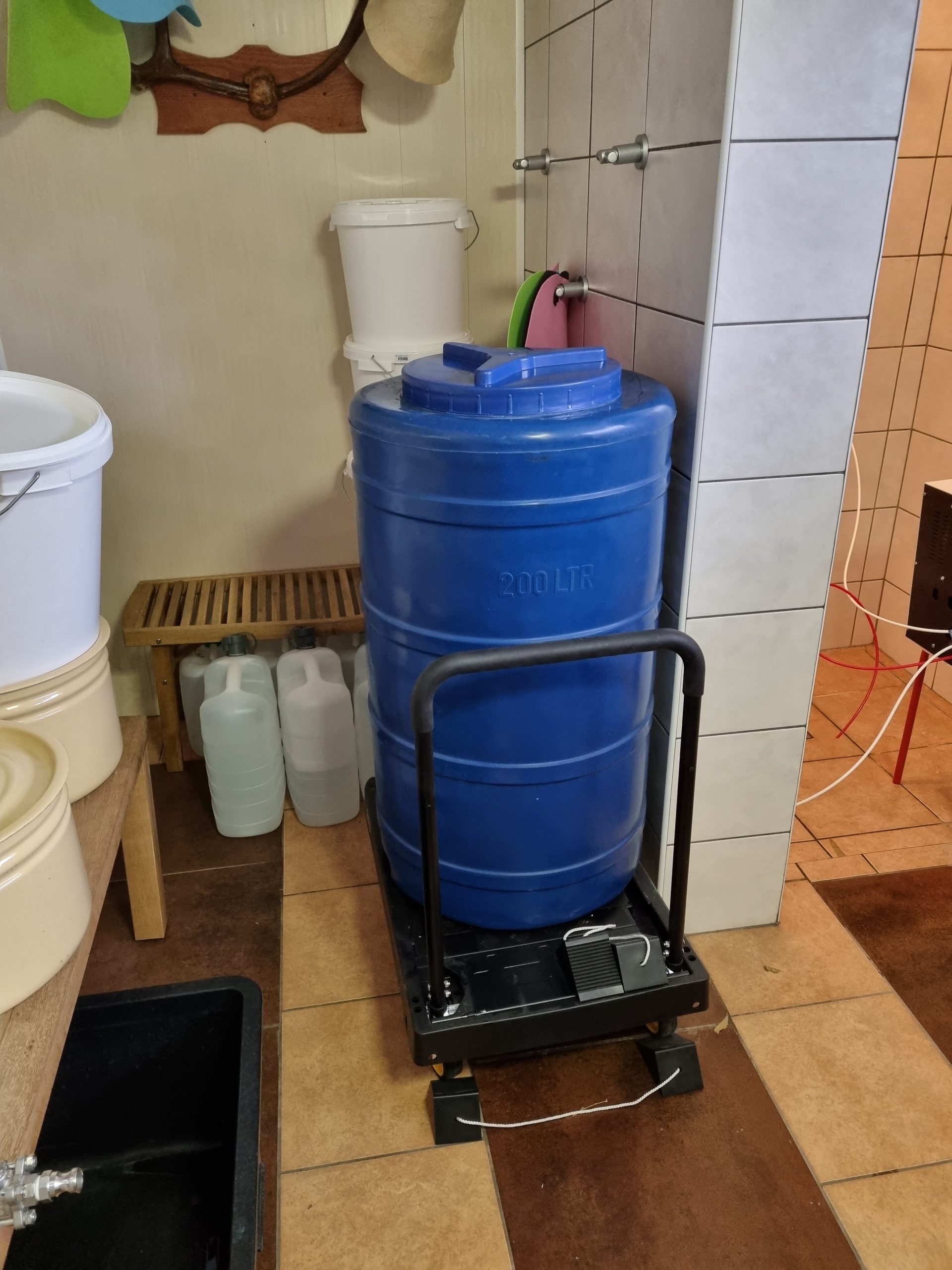
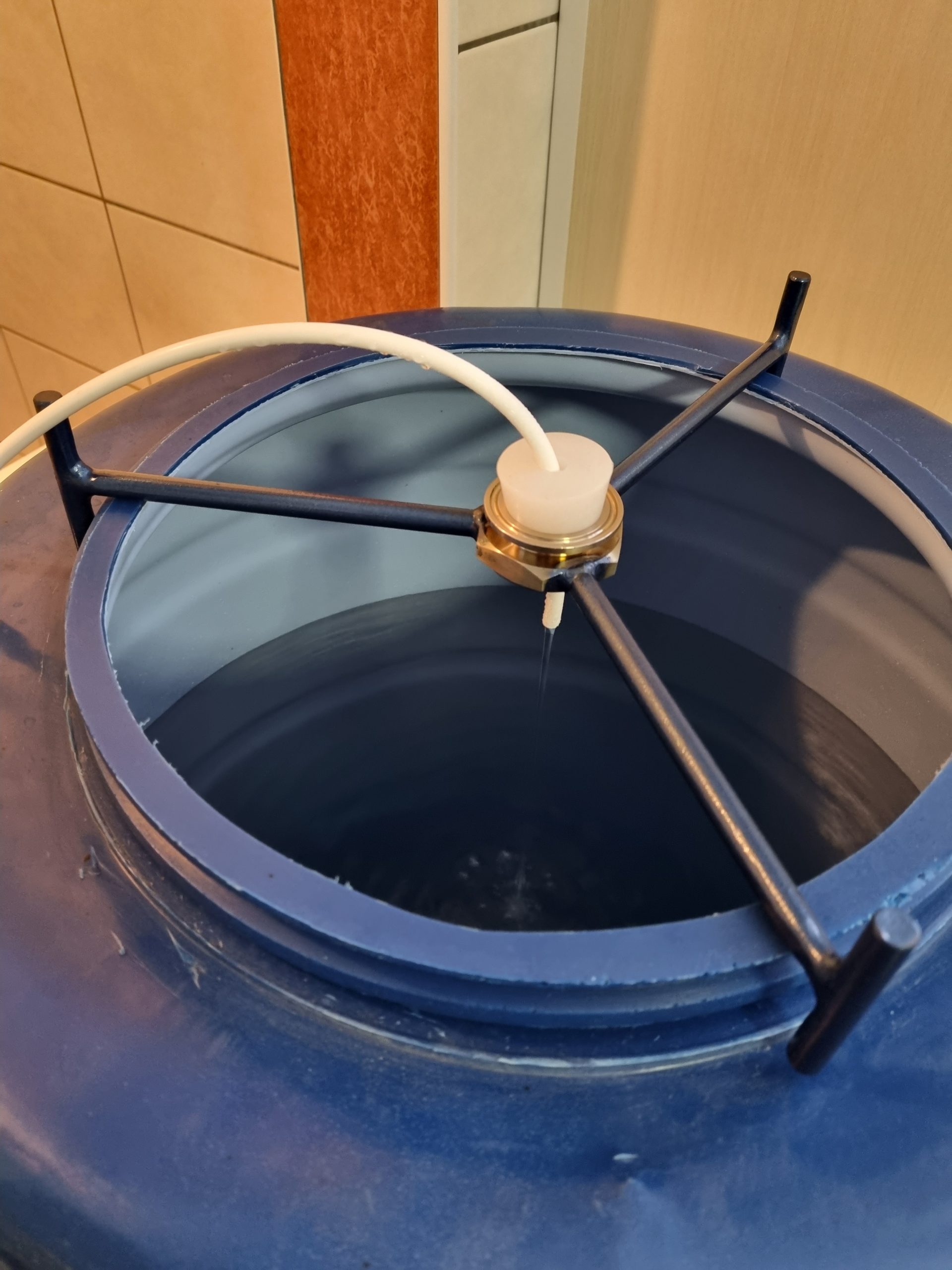
So let’s start with the water, one of the four major ingredients of the beer. I make my own water, that is I use a reverse osmosis filter system to remove any salts and later add my own. My brew size is 20 gallons (about 80 liters) so this requires about 100 liters of water. I have a 200 liter plastic barrel to store filtered water. Filling two thirds of the container is enough for one brew. There is not too much space in my sub-basement kitchen so I keep the water barrel in a different room and use a trolley to move it around.
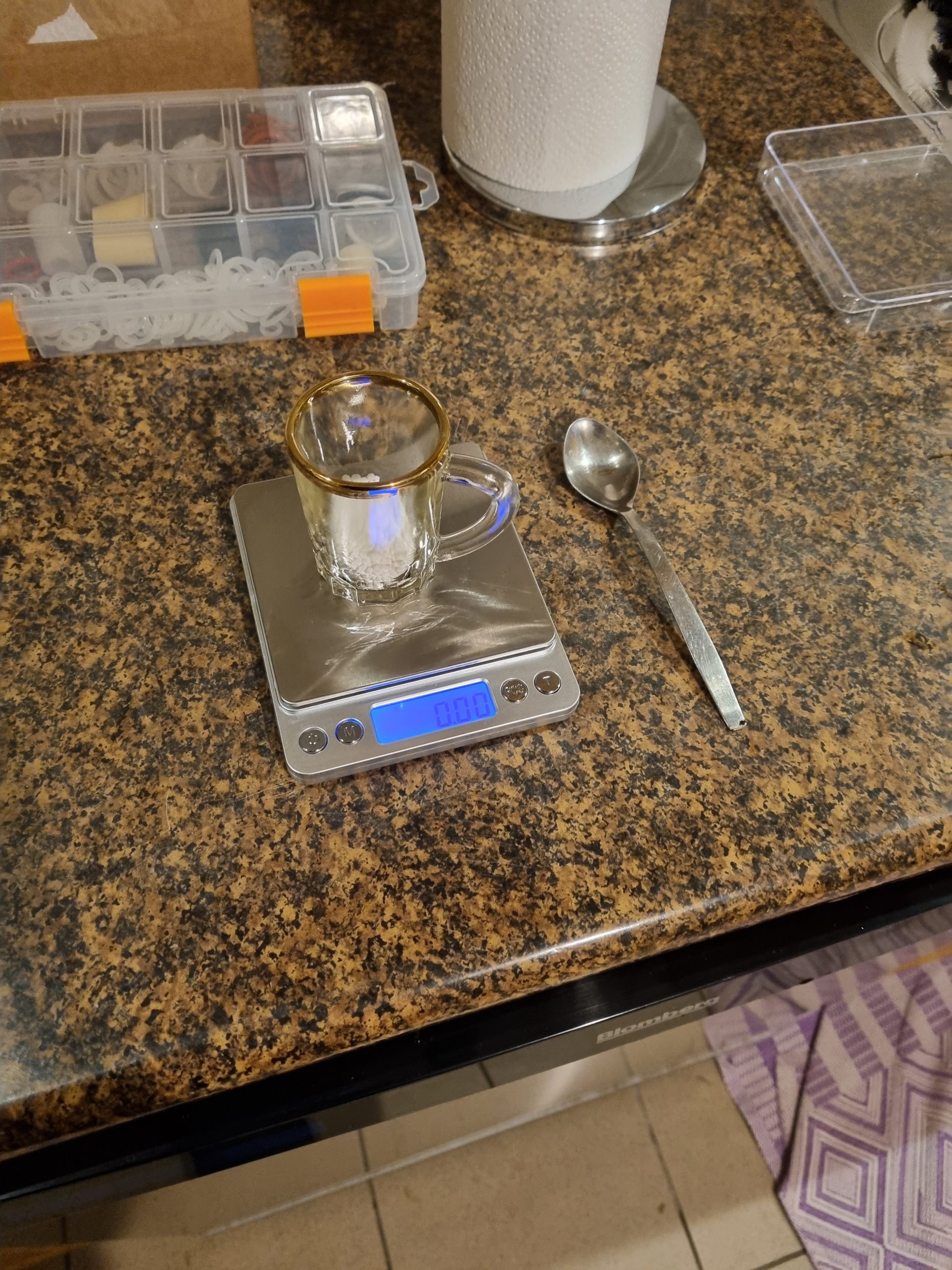
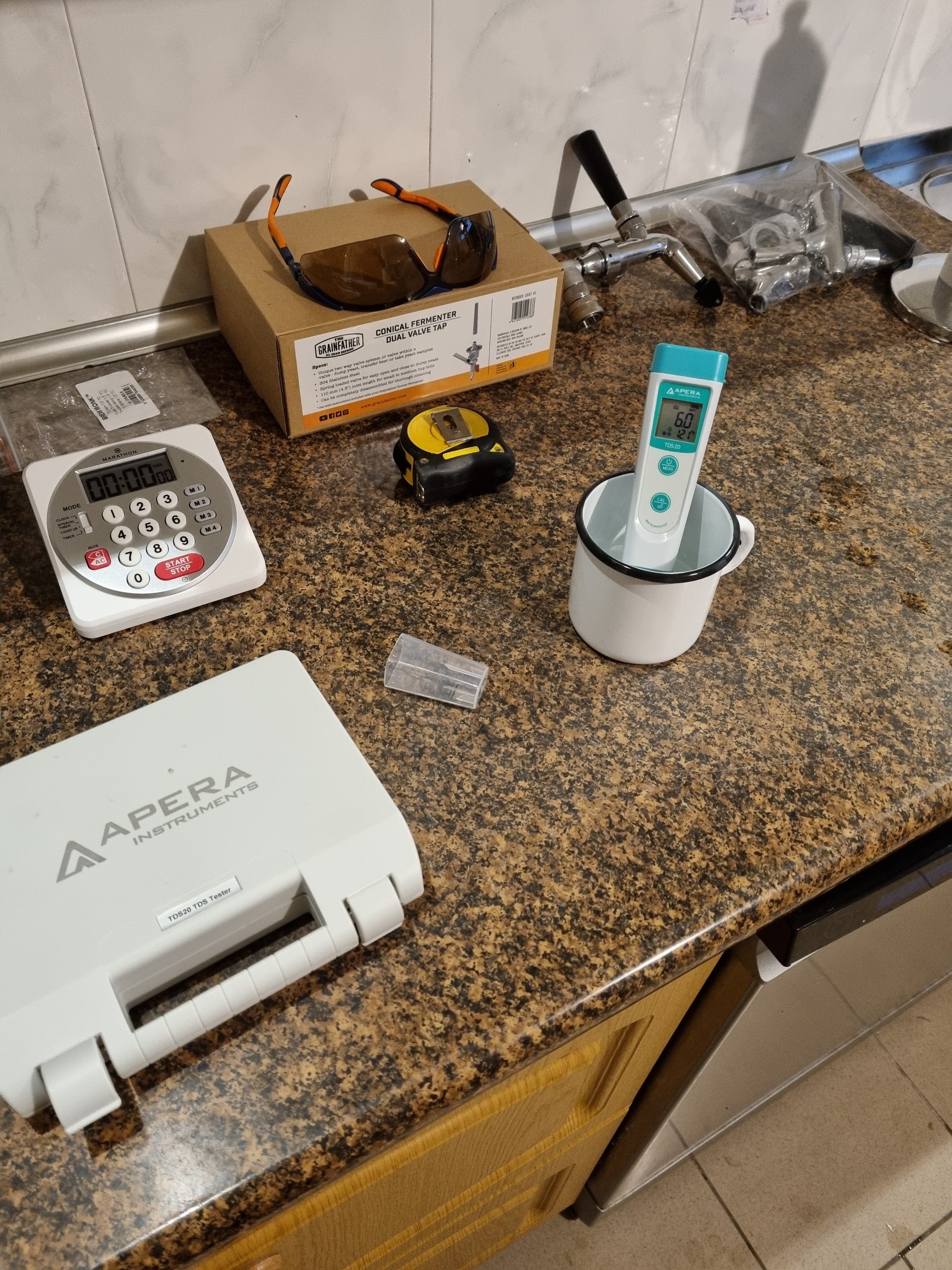
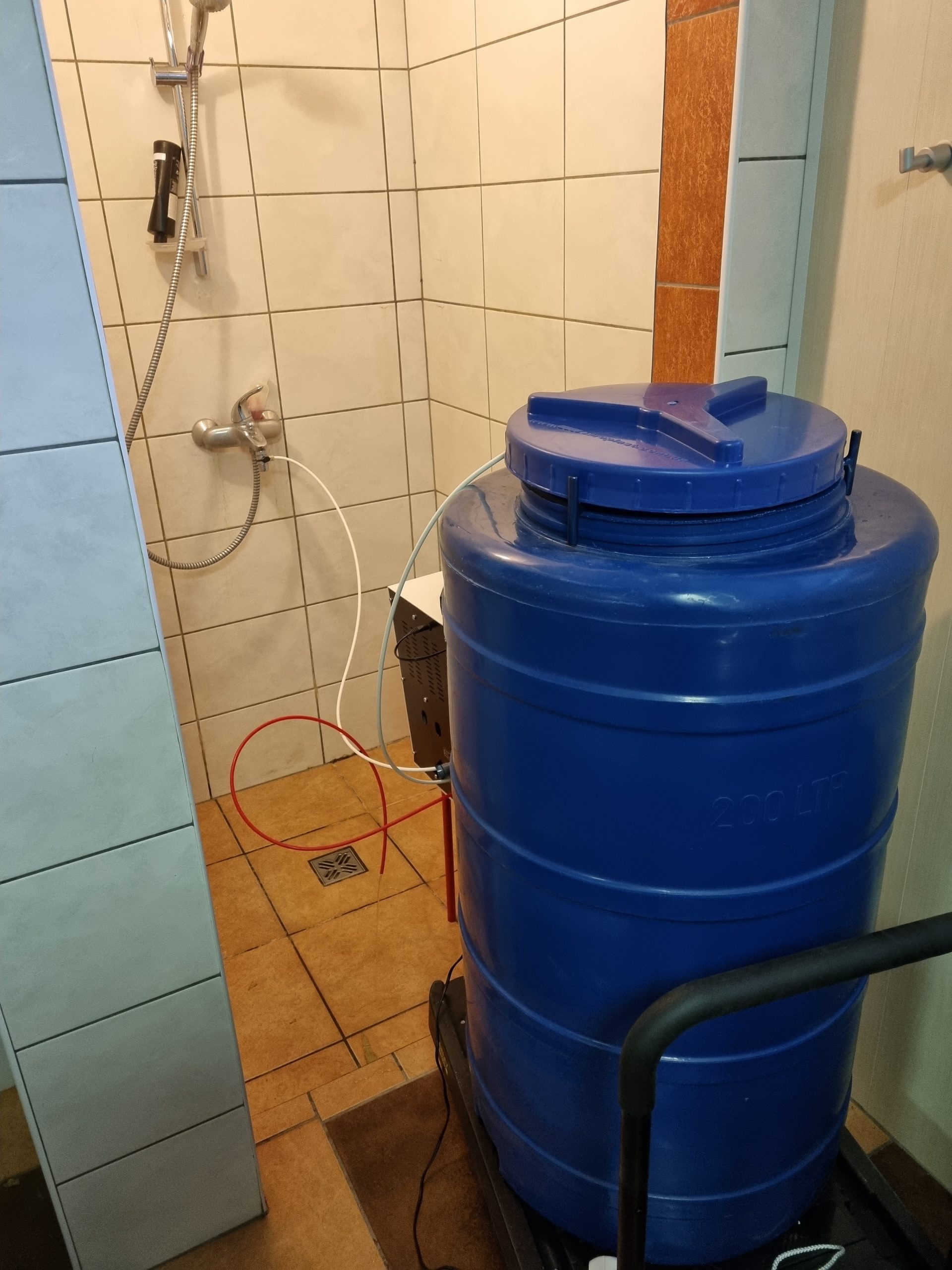
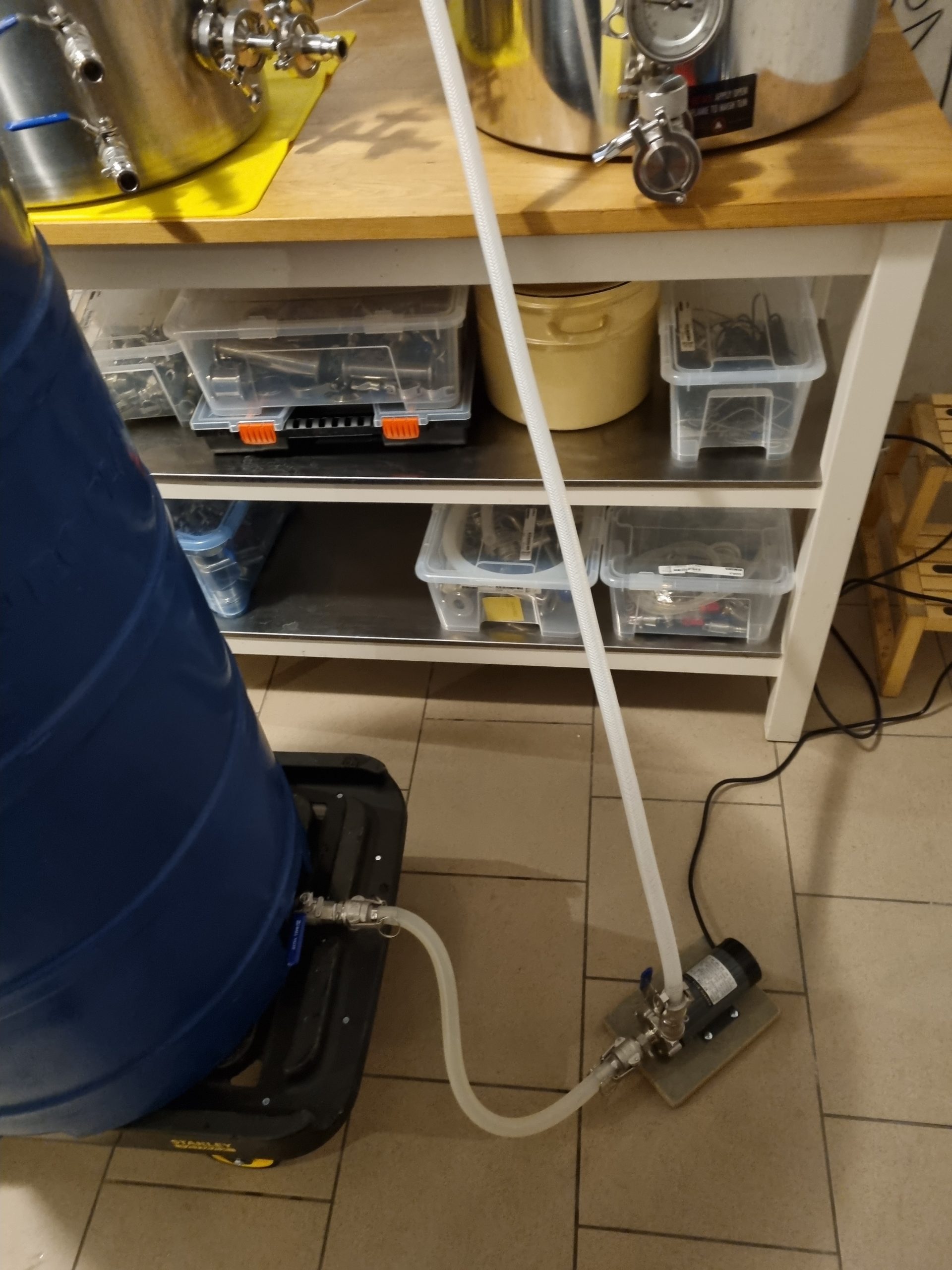
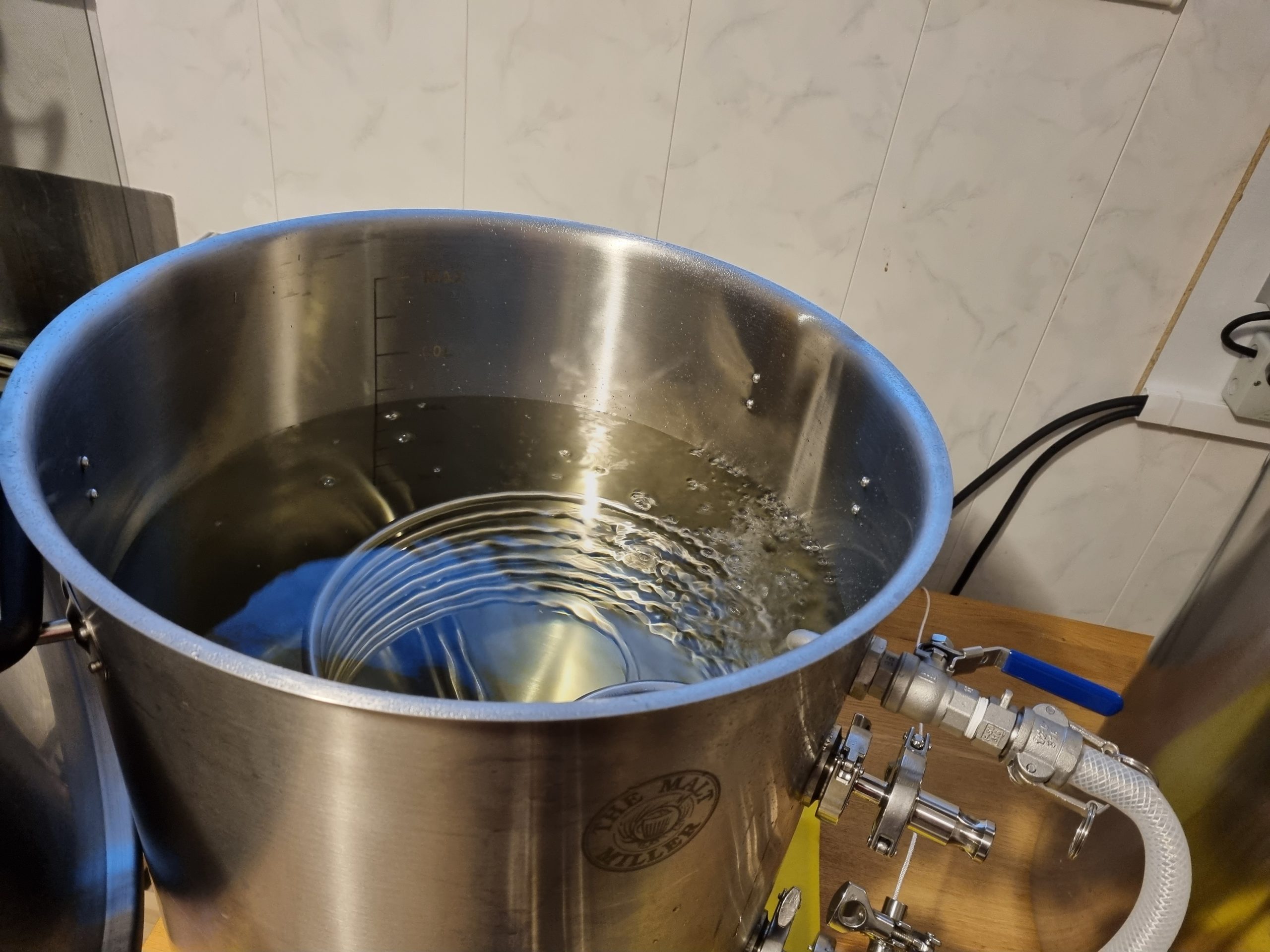
So the first task is to fill and heat the strike water. About 50 liters is enough for the current recipe to have a proper water to malt ratio. Water is heated in a dedicated kettle called Hot Liquor Tank (HLT). Both HLT and boil kettle has 6kW heating elements installed. Heating of 50 liters from about 12C to 75C takes about 40 minutes. During that time we can crush some grain.
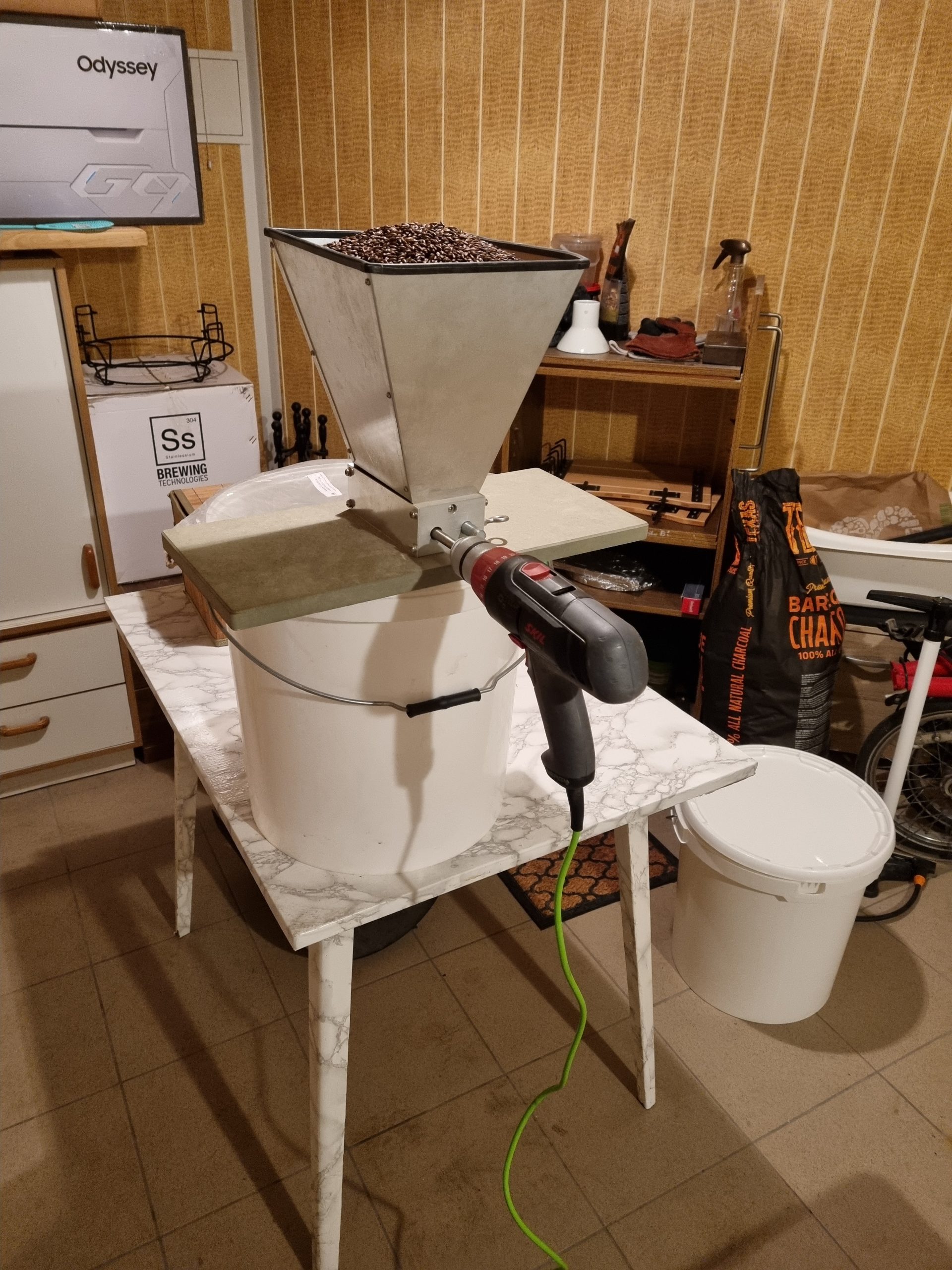
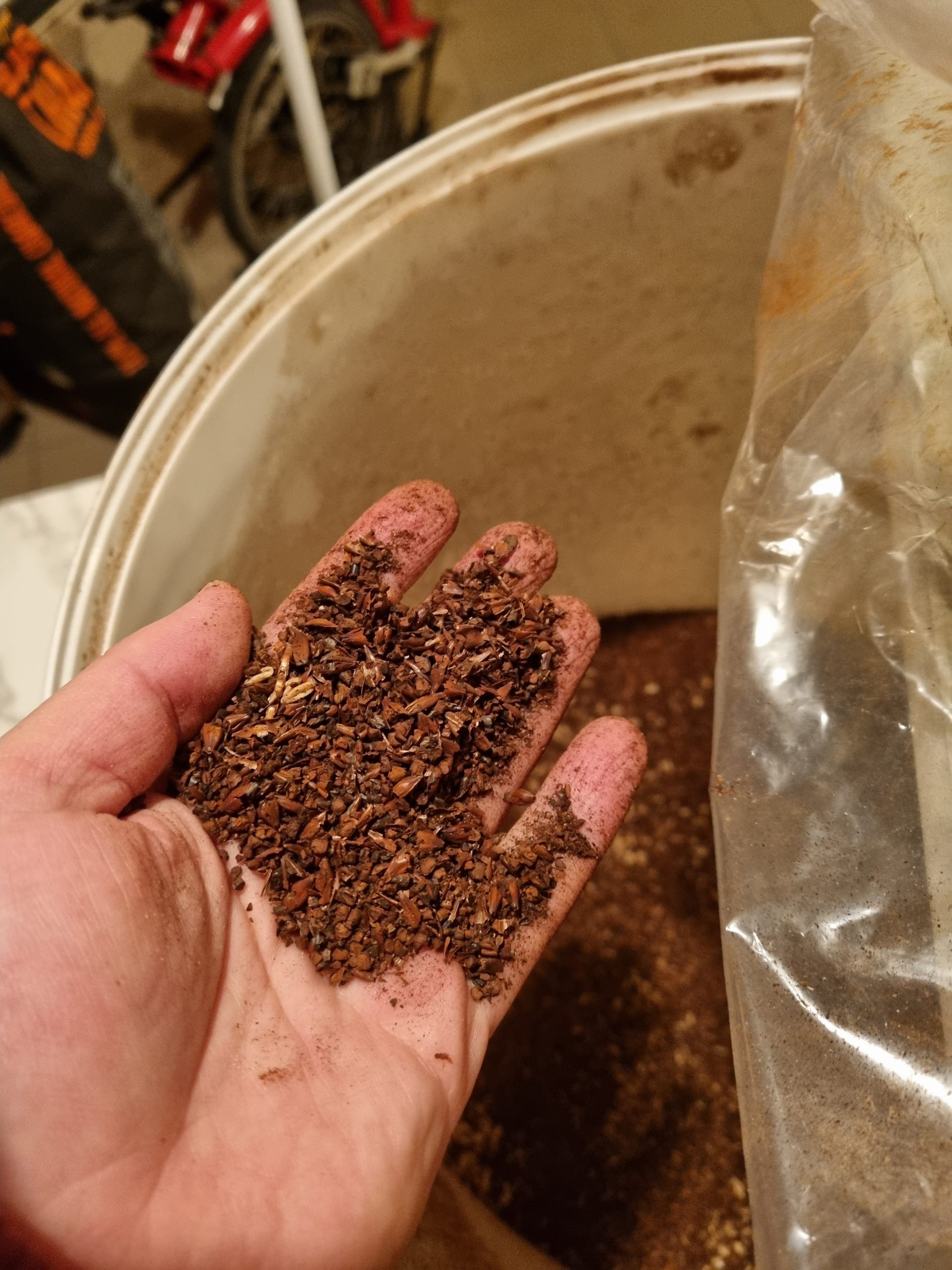
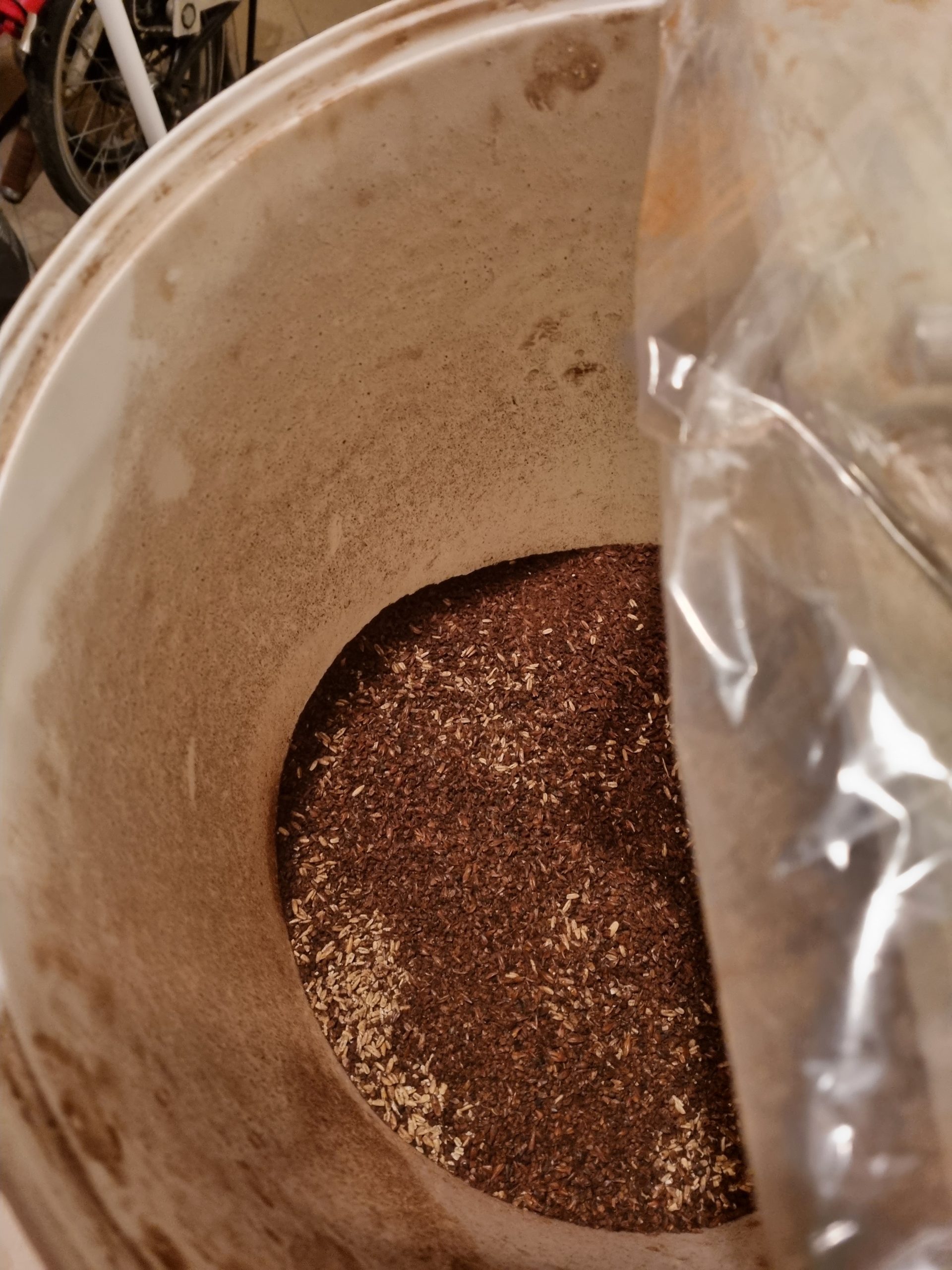
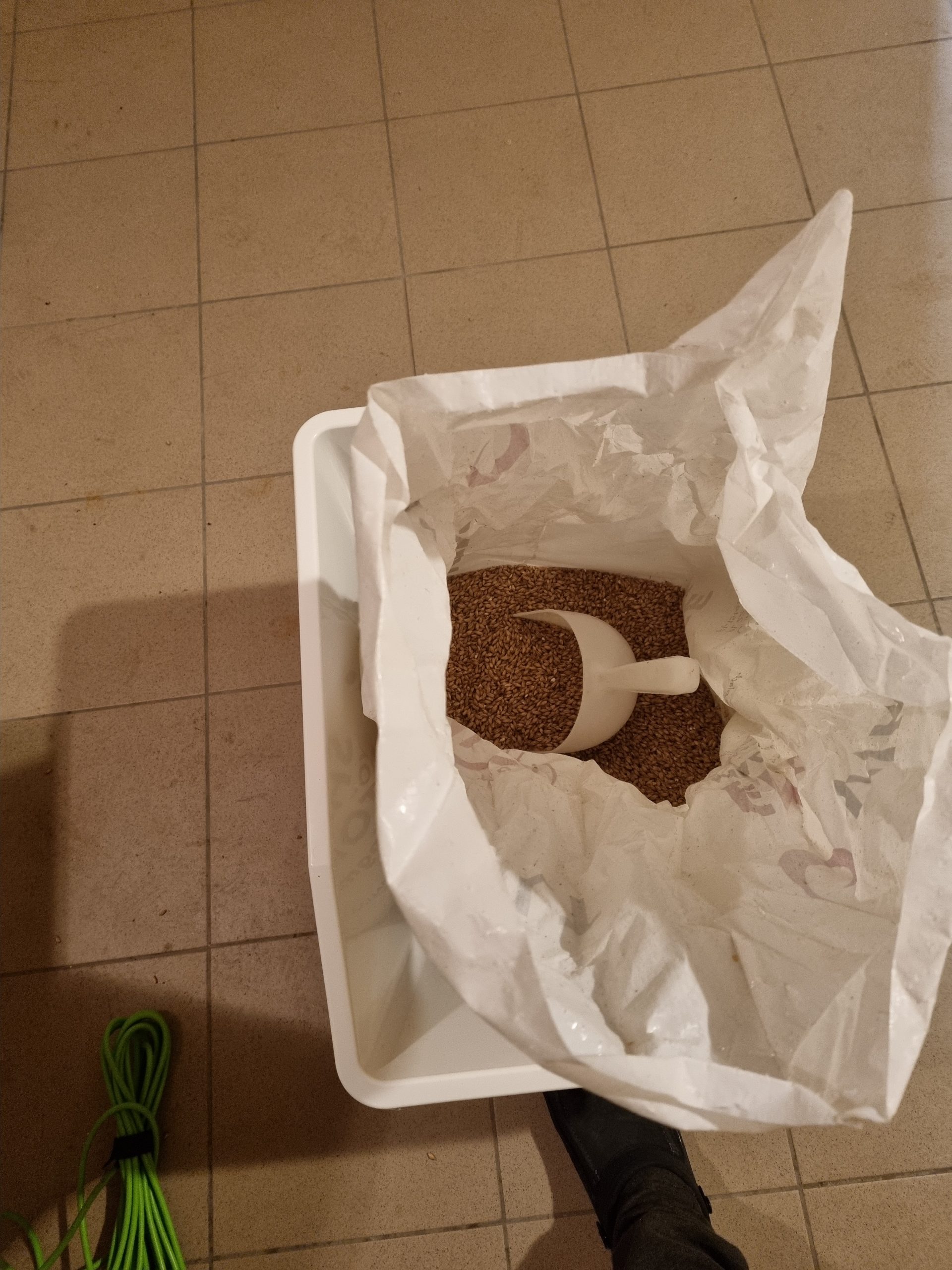
For malt crushing I use pretty standard two roller grain crusher. Nothing really fancy, but it does the job. My only complaint is that it can’t adjust the crush size on the fly. The rollers are moved by electric drill. For the barley it ideally should be split into some three parts, but crushing it more usually yields better extraction. I should probably had to reduce distance between rollers for the oats, as I noticed that these don’t crush so well only later and decided not to go into roller adjustments. This is were more advanced crusher would aid as it usually have simple crush size adjustments. The result is 20 kg of crushed grain that I keep in a special buckets. Better idea would be to do this the day before the brew day, but it’s not always an option.
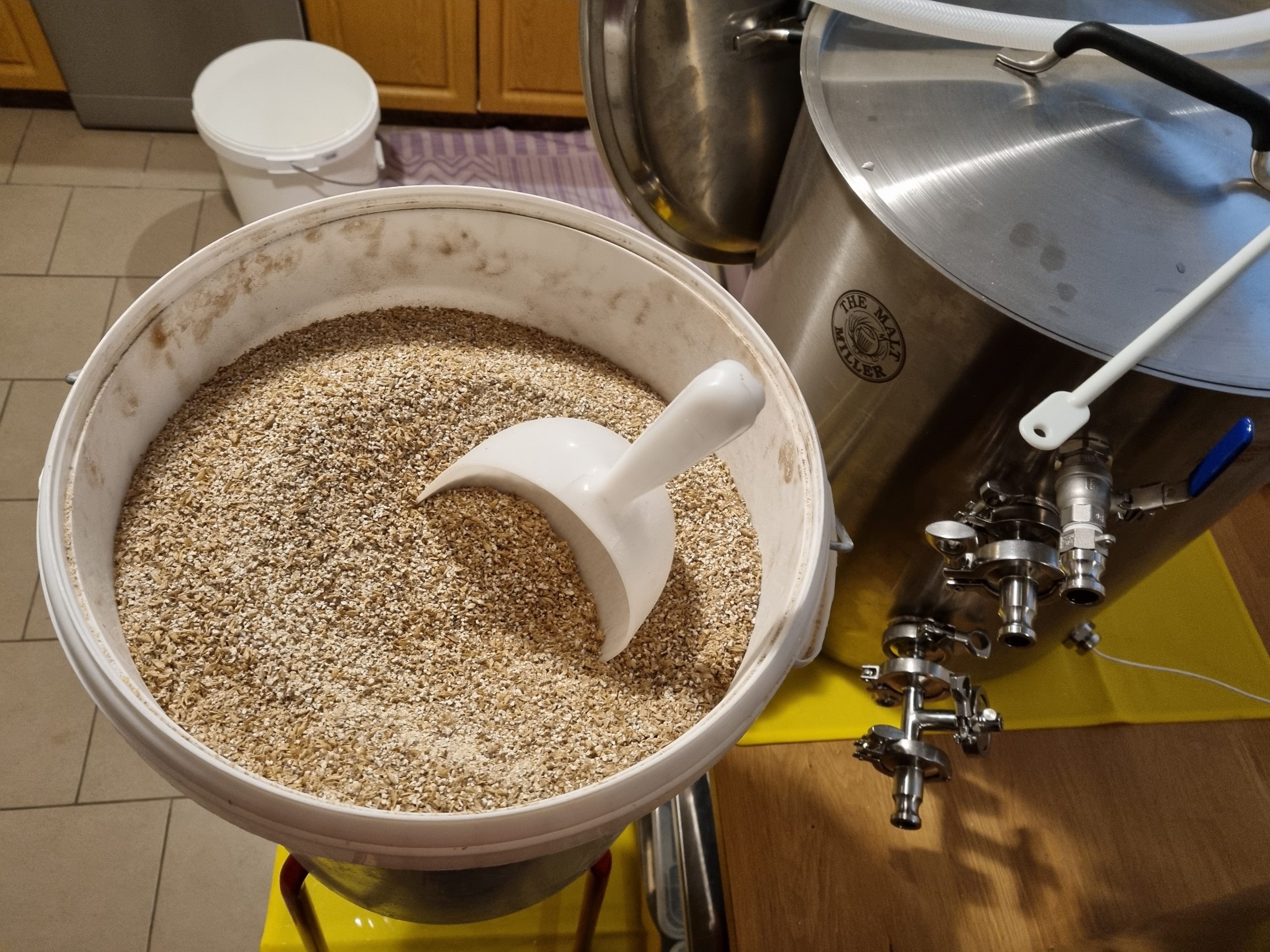
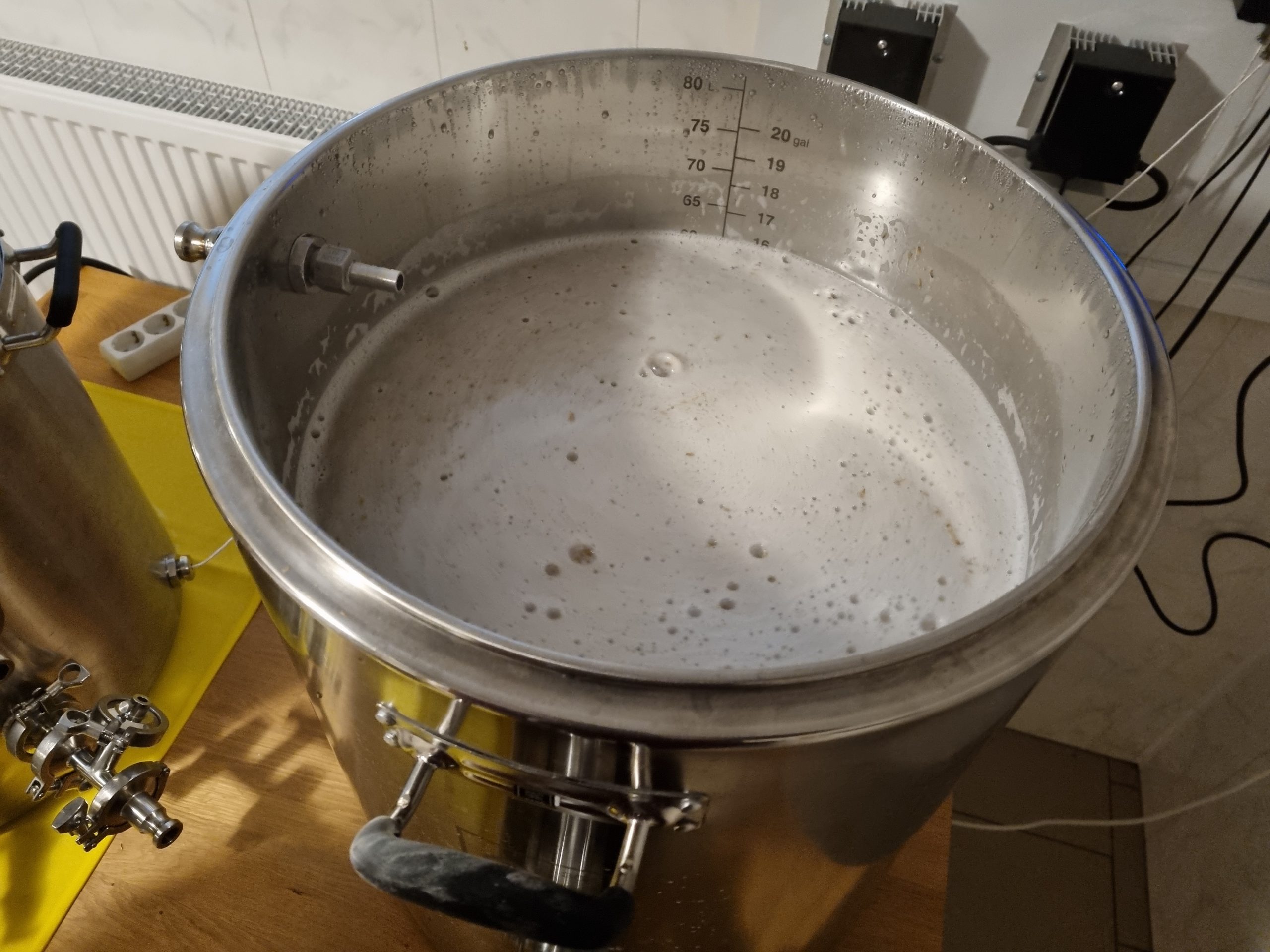
Getting back to the kitchen we have strike water heated. We transfer this water to Mash Tun (MT) using a pump. I use two pumps in my brewing process and one of those is dedicated only to pumping water, another pumps wort. After transferring the water I add crushed malt and stir while adding it. The temperature in my case dropped to around 66C activating enzymes to extract sugars. For this brew I used single infusion method where I do not adjust temperature after adding strike water. With my system it’s possible to do HERMS (Heat Exchange Re-circulating Mash Systems) but for simplicity decided not to go there with this recipe. The standard time for mashing is 60 minutes. During this time I also heated additional 50 liters in HLT for sparging. After mashing I did some lautering to clear the wort. Lauter grant which is used as a buffer is more common equipment for commercial breweries than homebrewers.
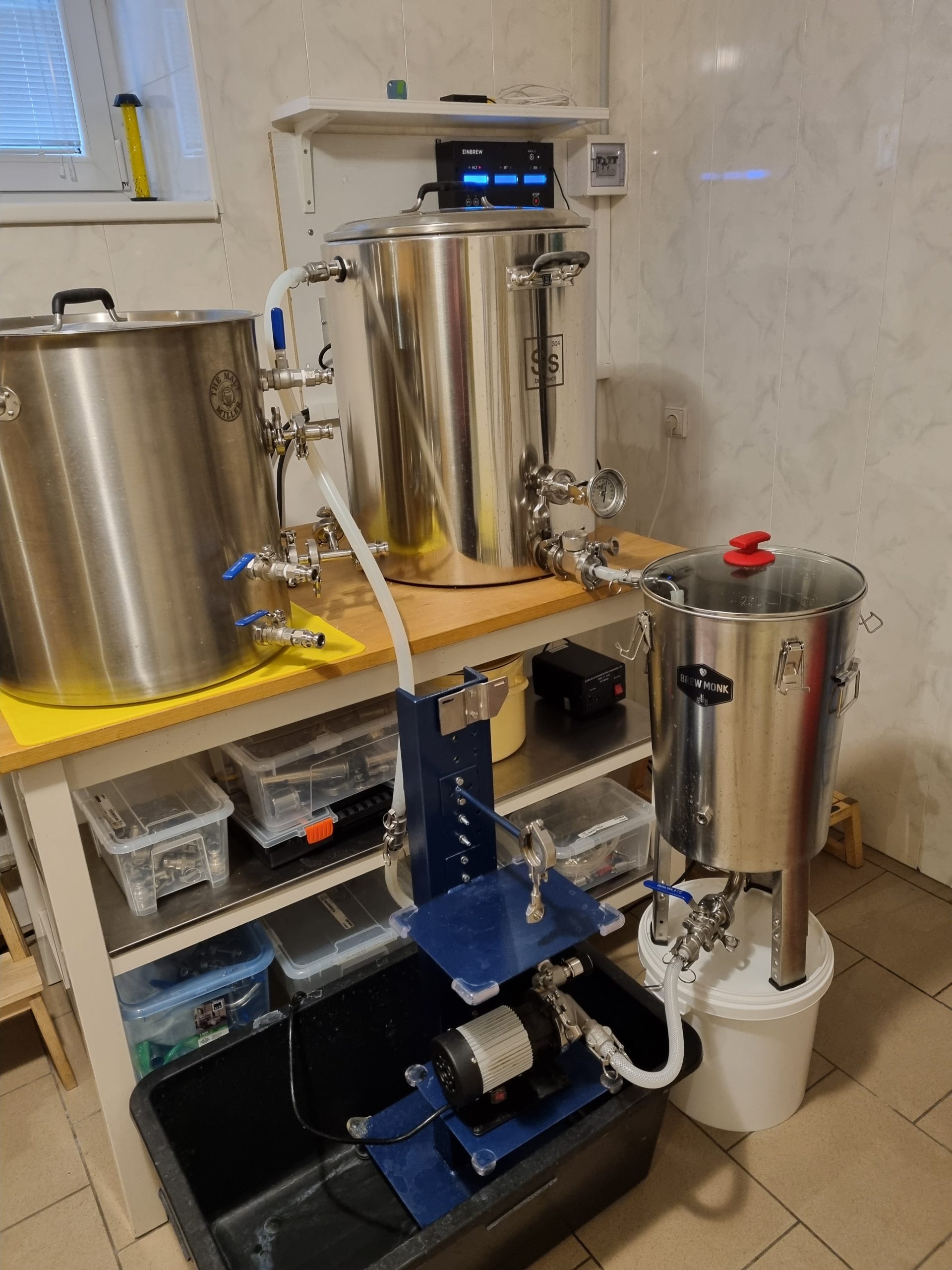
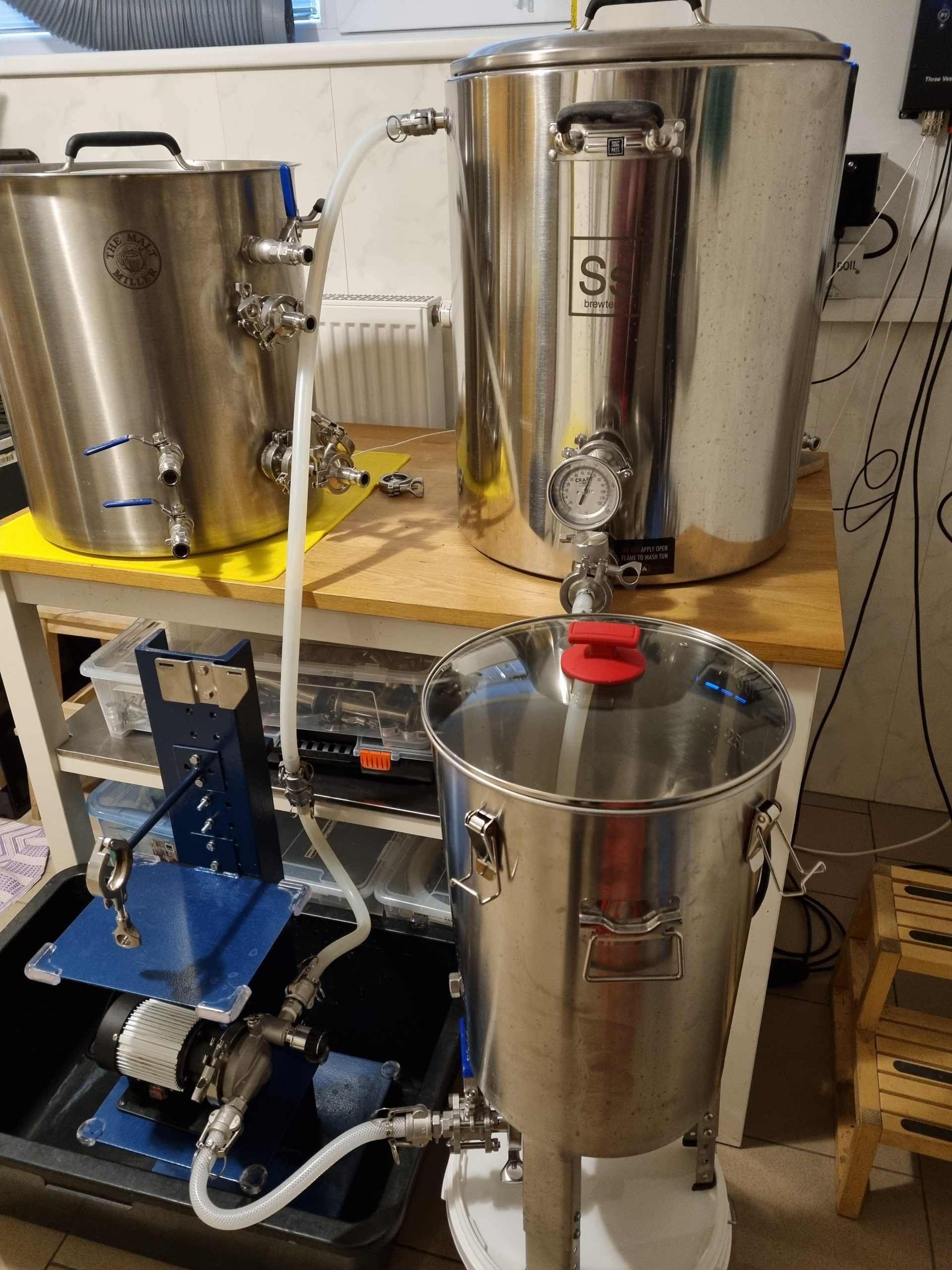
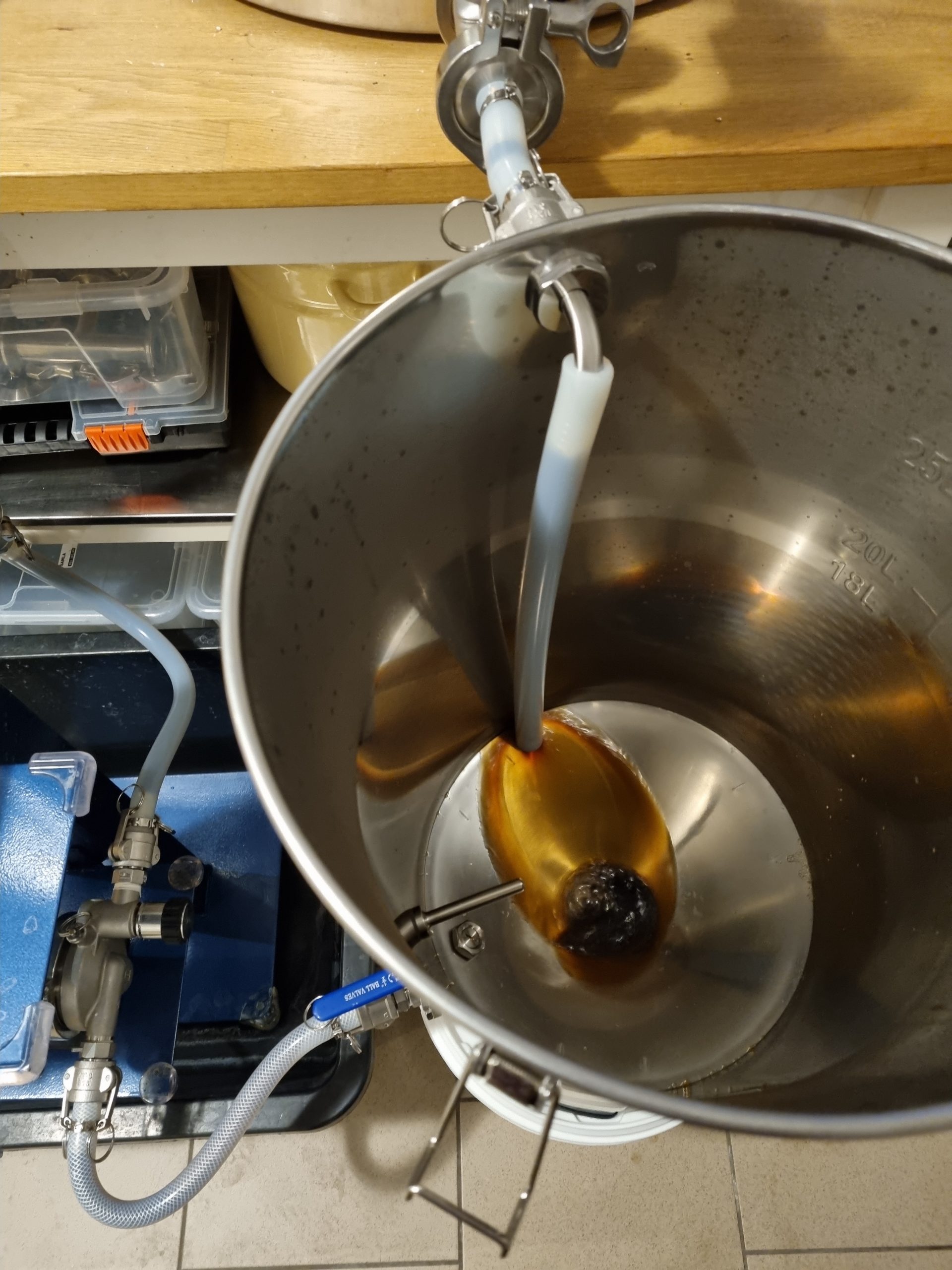
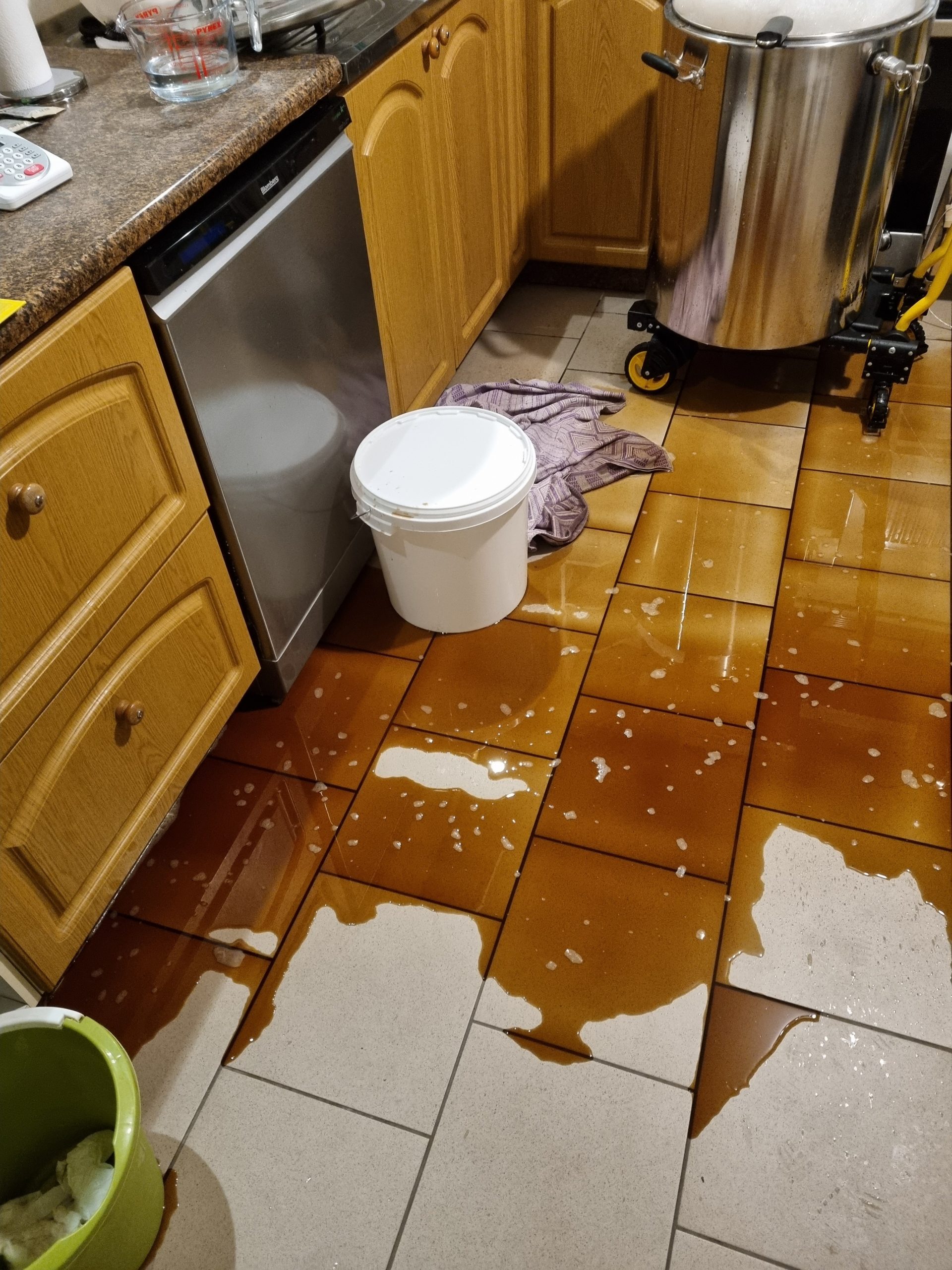
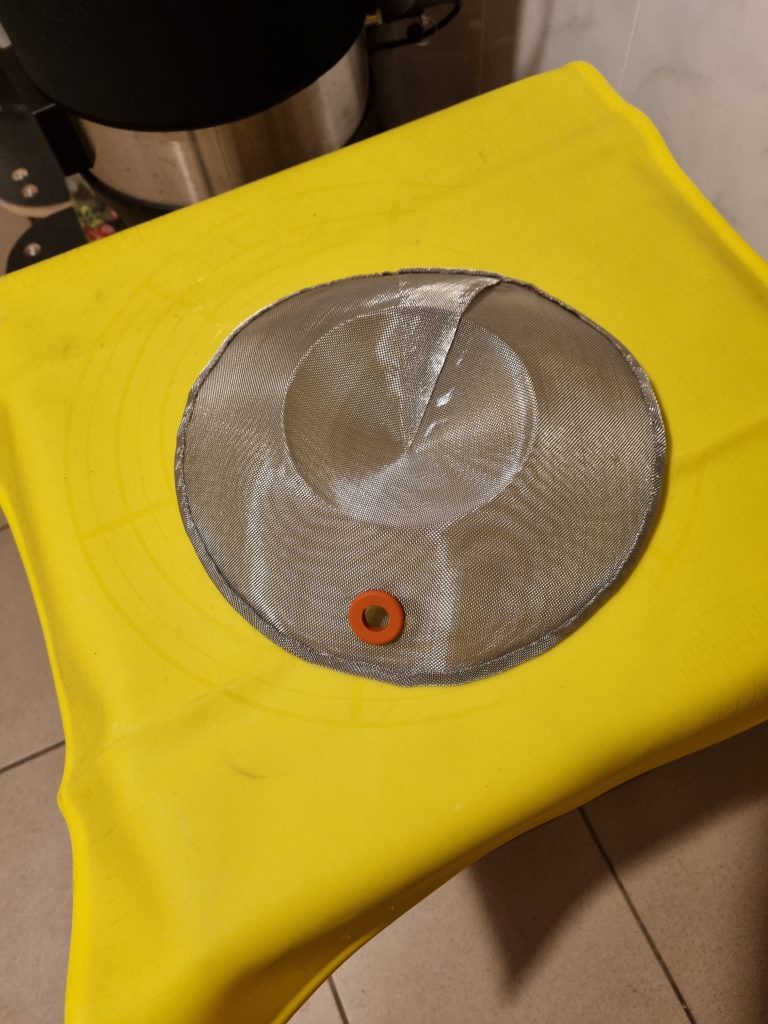
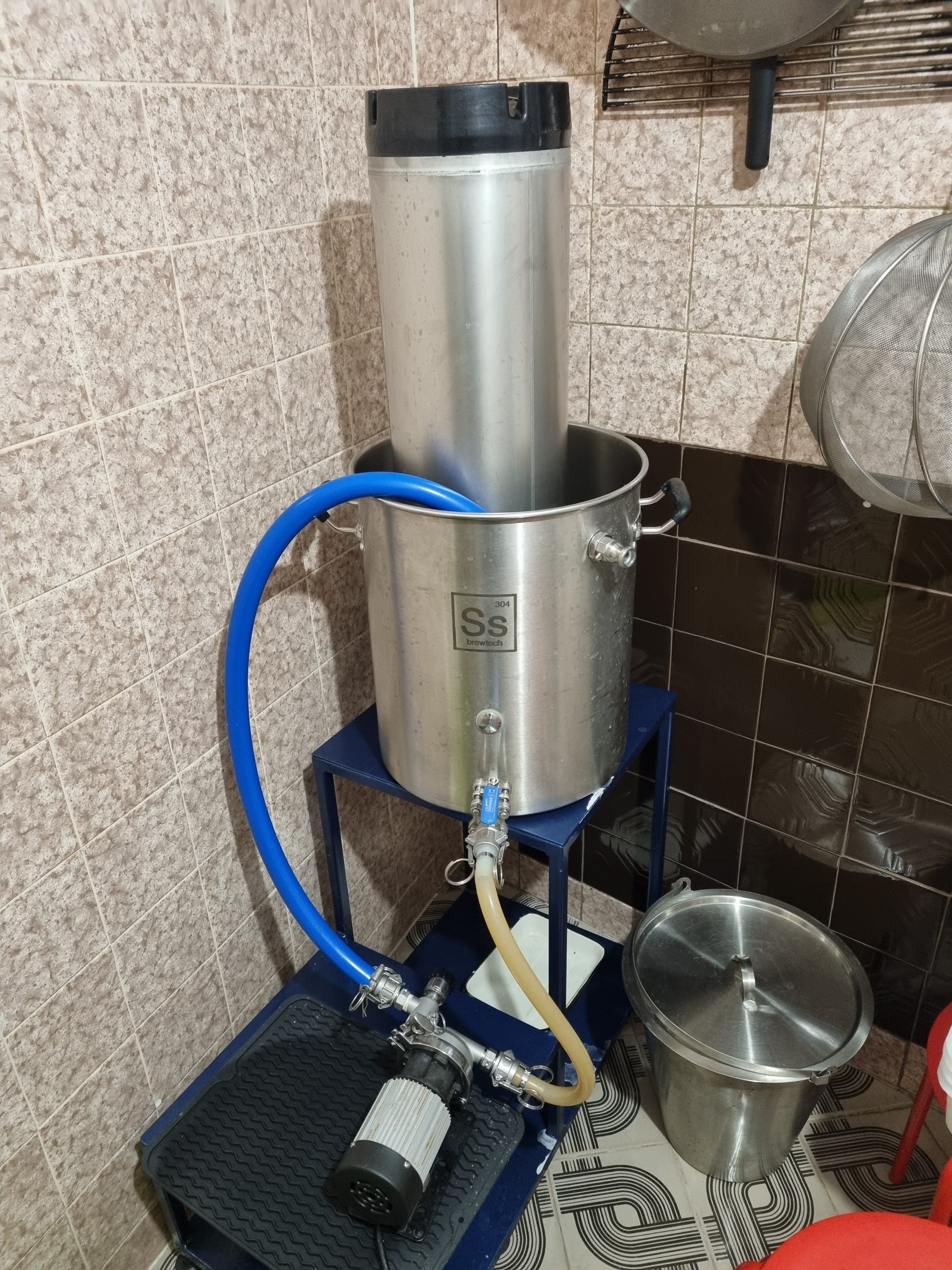
This Lauter Grant is of my own design, made it from a fermenter. It worked pretty good and when wort was clear (it was actually very much black…) I started transferring to the boil kettle. During this transfer I arranged sparging setup where another 50 liters of water heated in HLT were added to mash as kind of shower to clean up remaining sugar. So I started sparging and simultaneously transferring to boil kettle. Here’s were my troubles started. I noticed in the boil kettle some little specs of grain. I always used fine mesh to catch these specs in my previous setups, but not this time… So I decided to do additional filtering. I transferred remaining wort to boil kettle, totaling 80+ liters of wort. I cleaned the Mash Tun and and connected to boil kettle to transfer using mesh. During that time I was called by my wife for some help. So I thought to myself these two vessels have the same 20 gallon capacity it should be fine.. I went up to get my daughter also made me some coffee as it is cold in sub-basement. While sitting and drinking the coffee I thought to myself “now hypothetically I return to the basement kitchen and find that something bad happened. what could that be?”. This is me overthinking stuff. So I drank my coffee and went back. When I saw the next picture a many Polish swear words came of my mouth. I forgot that I did not closed a port at the top of Mash Tun… So a few liters spilled on the floor and under the furniture. Took me some hour to clean the mess. So after cleaning this up I transferred wort to boil kettle and started pre-heating.
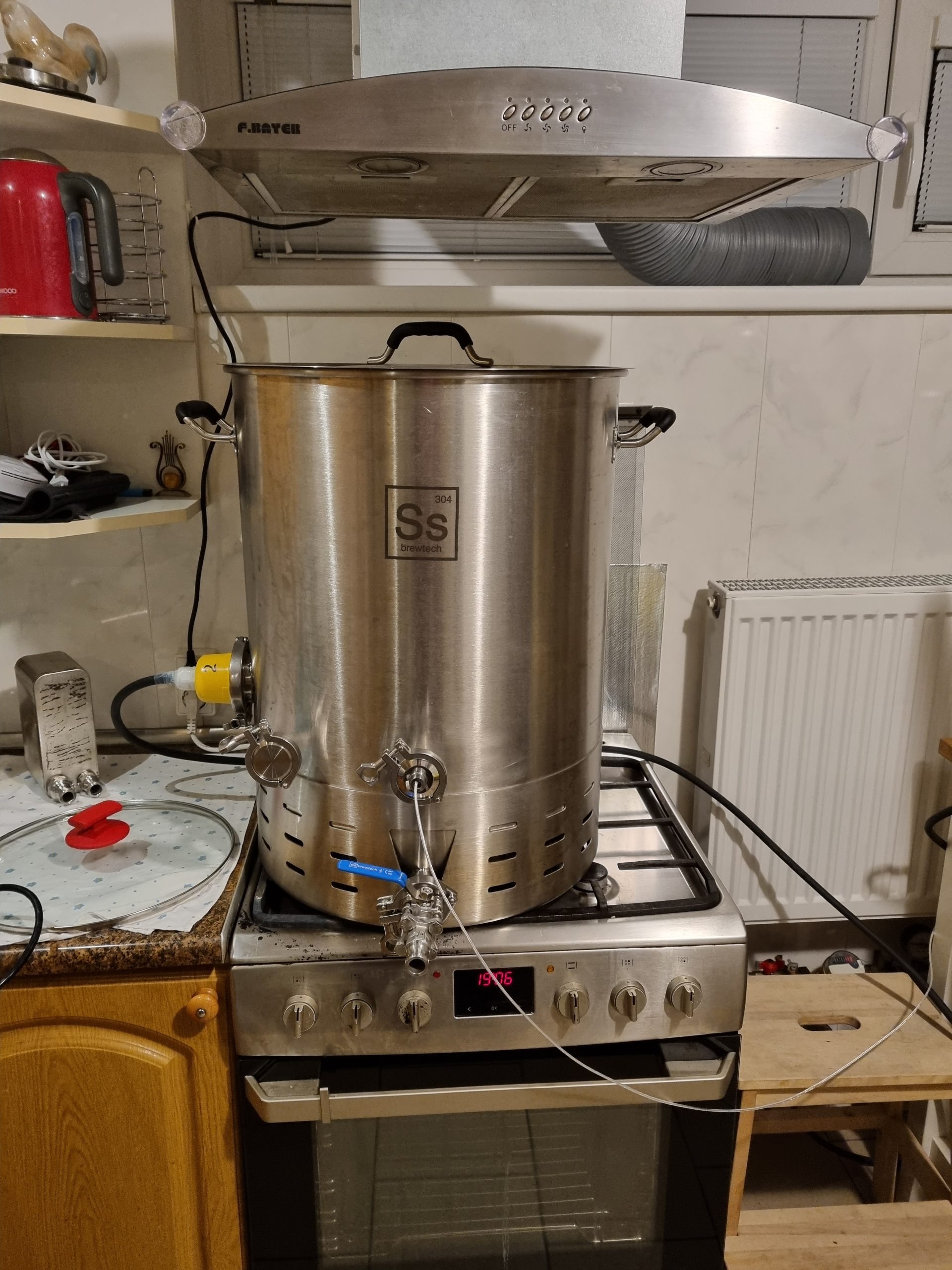
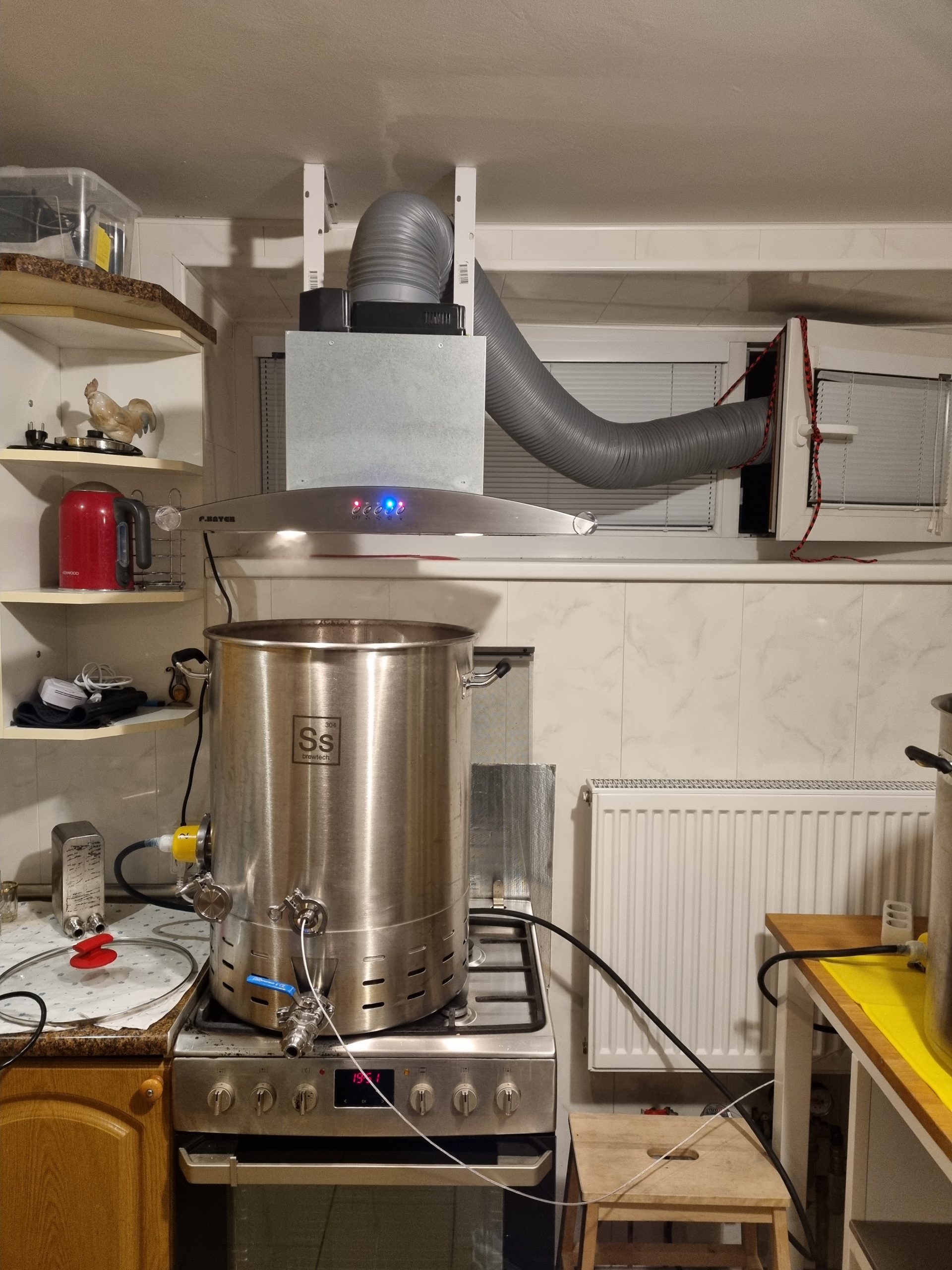
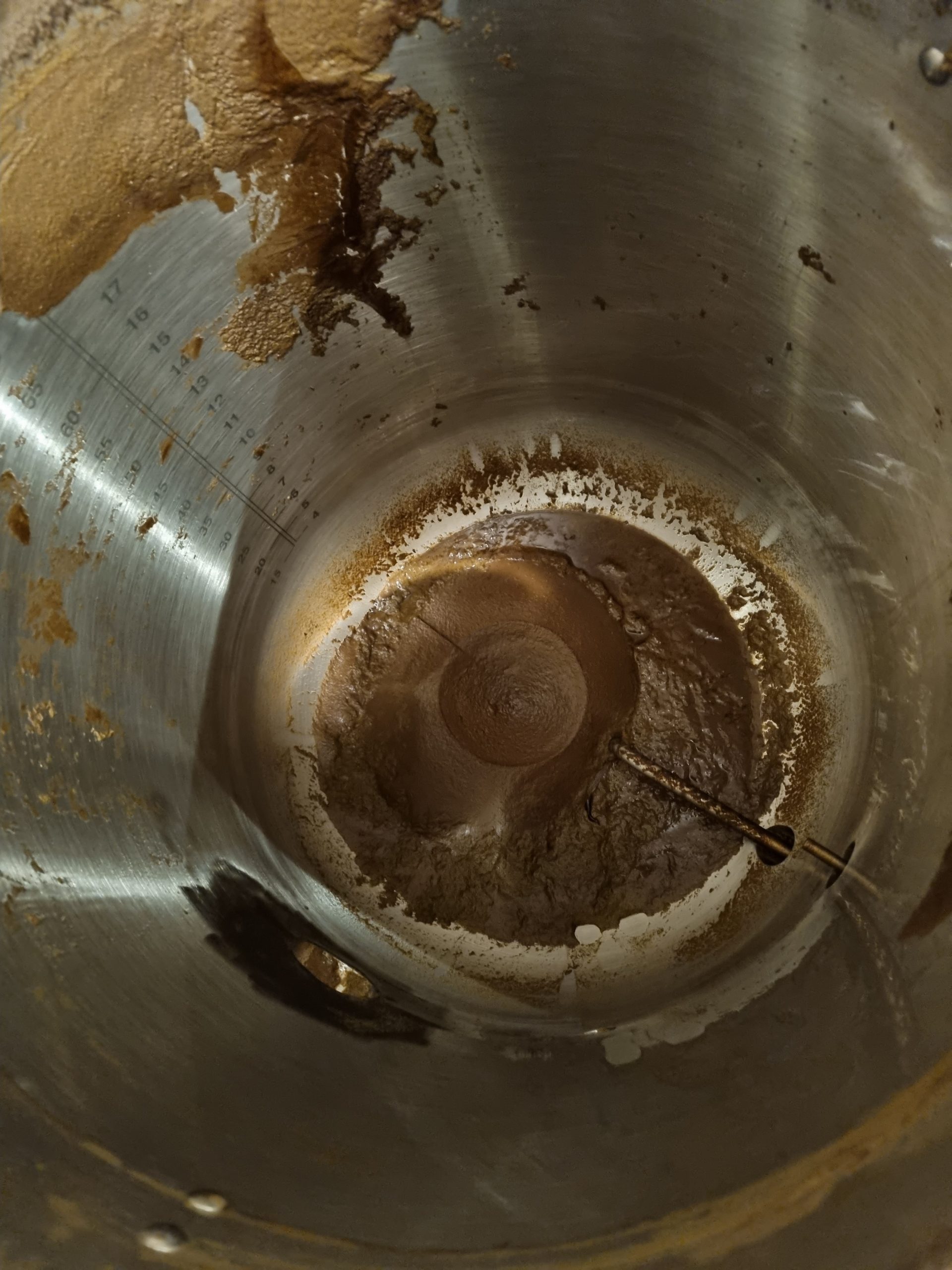
Took something about a half an hour to reach the pre-boil temperature of 95C. The controller alerted me that pre-boil temp was reached. I checked and it was like 95C on the controller, but the wort seemed much nearer the boil, did not checked with my Thermapen at the moment. I left the room for a minute or two and after the return I saw that boil was already vigorous and some wort spilled onto the top of the oven. The lesson is not to leave a room when the boil is nearing. My first thought was “why this happened”, so I checked controller and it was still showing it was pre-heating! The controller missed the temperature by some 2 degrees Celsius. In short I should have RTFM. Later I spend an hour adjusting temperature with not much success, it was somewhat boiling though. So at some point I decided enough of the boil for now. To sanitize wort it needs like 10 minutes of boil, so this much it boiled for sure. Time to cool and fill the fermenters. Another nasty thing was condensate dripping from the steam extractor, will need to work on this for the next time.
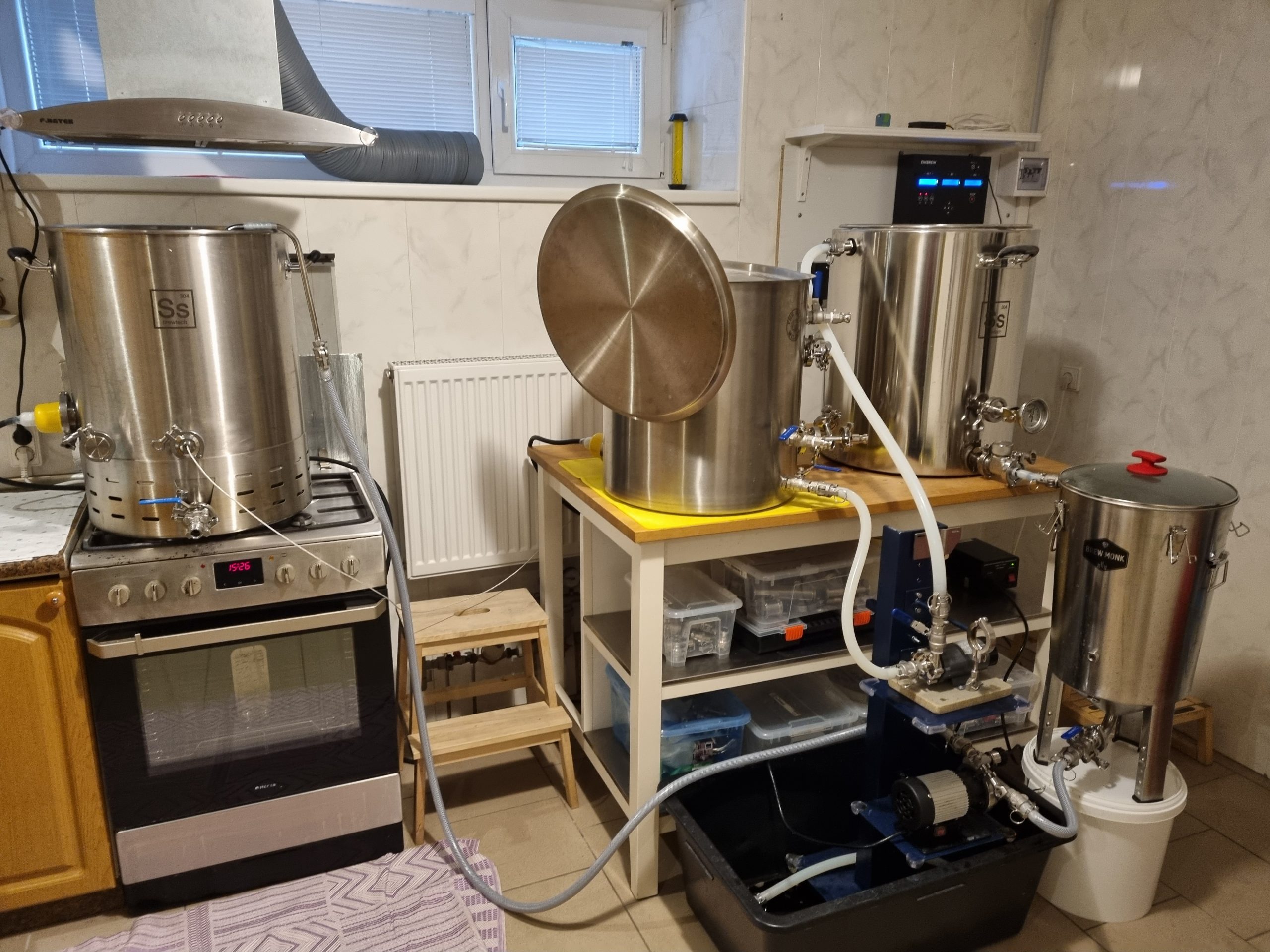
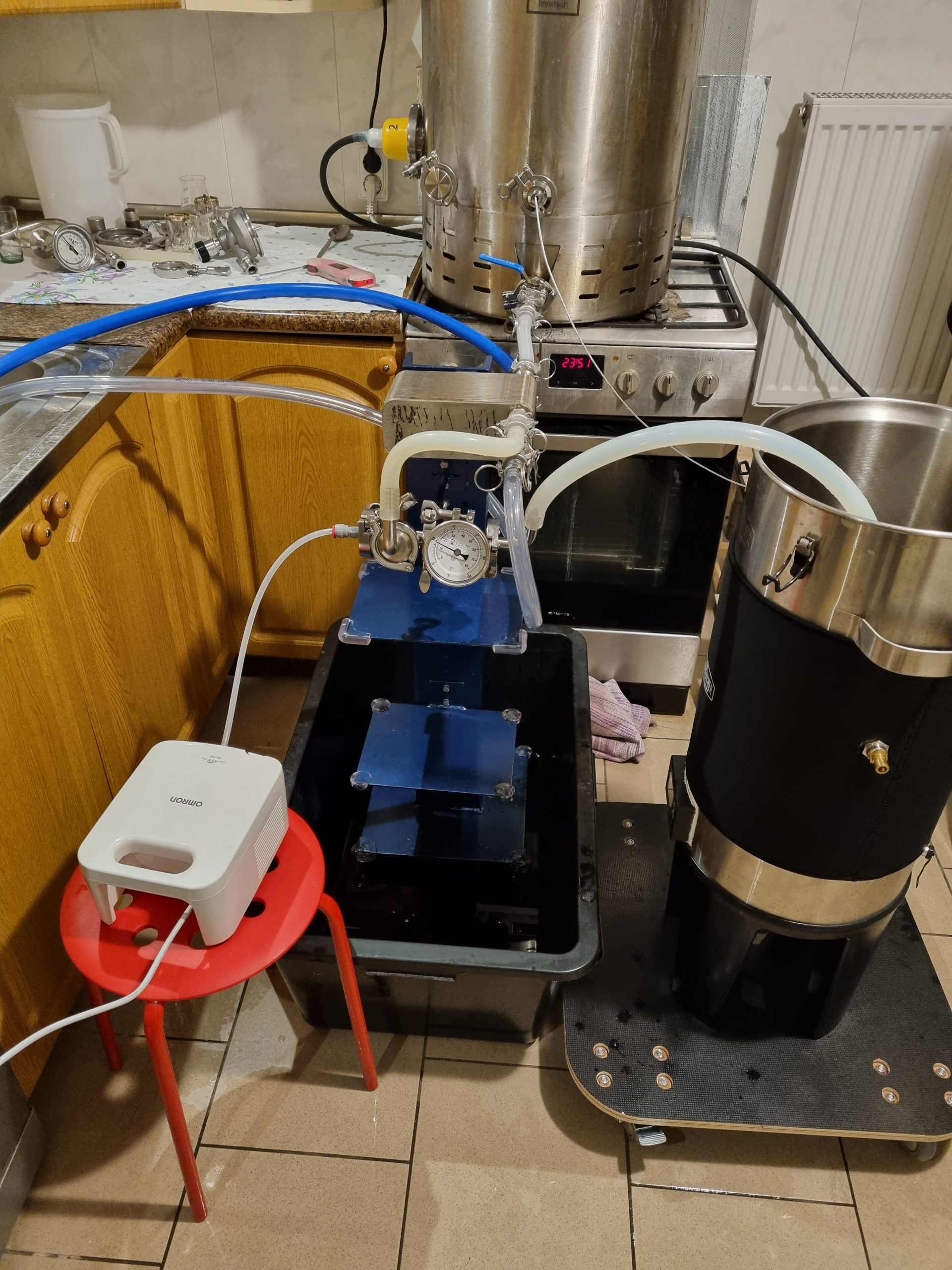
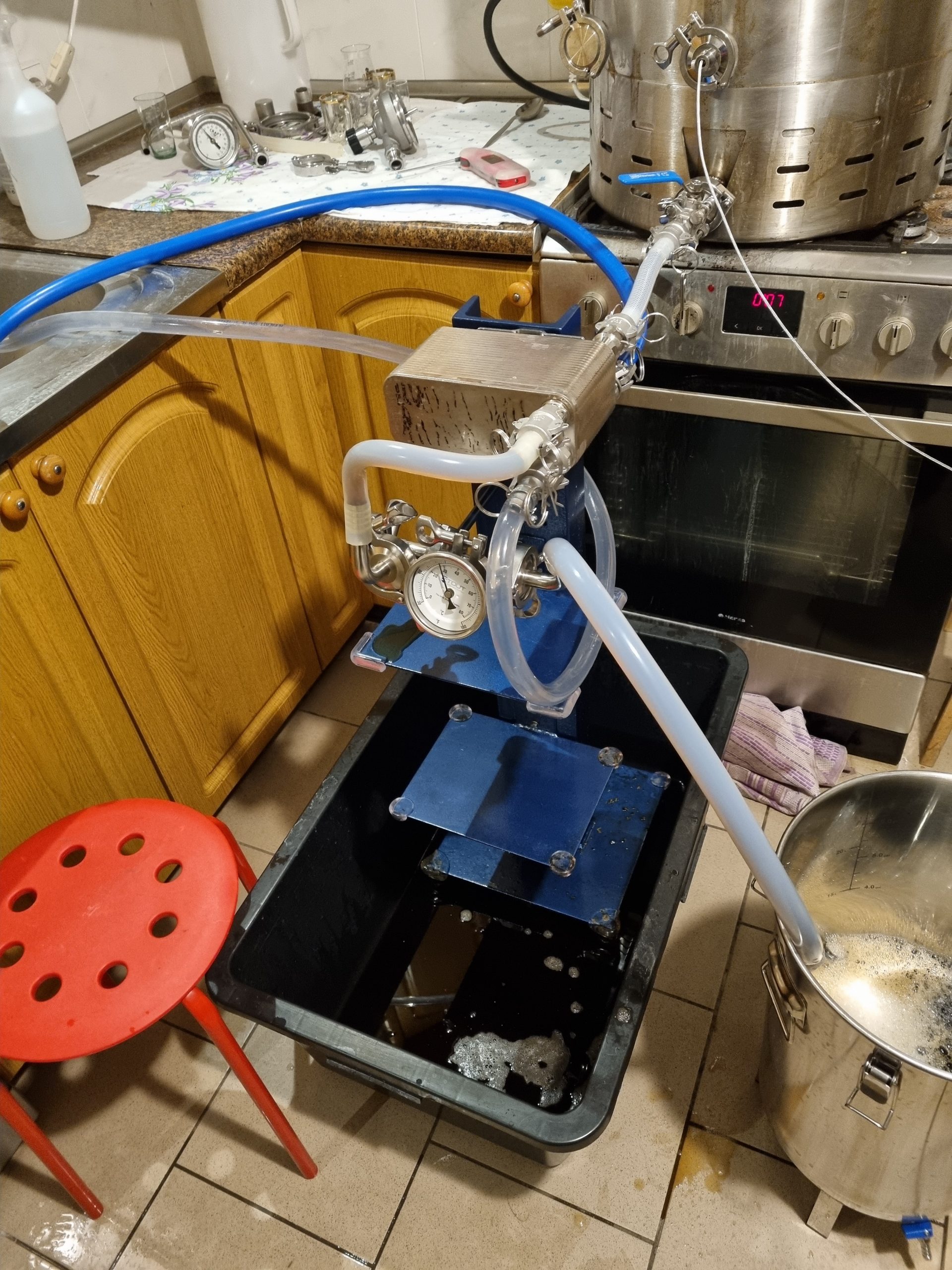
So next thing I assembled a setup for chilling and inline aeration. The stand is also designed by me. My original idea of inline-aeration (aeration is needed to increase yeast cell grow) had one troubling question – will I be able to know how much I filled the fermenter? This is the first time I used new aeration compressor, which is actually a medical equipment. So I started flow and saw what I was afraid of most, the output was literally spewing foam! Sure it’s effective but totally not practical.
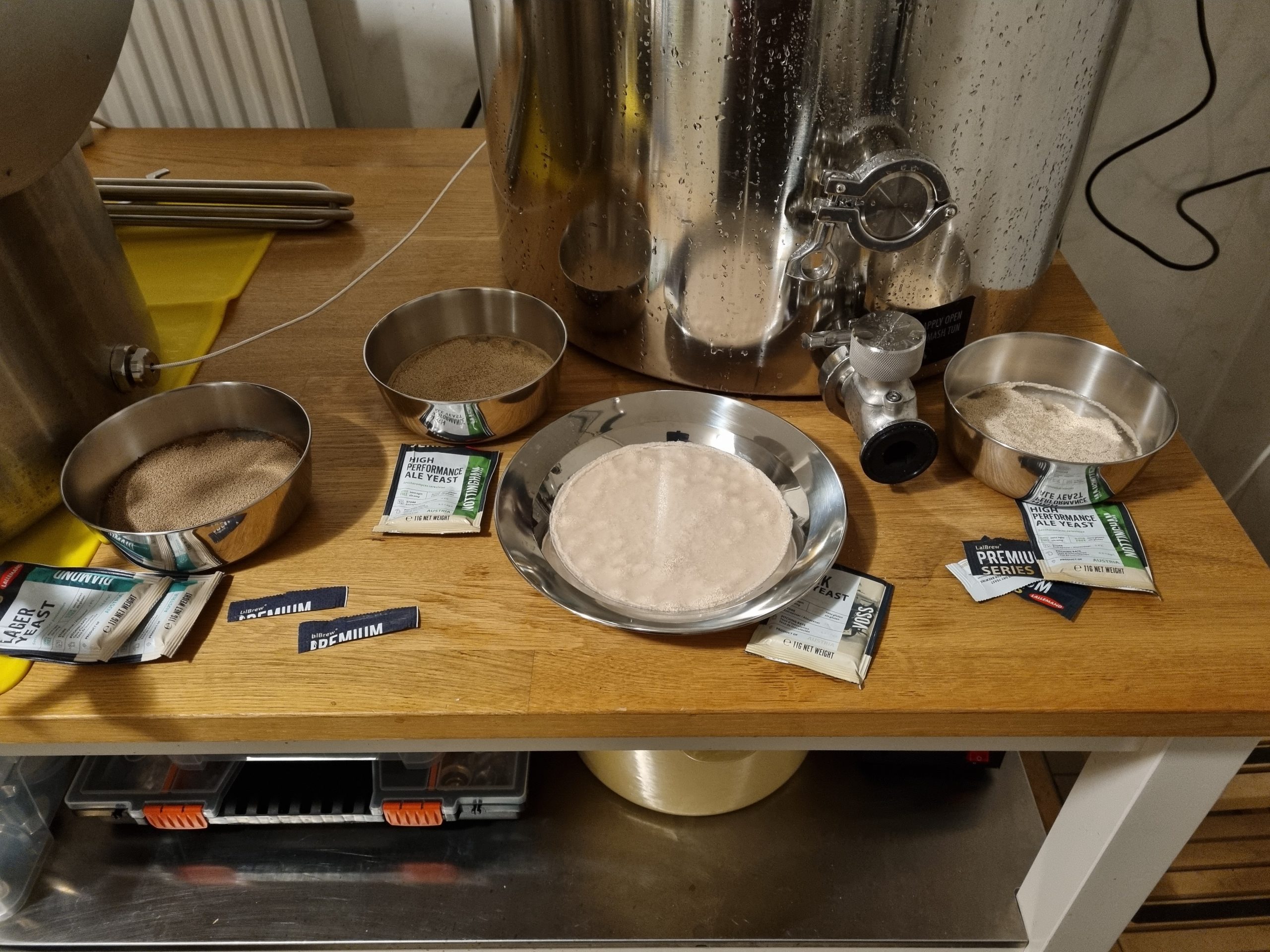
So let’s get to the fermenters. I choose to split wort into multiple batches. Four fermenters to be exact. This way I could use different yeast and fermentation temperatures for each to create more variety.
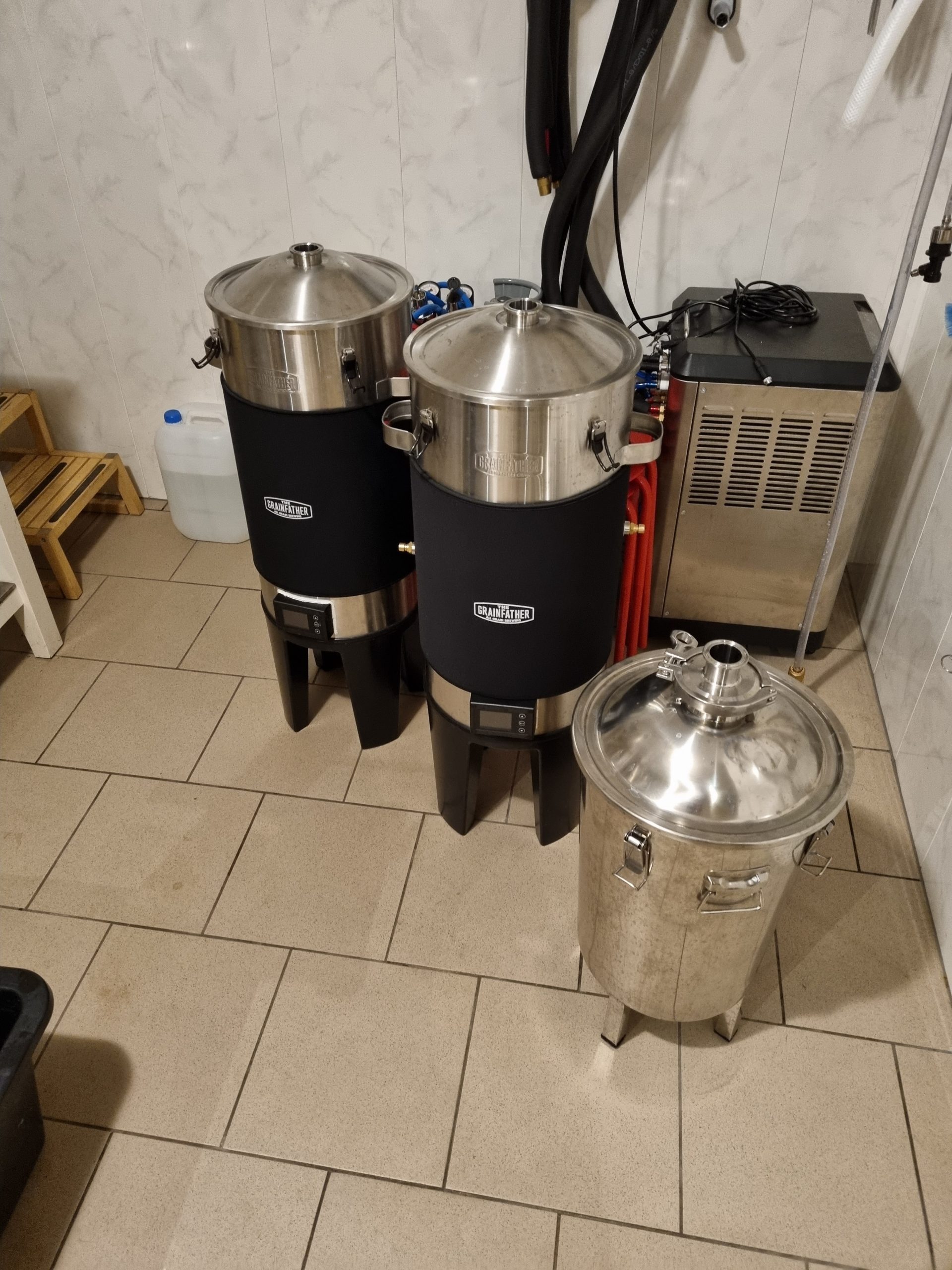
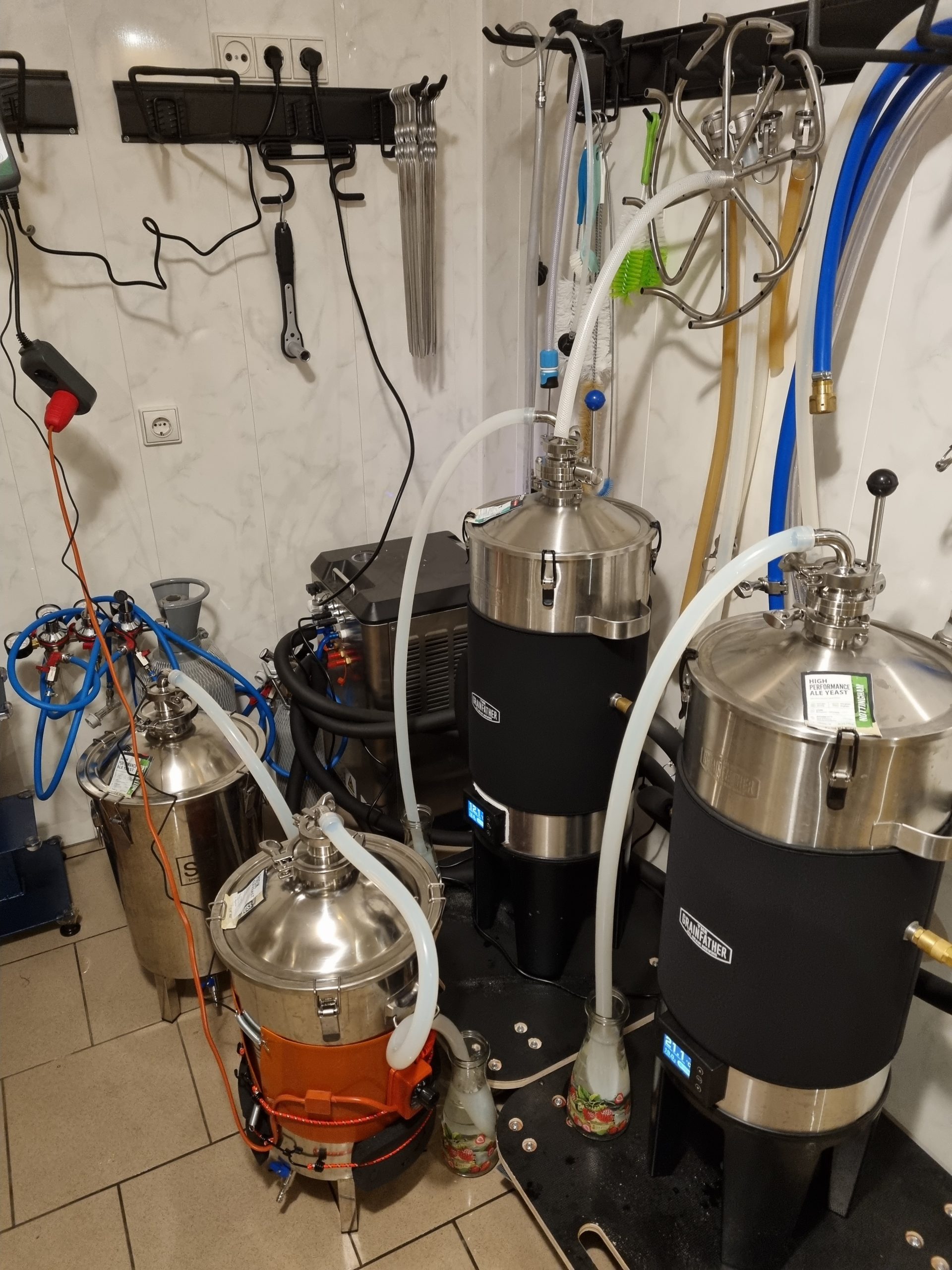
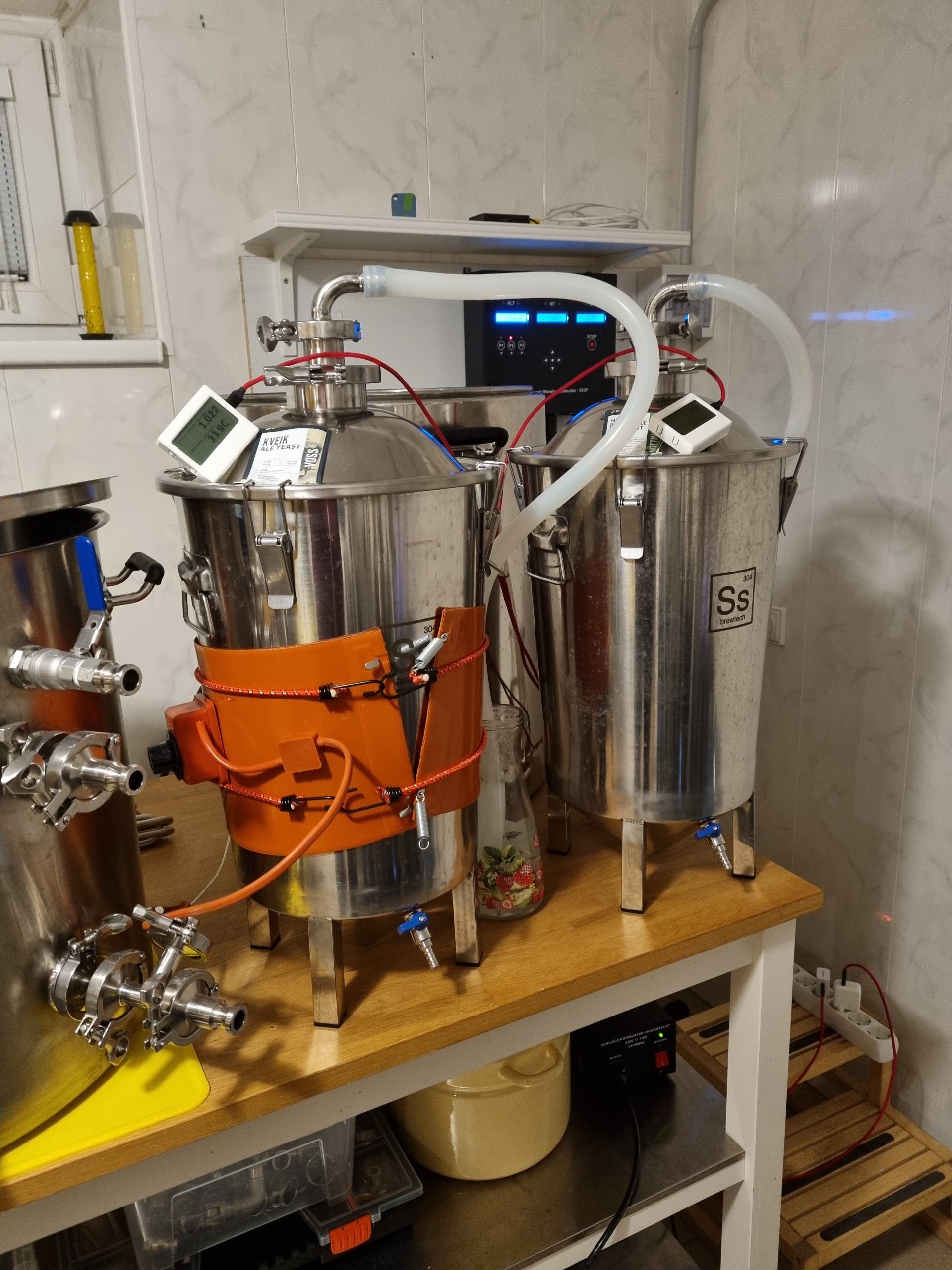
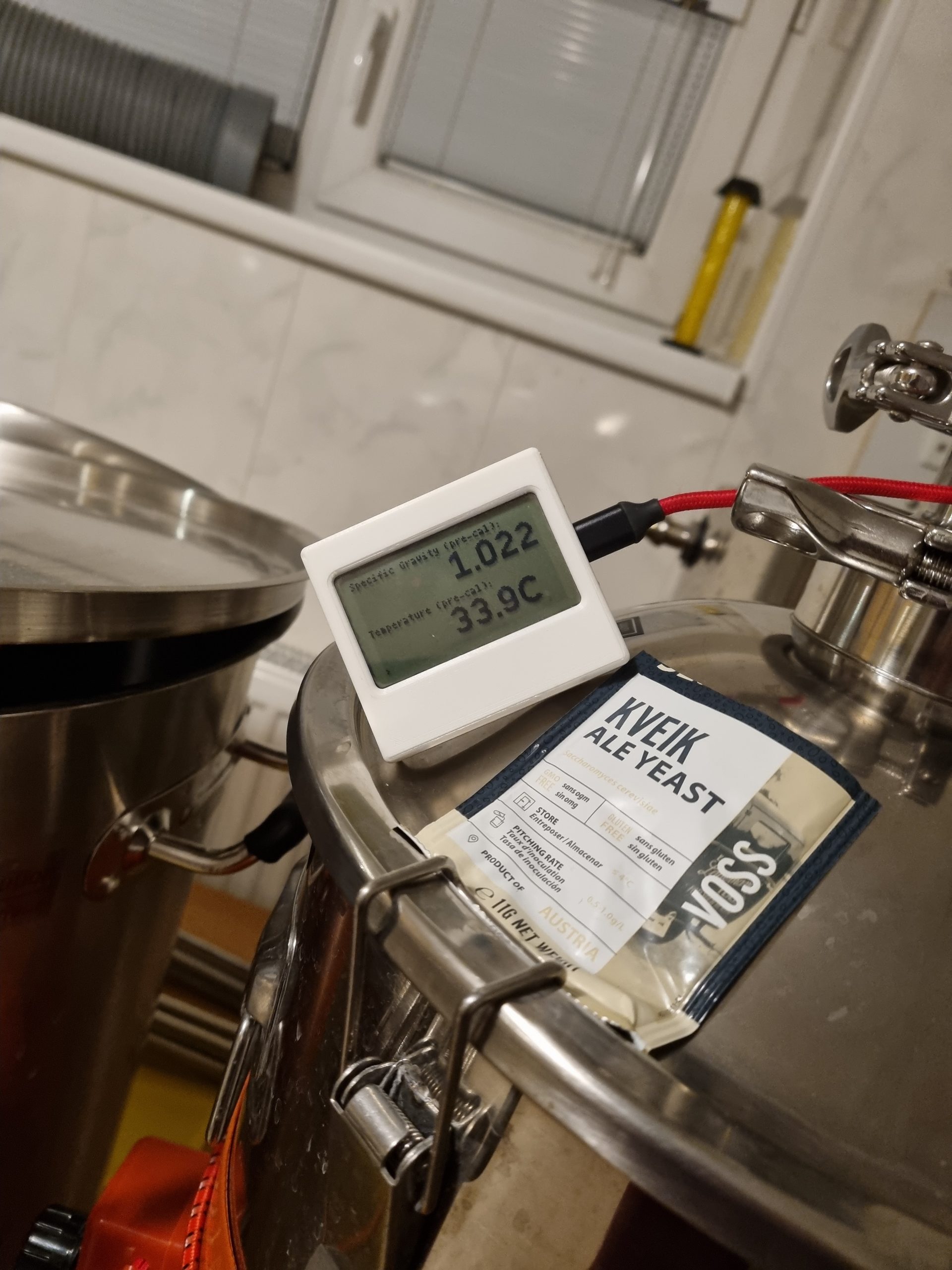
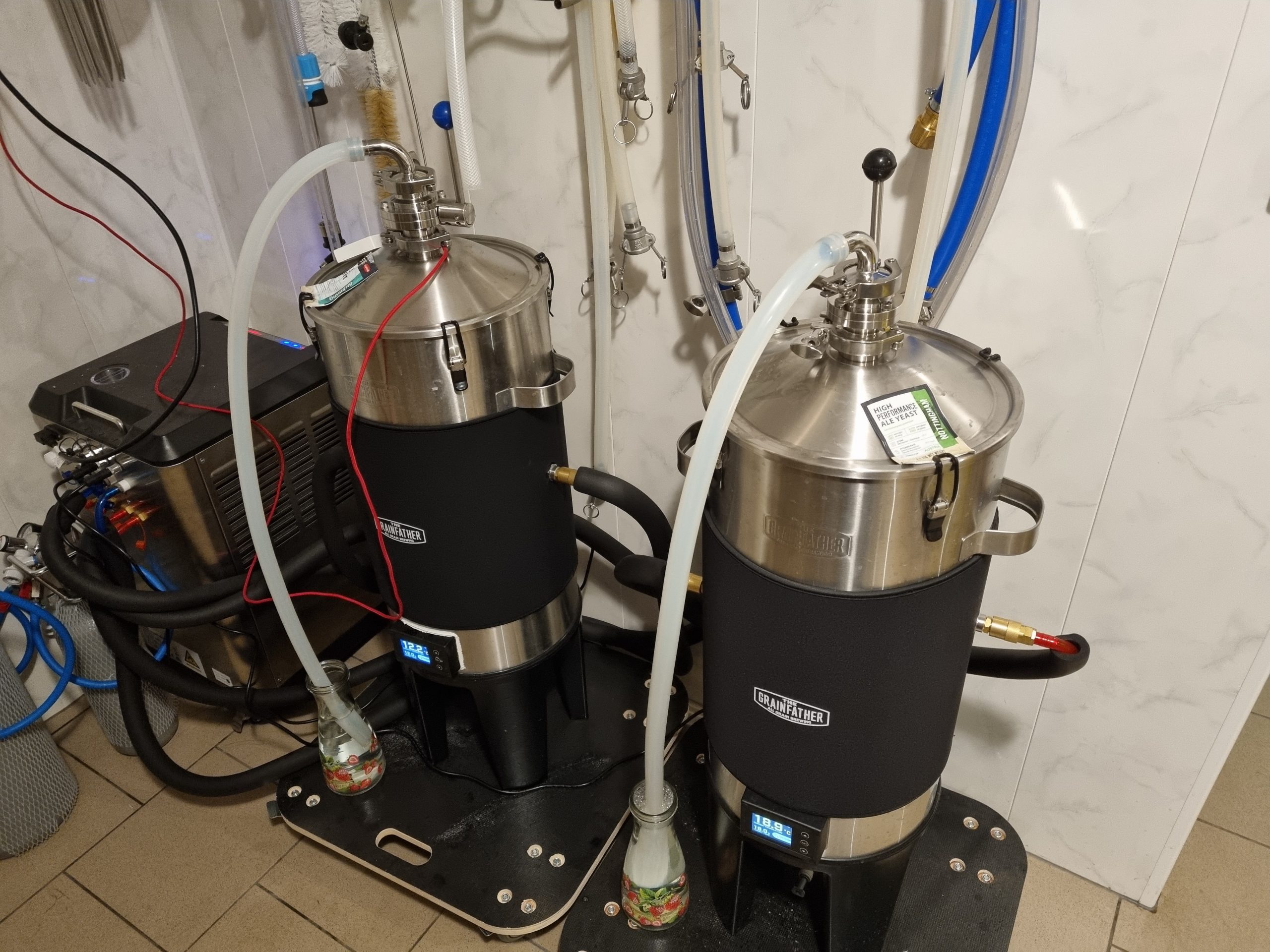
After connecting my BT signal amplifiers (and real time “monitors”) I saw that my fermented with heating belt had heated to +45C. My first thought was “god damn, I killed the yeast”. I pulled the plug and left it for the night. In the morning this is the first thing I checked and I was not surprised that the beer was fermenting fine. The Voss Kveik yeast are monsters after all. This beer finished fermenting first.
Bottling and kegging
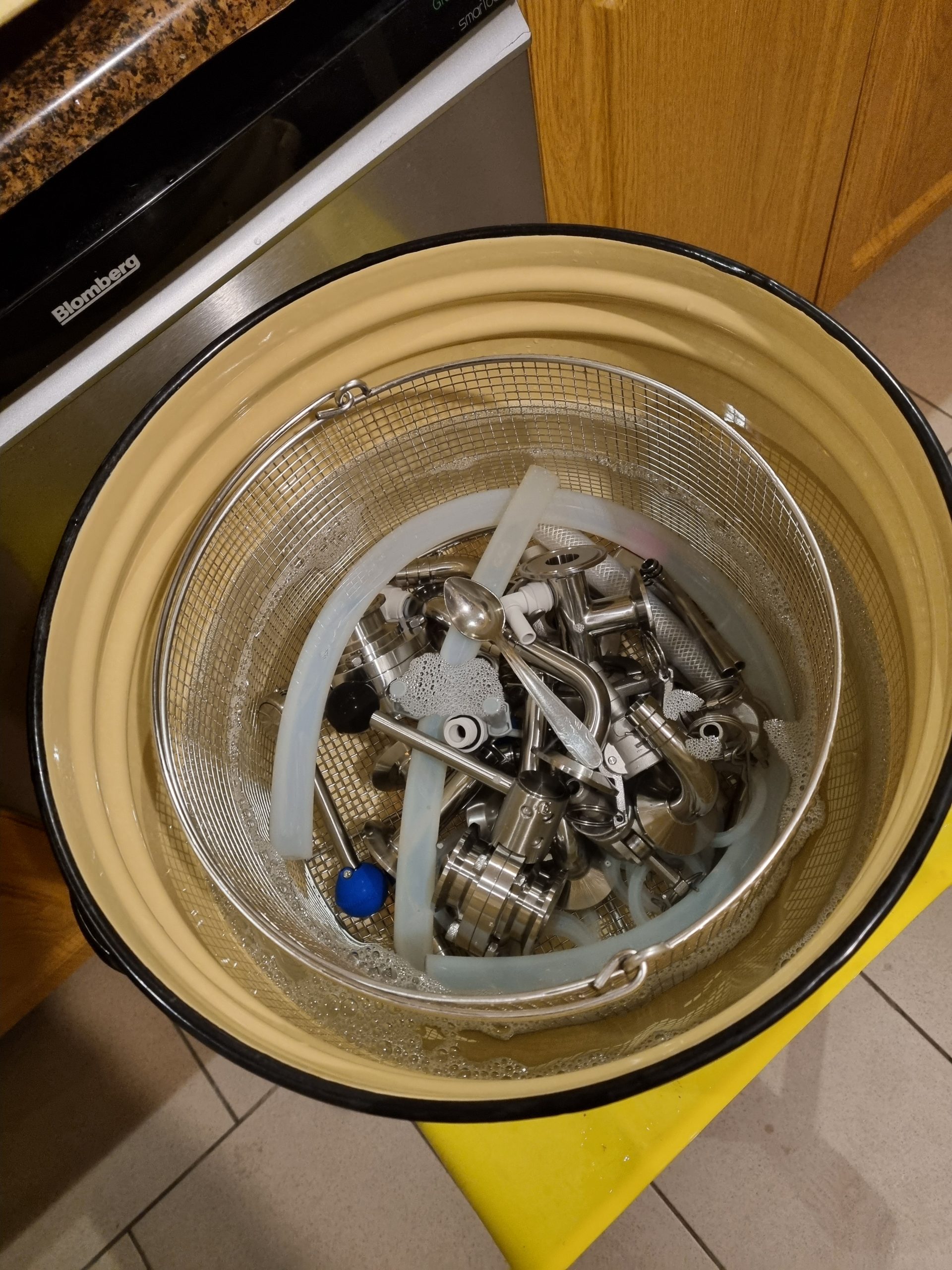
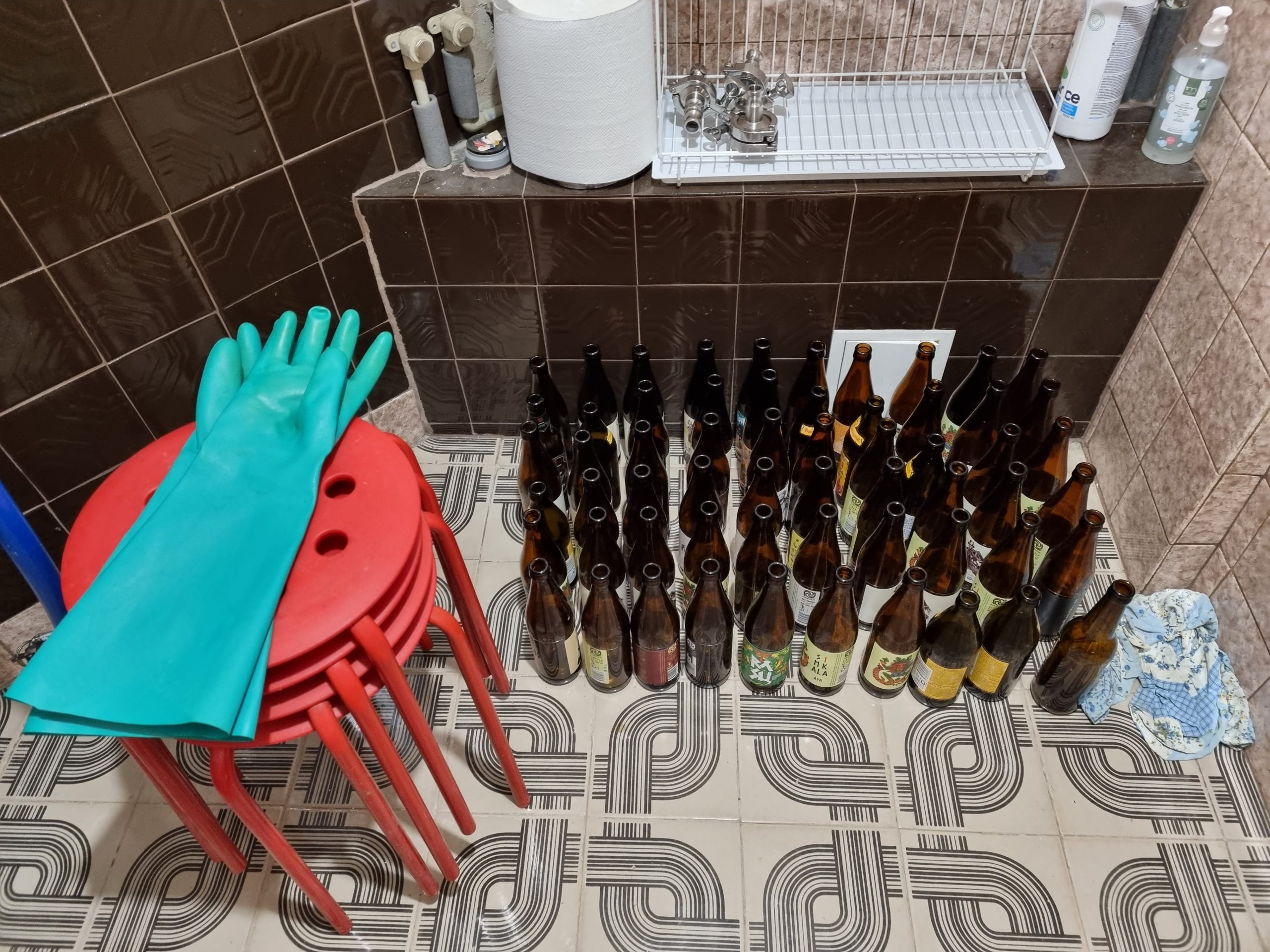
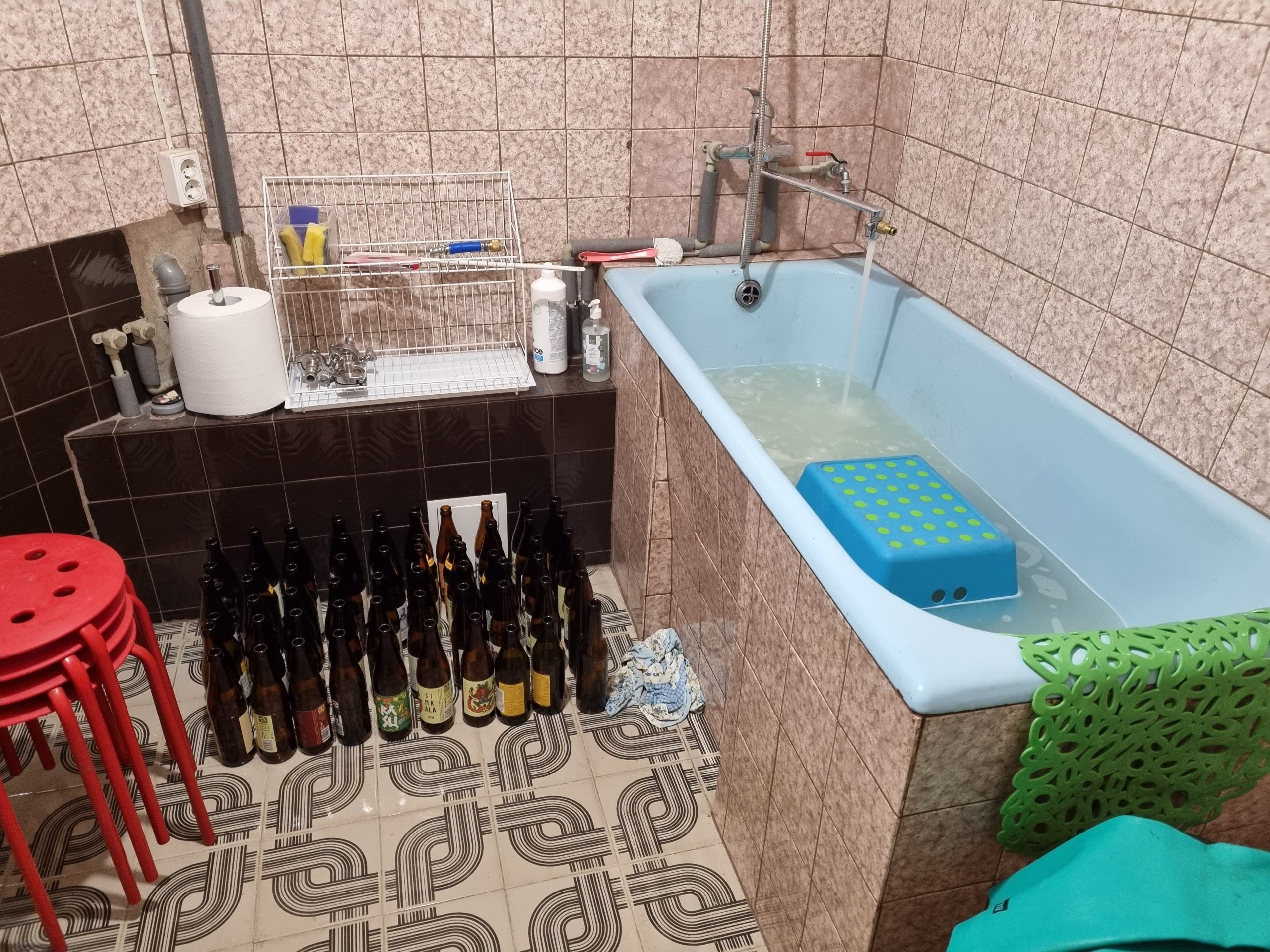
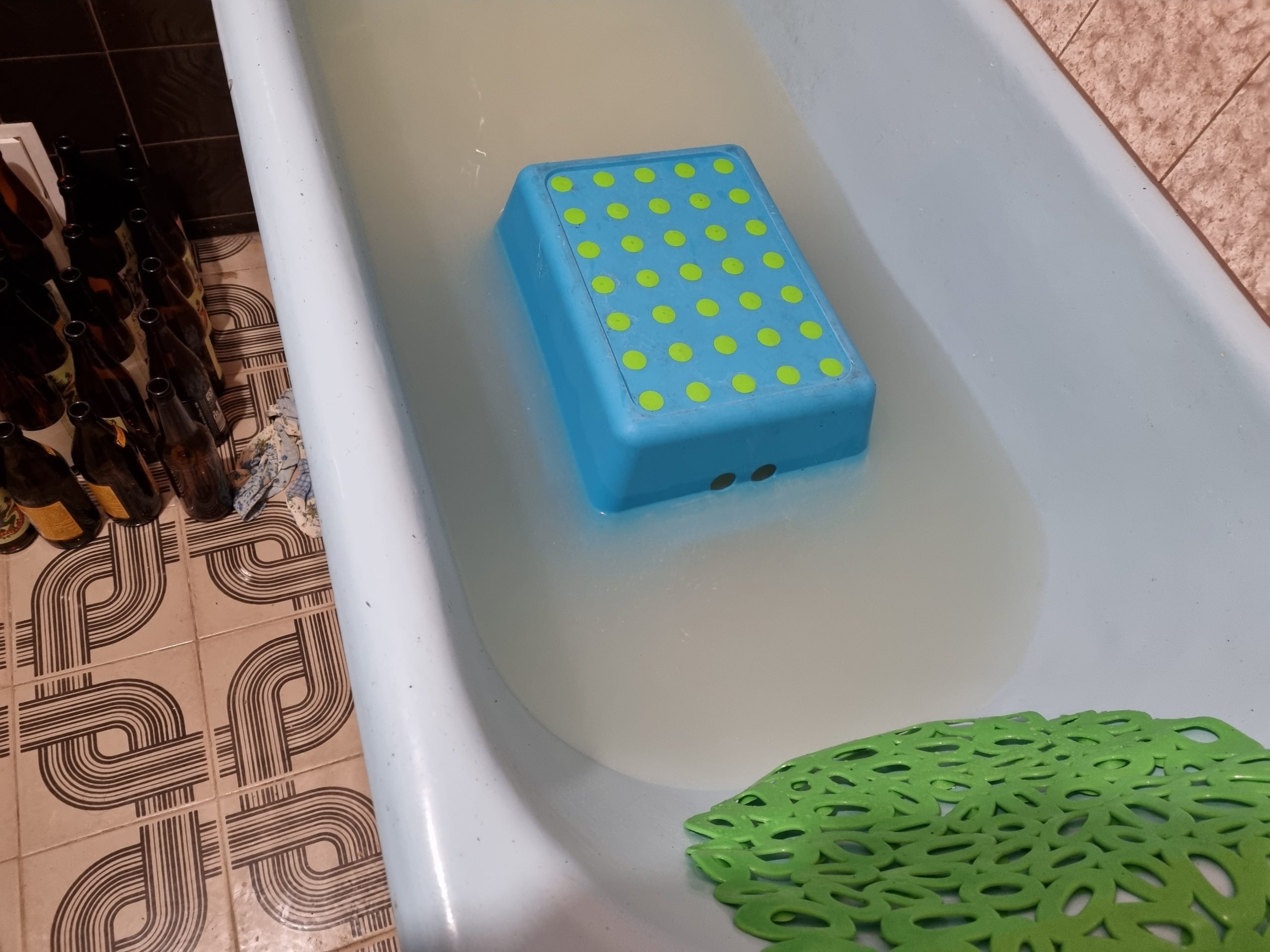
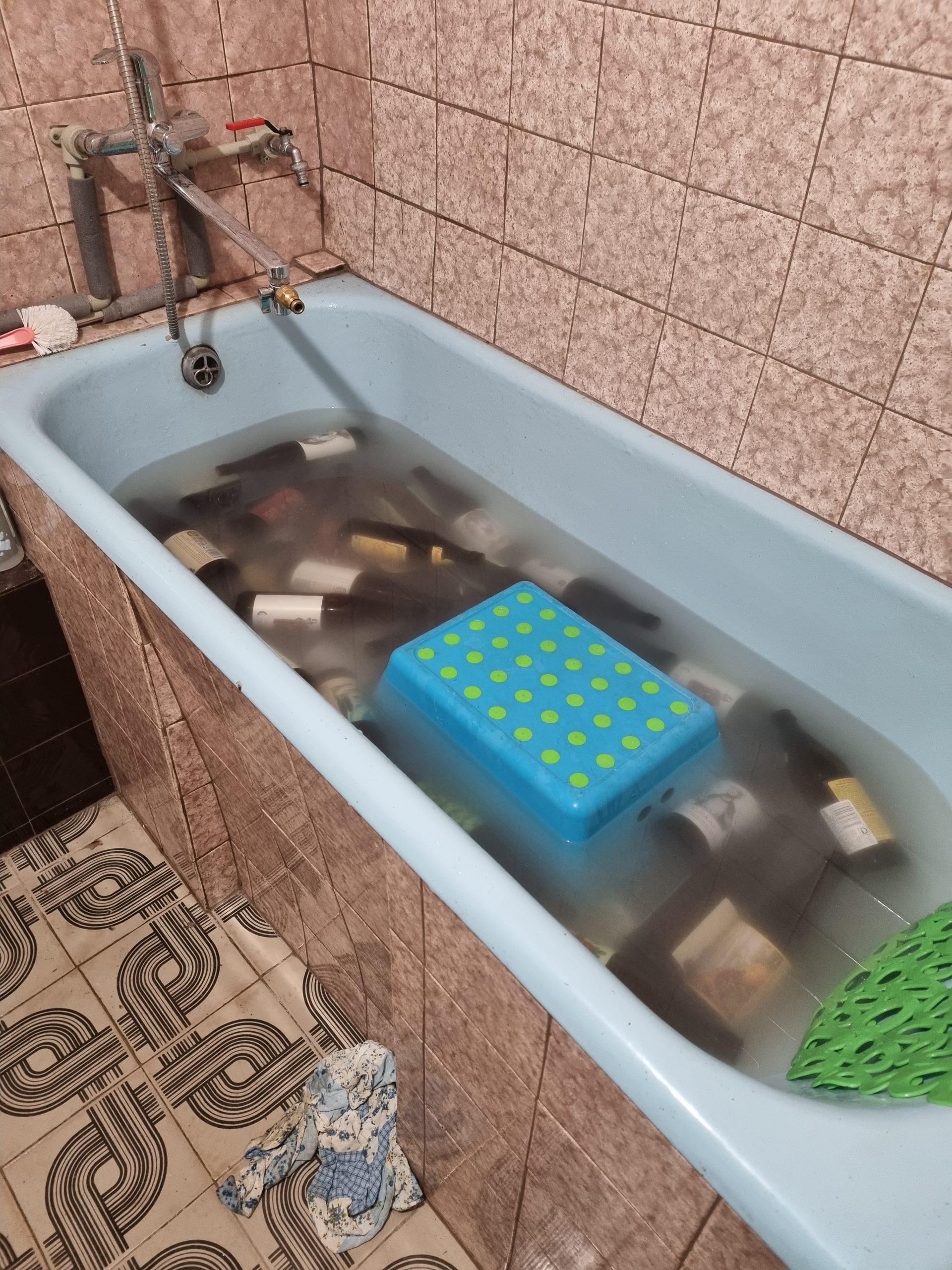
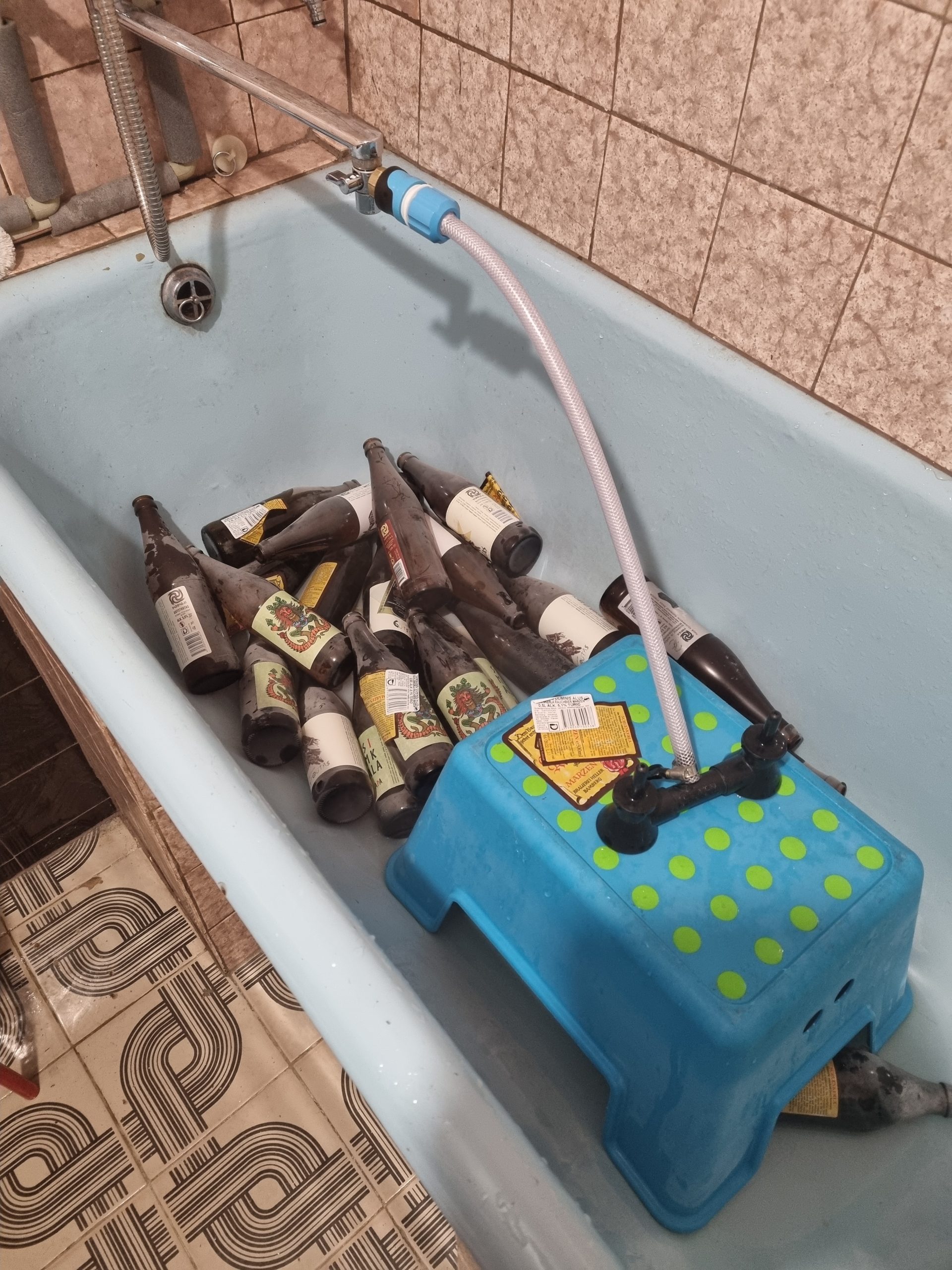
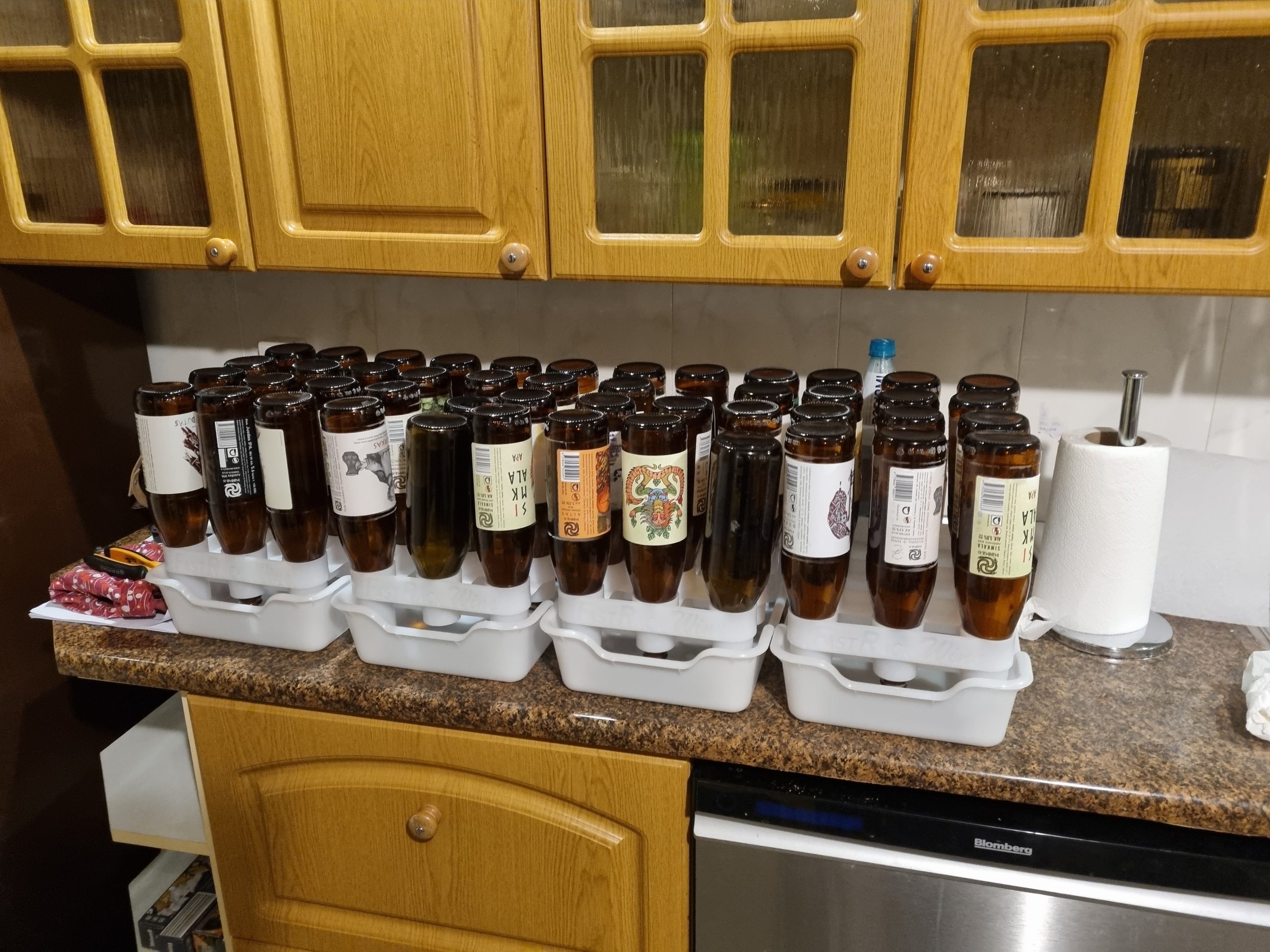
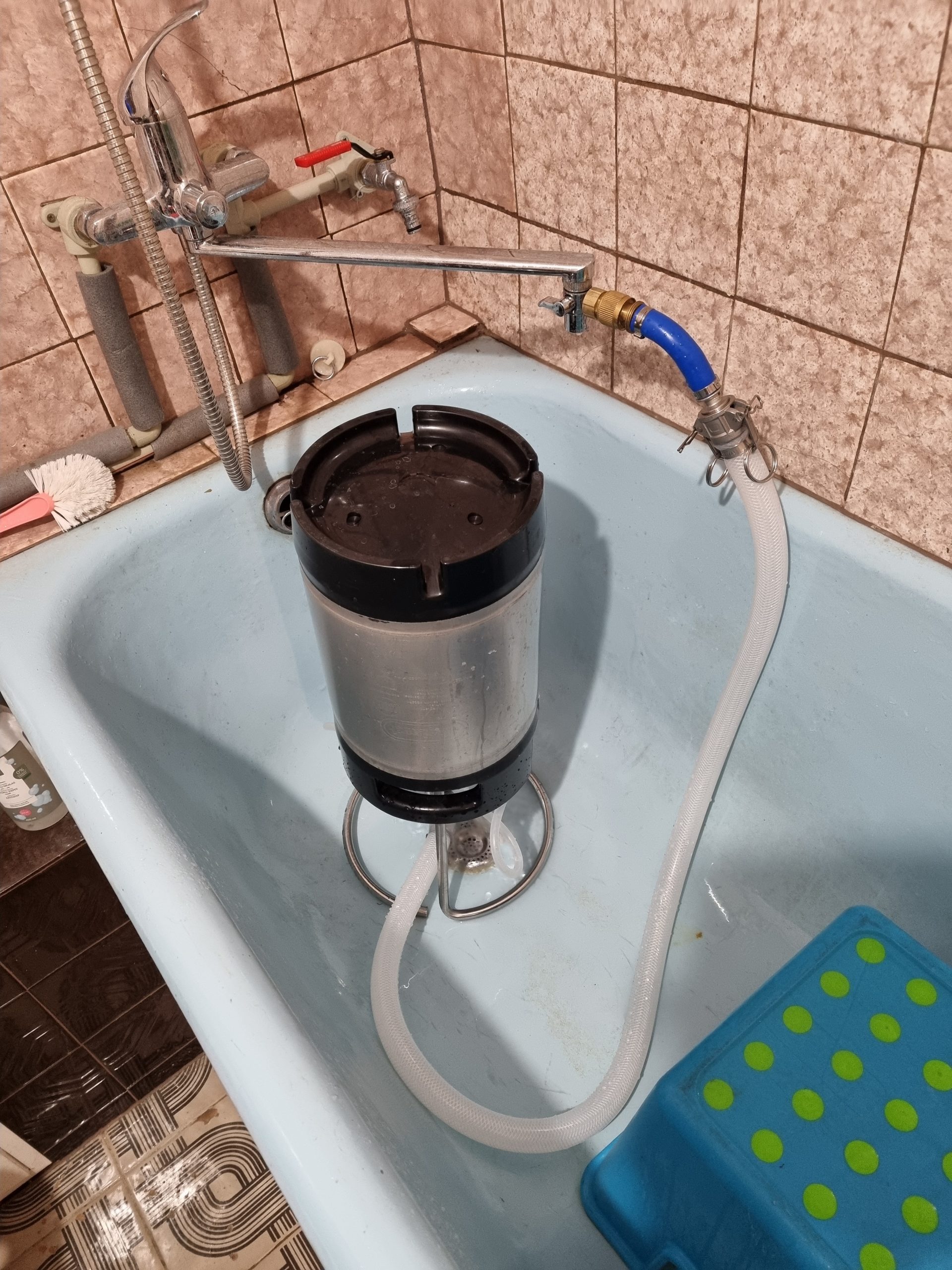
Almost a year since I bottled a beer (was using kegs only). Bath tub is perfect for soaking bottles. Used Enzybrew 10 cleaning product. Some bottles as you can see has a very tough labels, so I don’t even try to remove them.
Black Kveik
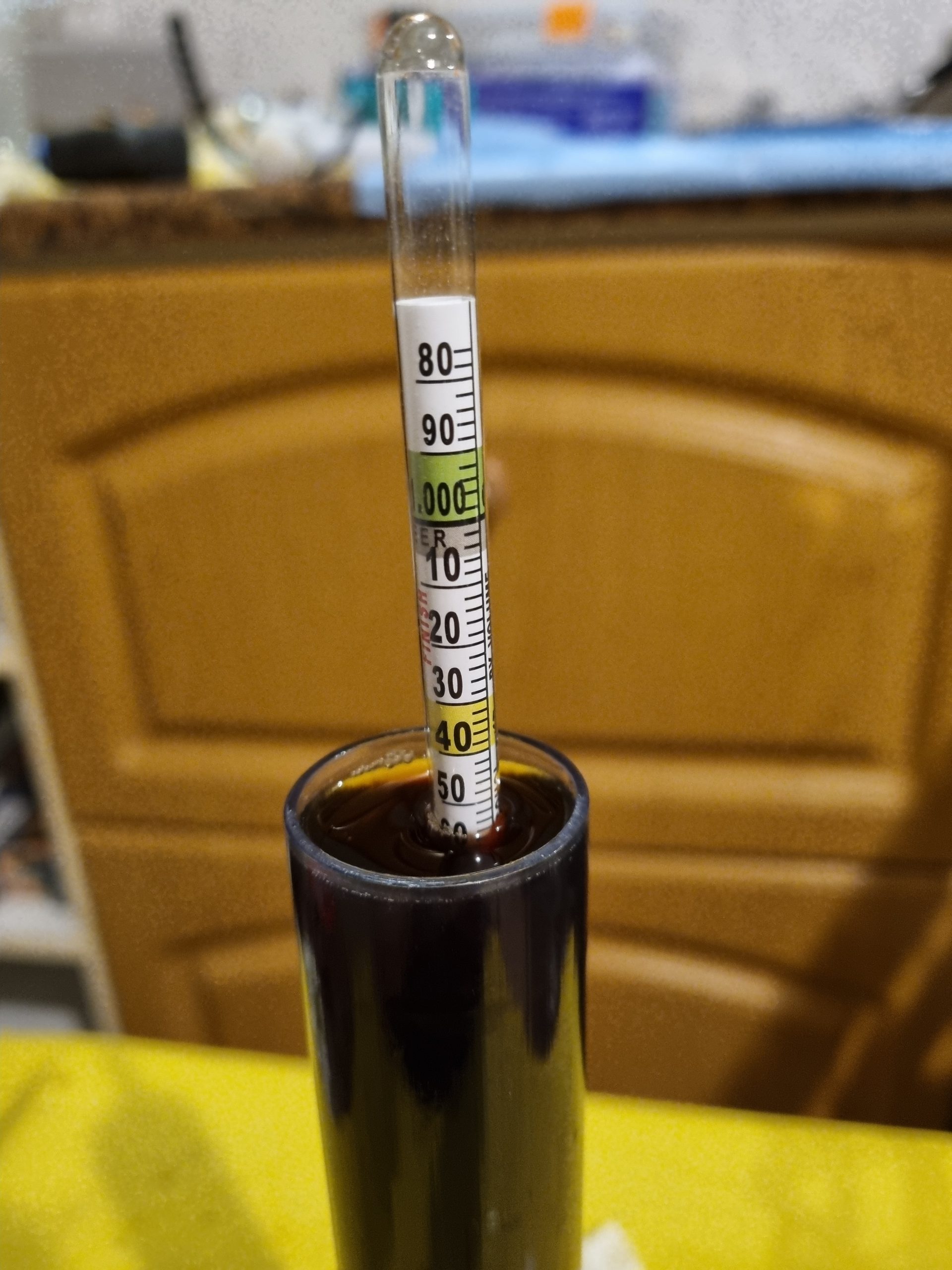
F.G. 1.012, ABV 5.78%
This beer was fermented using Lallemand Voss Kveik yeast (a Norwegian farmhouse ale yeast). The fermentation temperature by mistake had reached above 45C. Later on fermented at around 33C. This beer was kegged and primed with sugar for carbonation.
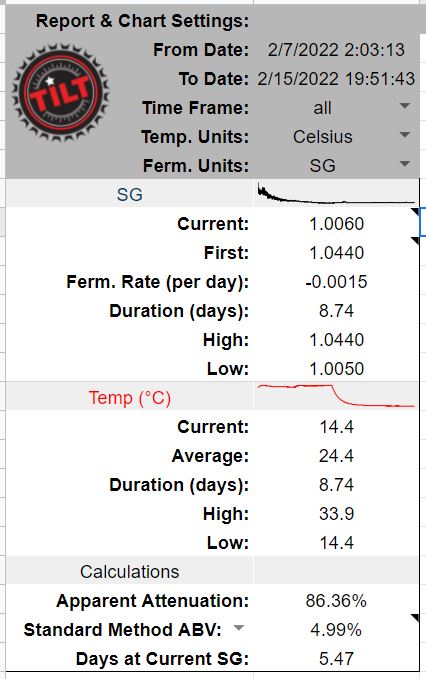
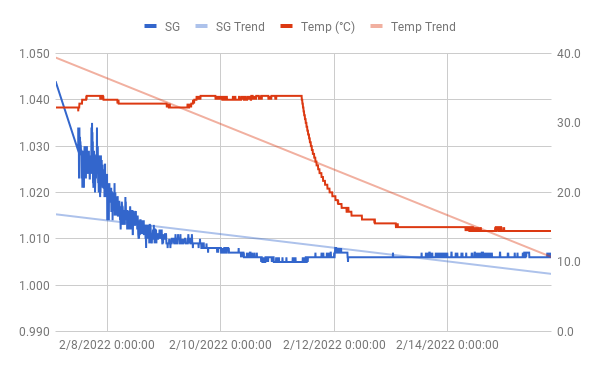
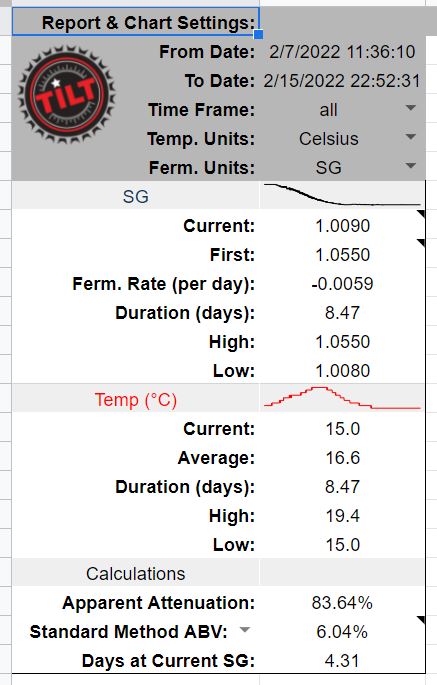
Click image for complete report
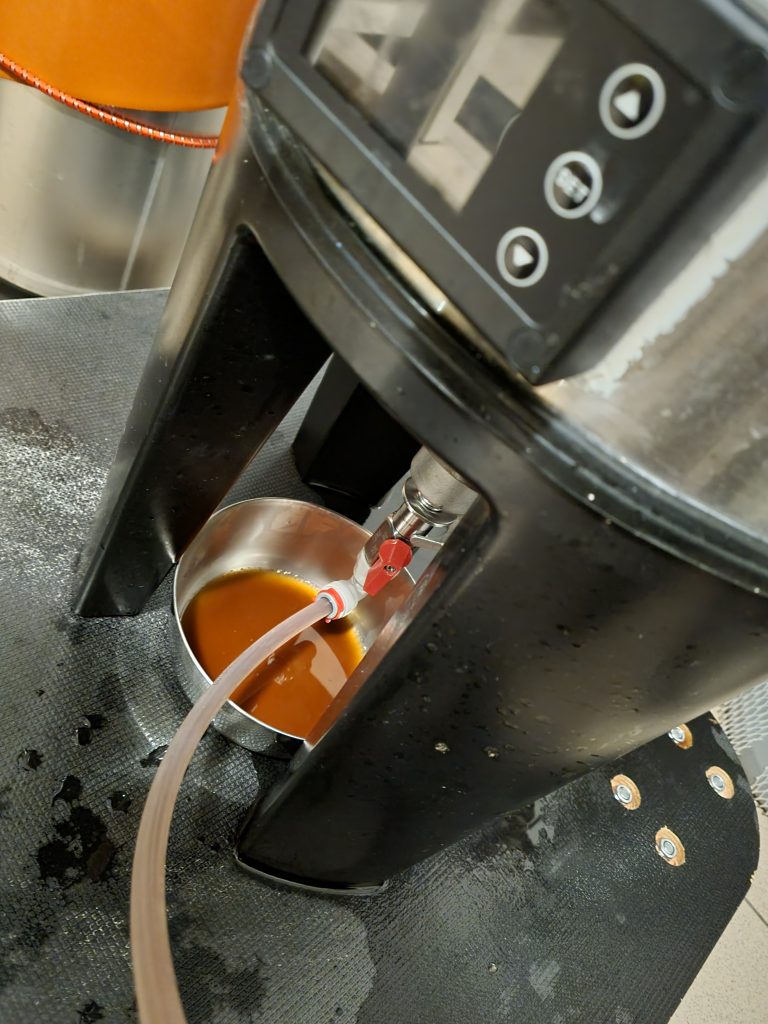
A few days before transferring this beer to keg I noticed that sanitizer bottle is almost empty. Initially I thought it dried out because it was sitting near the heater. So I refilled with another cup of sanitizer. Next day I noticed that sanitizer was quite high in the hose (see picture). On the day of transferring I found out that sanitizer climbed all the way up to the fermenter… I was not amused. How much of sanitizer did it sucked in?
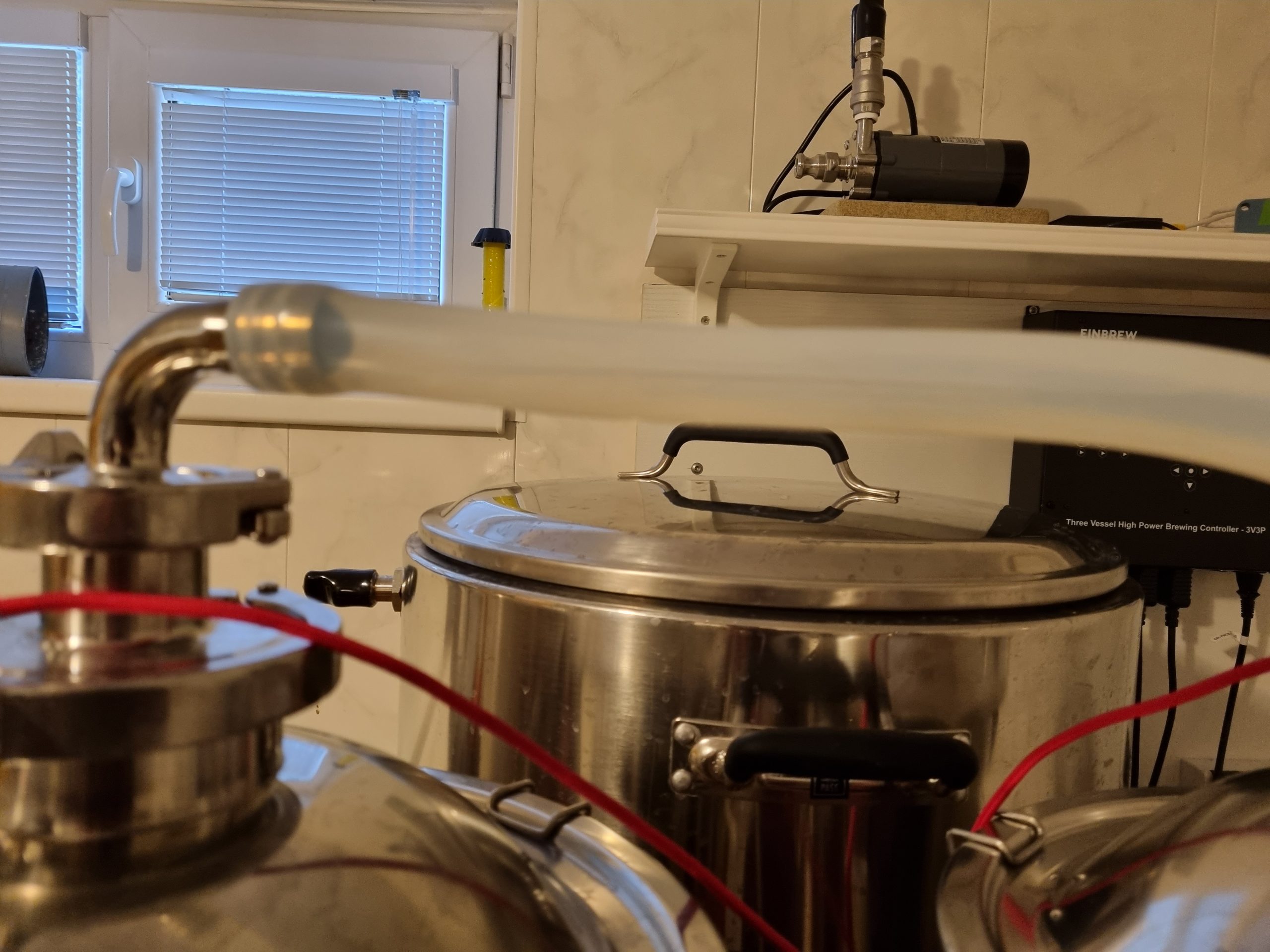
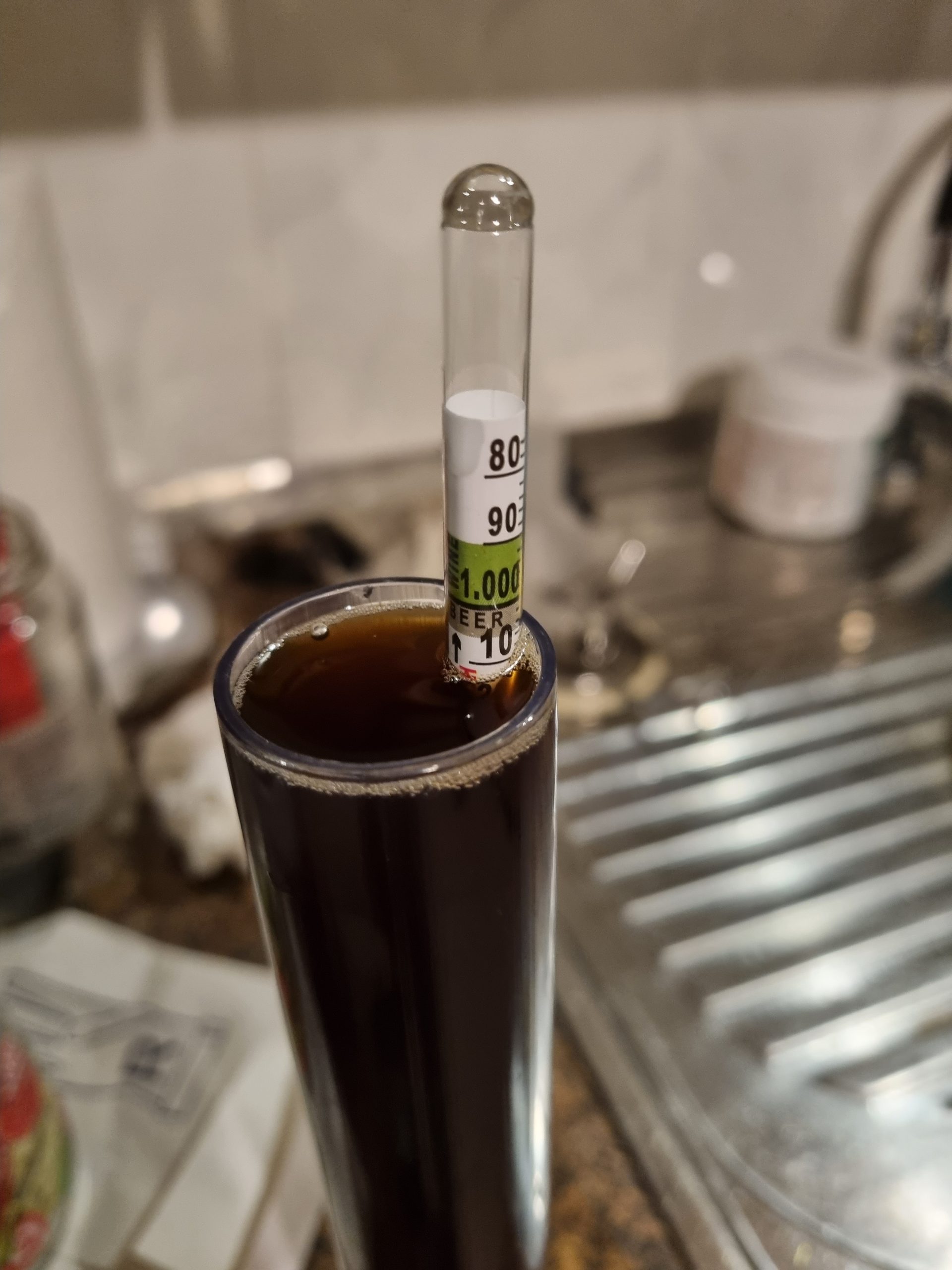
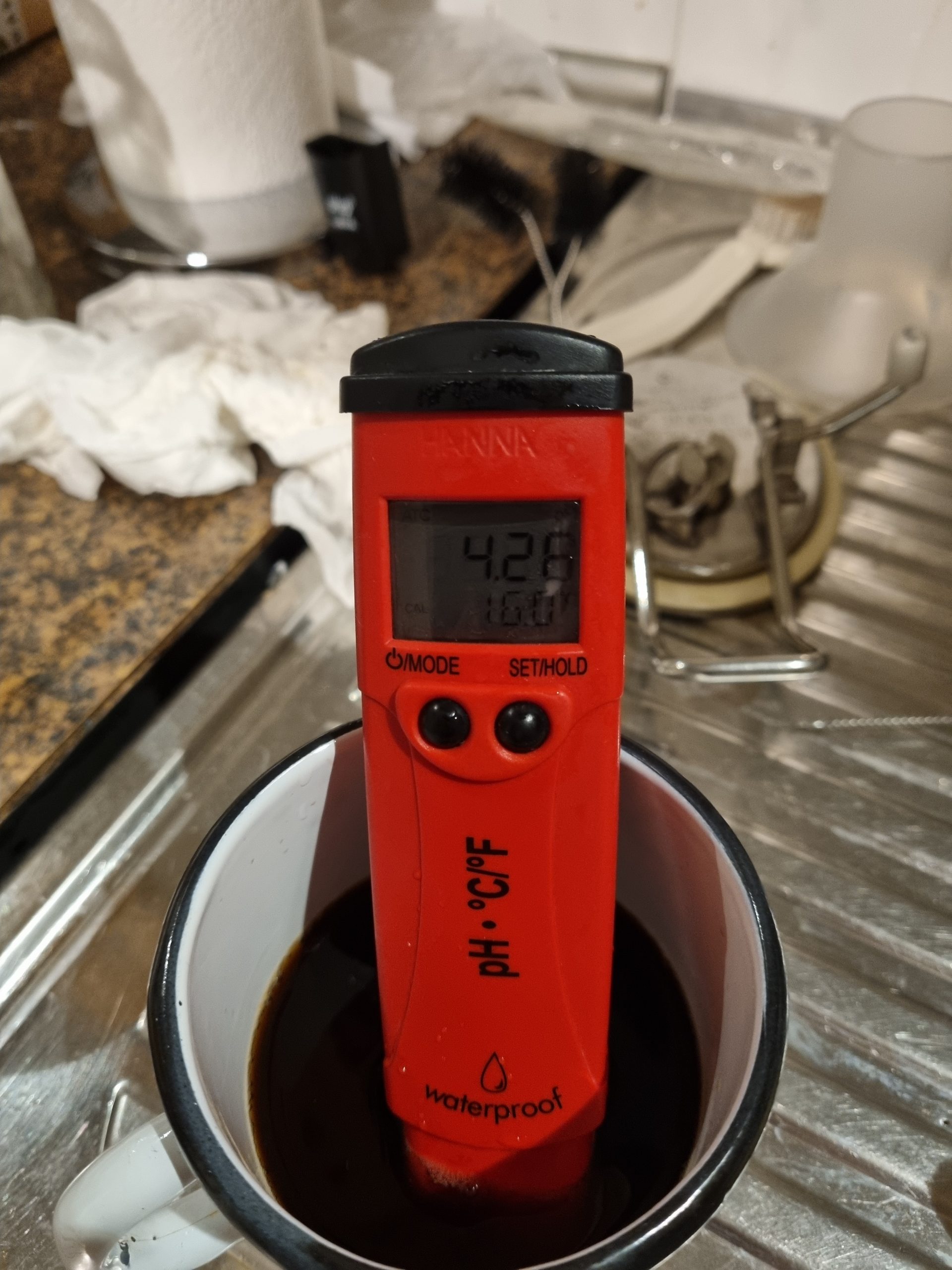
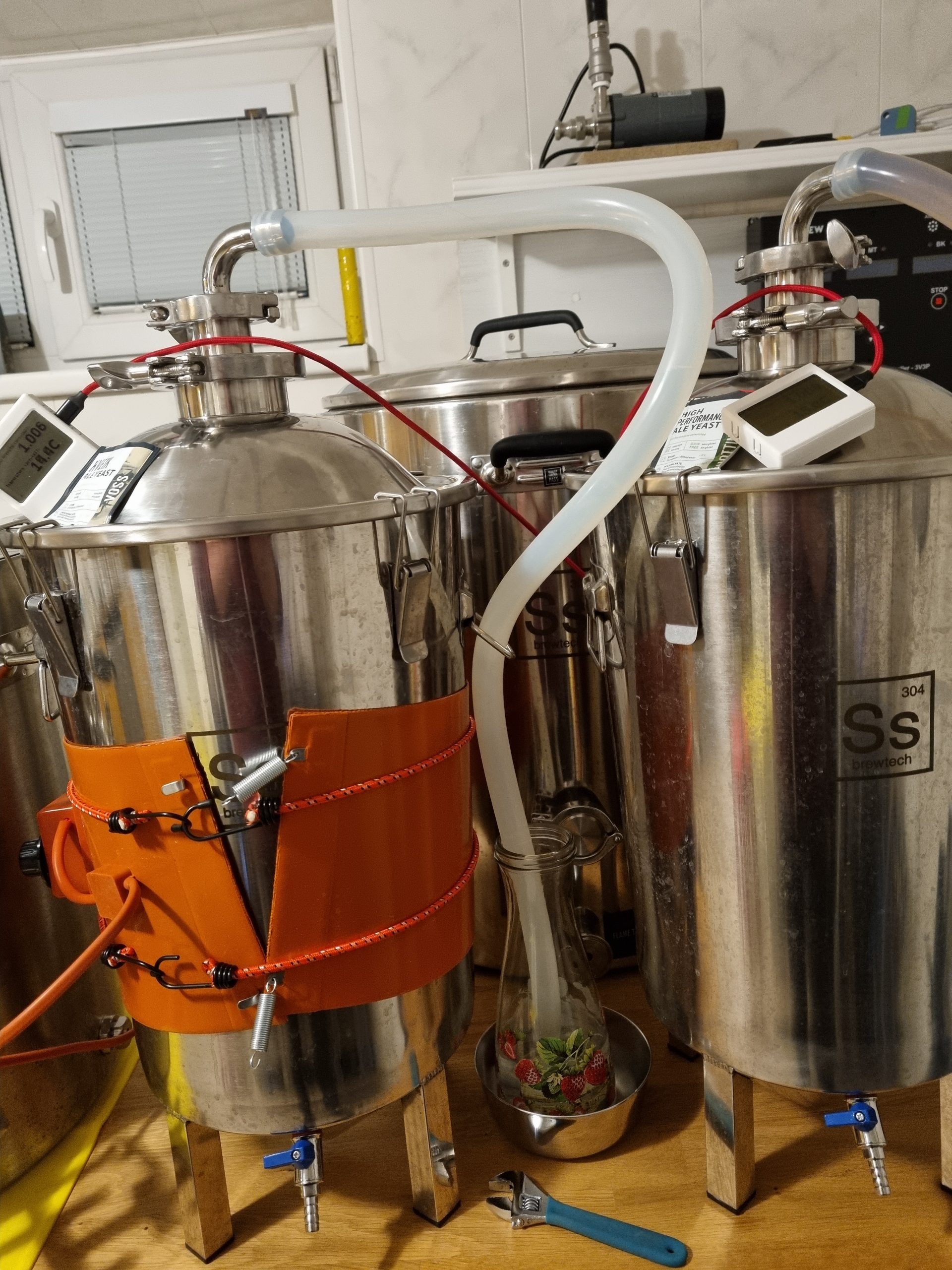
Later I transferred the beer to the keg. It tasted like a normal beer, no unexpected sour taste. So maybe beer wasn’t ruined after all.
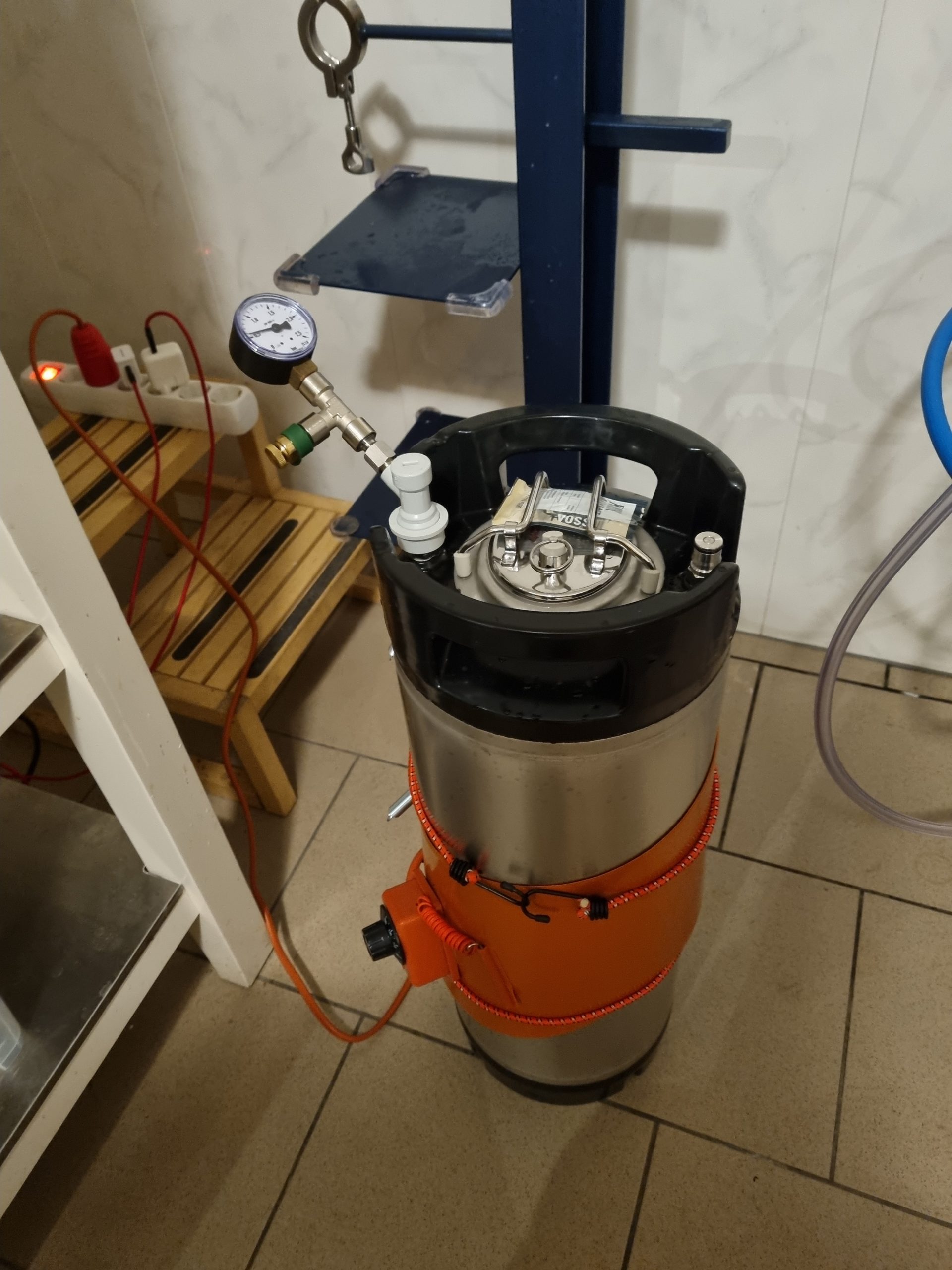
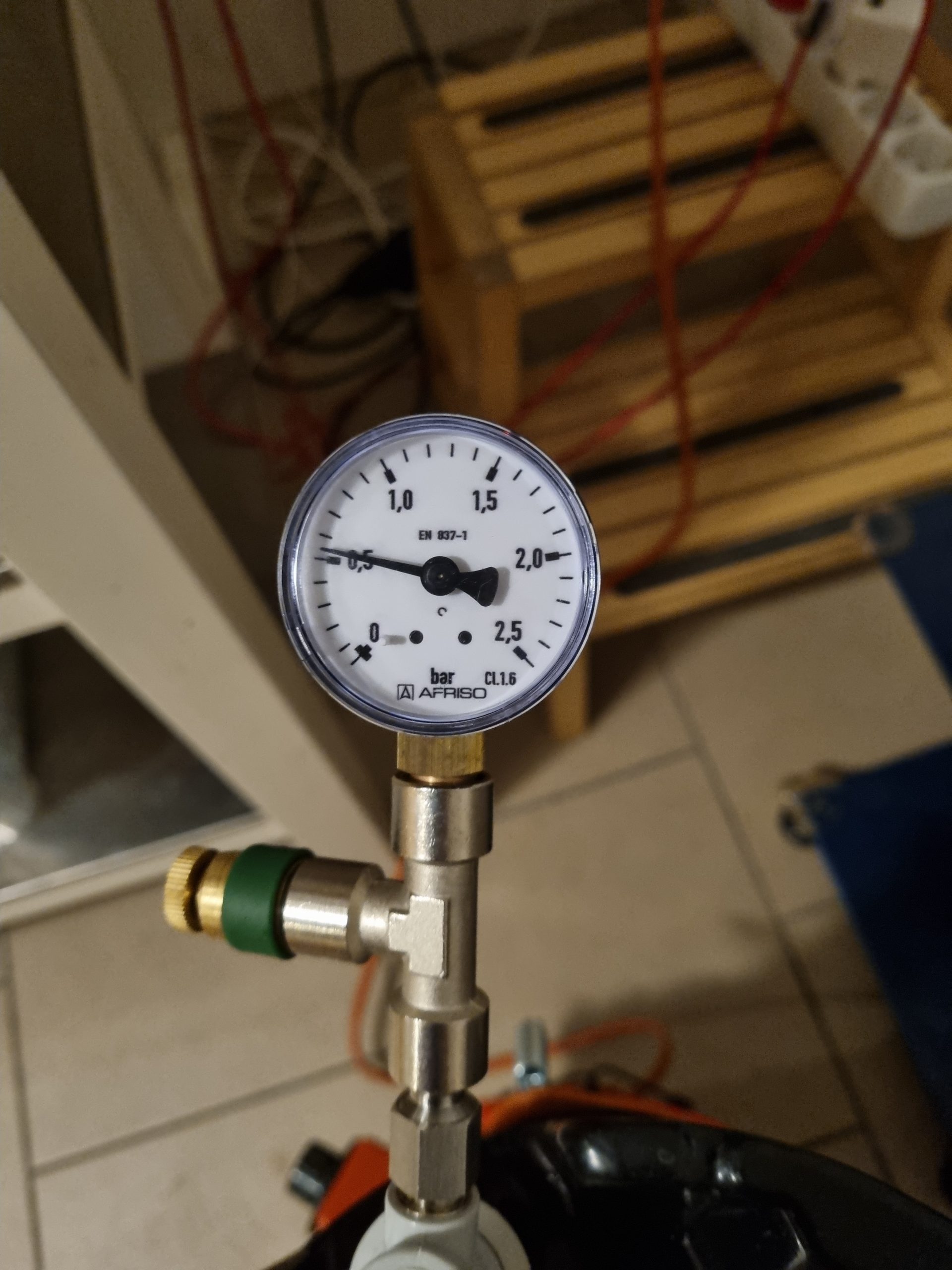
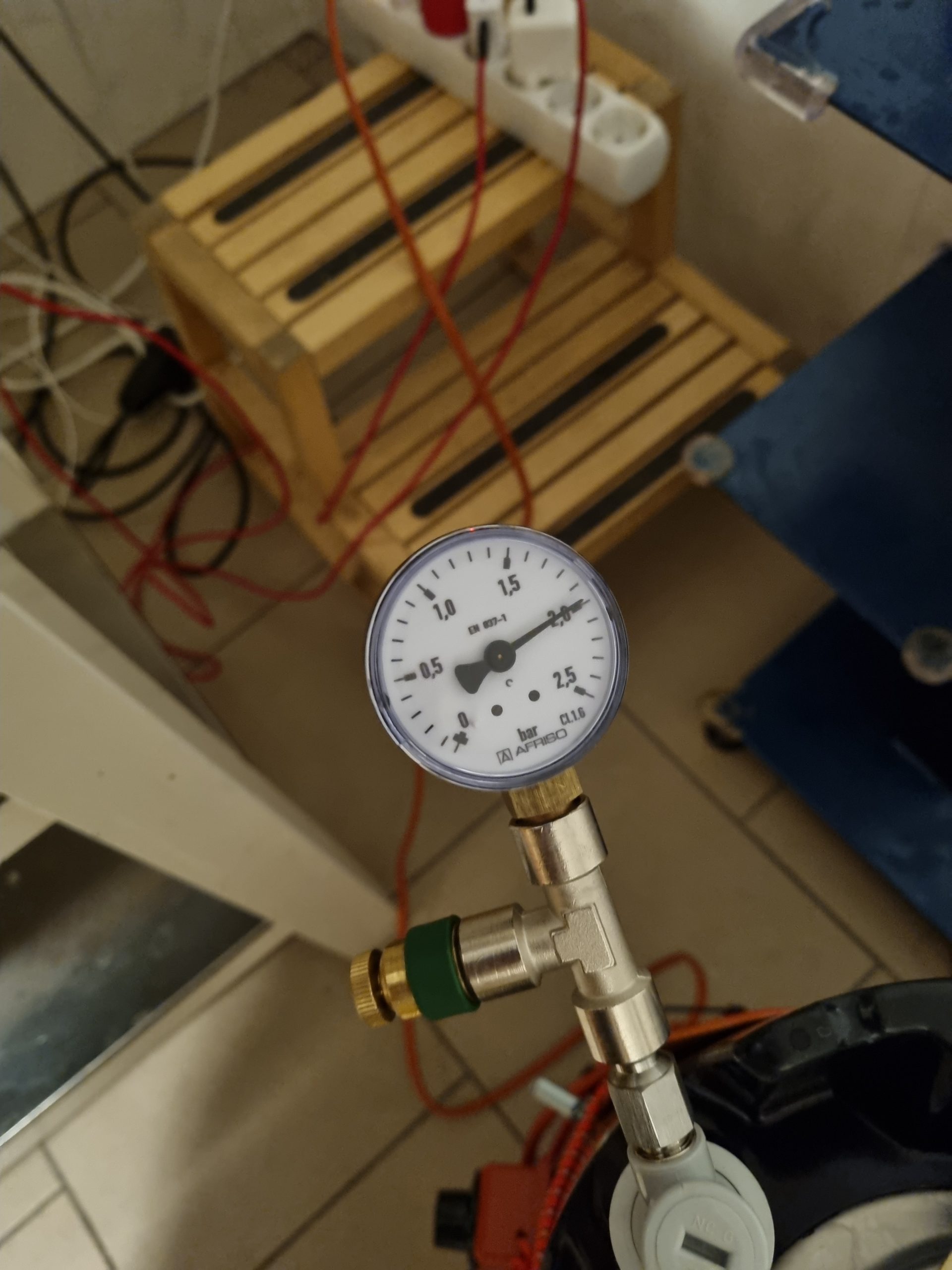
This is the first time I’m trying to carbonize beer in the keg using sugar. For Kveik yeast you also need to heat it. Added spunding valve to monitor the pressure. Pressure has risen to 2 bars in less than three days.
Black Diamond
F.G. 1.012, ABV 5.78%
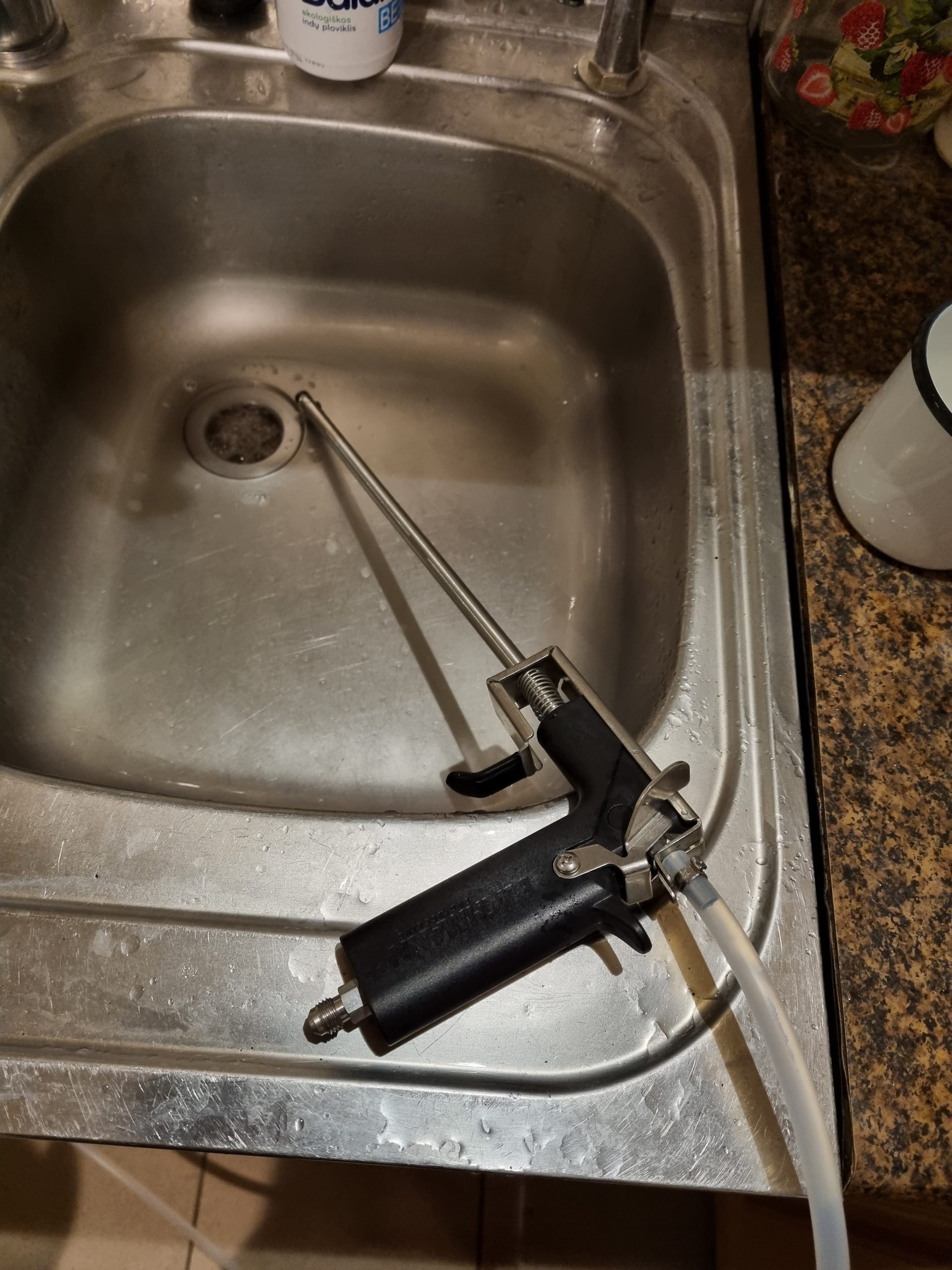
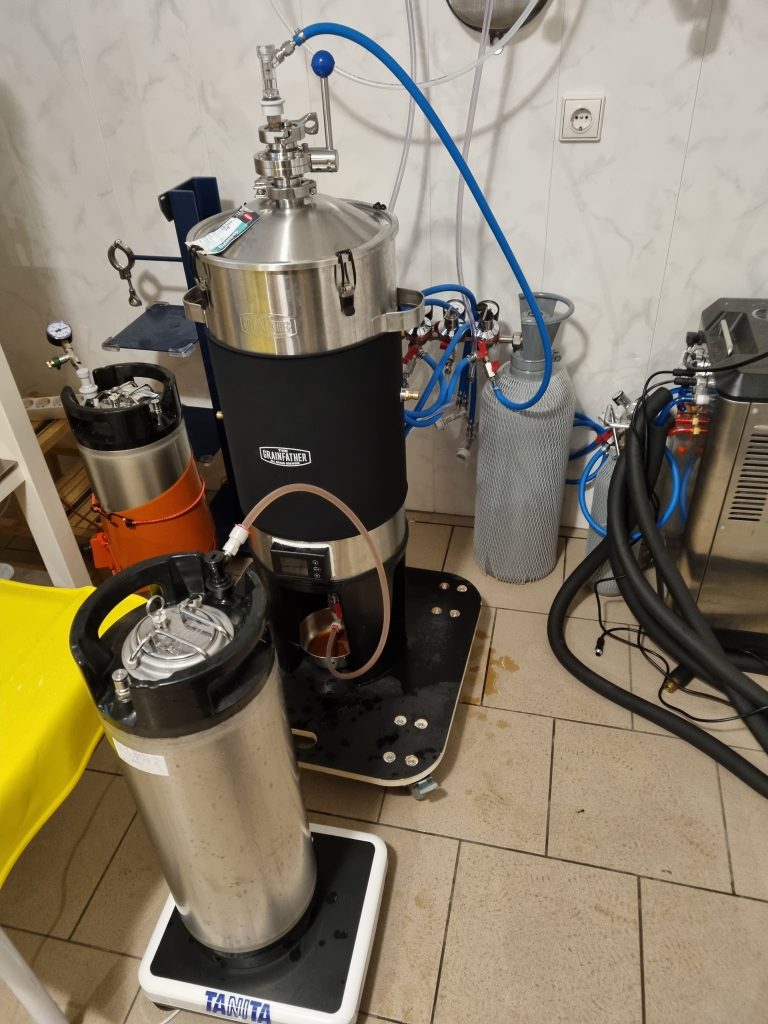
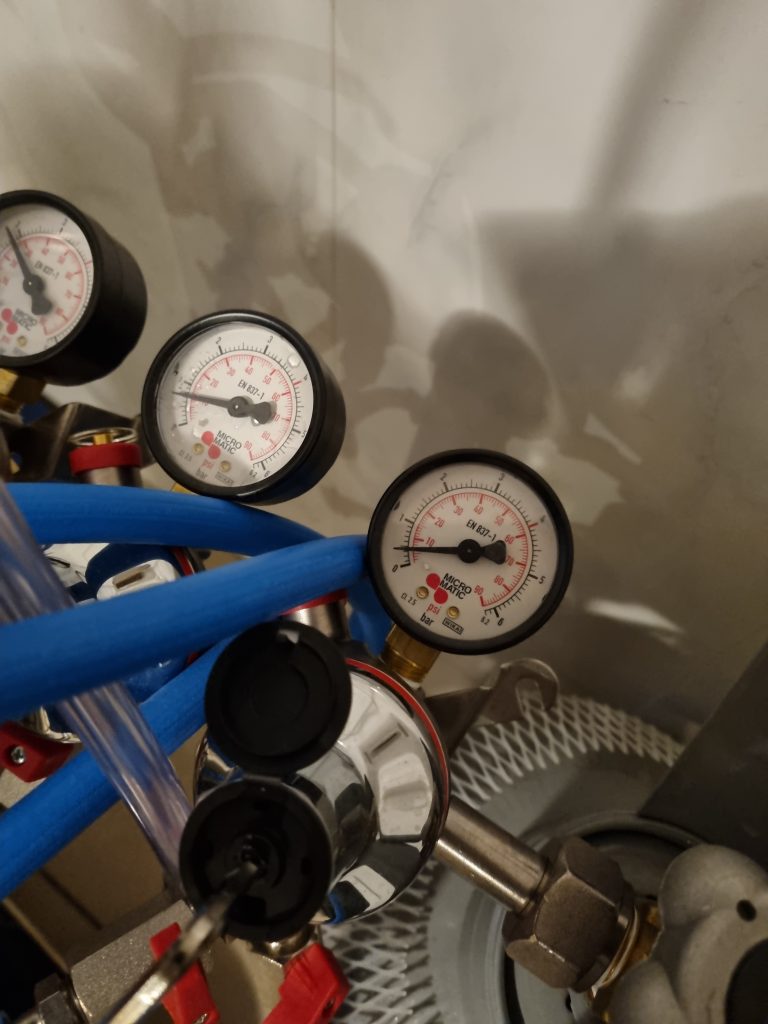
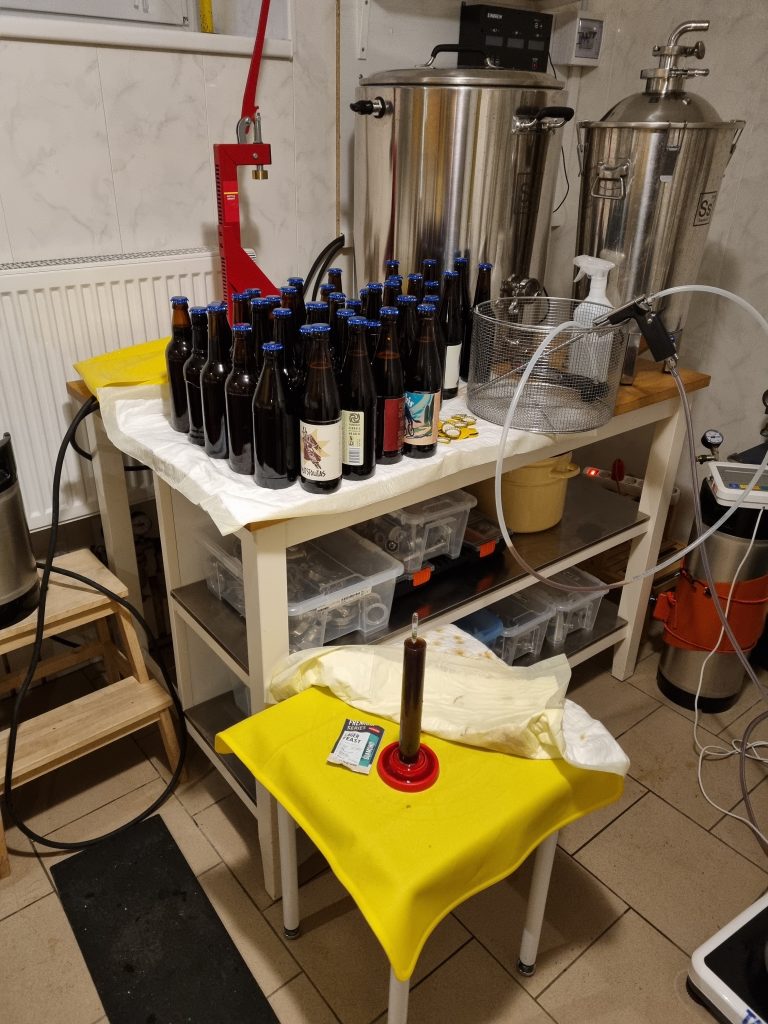
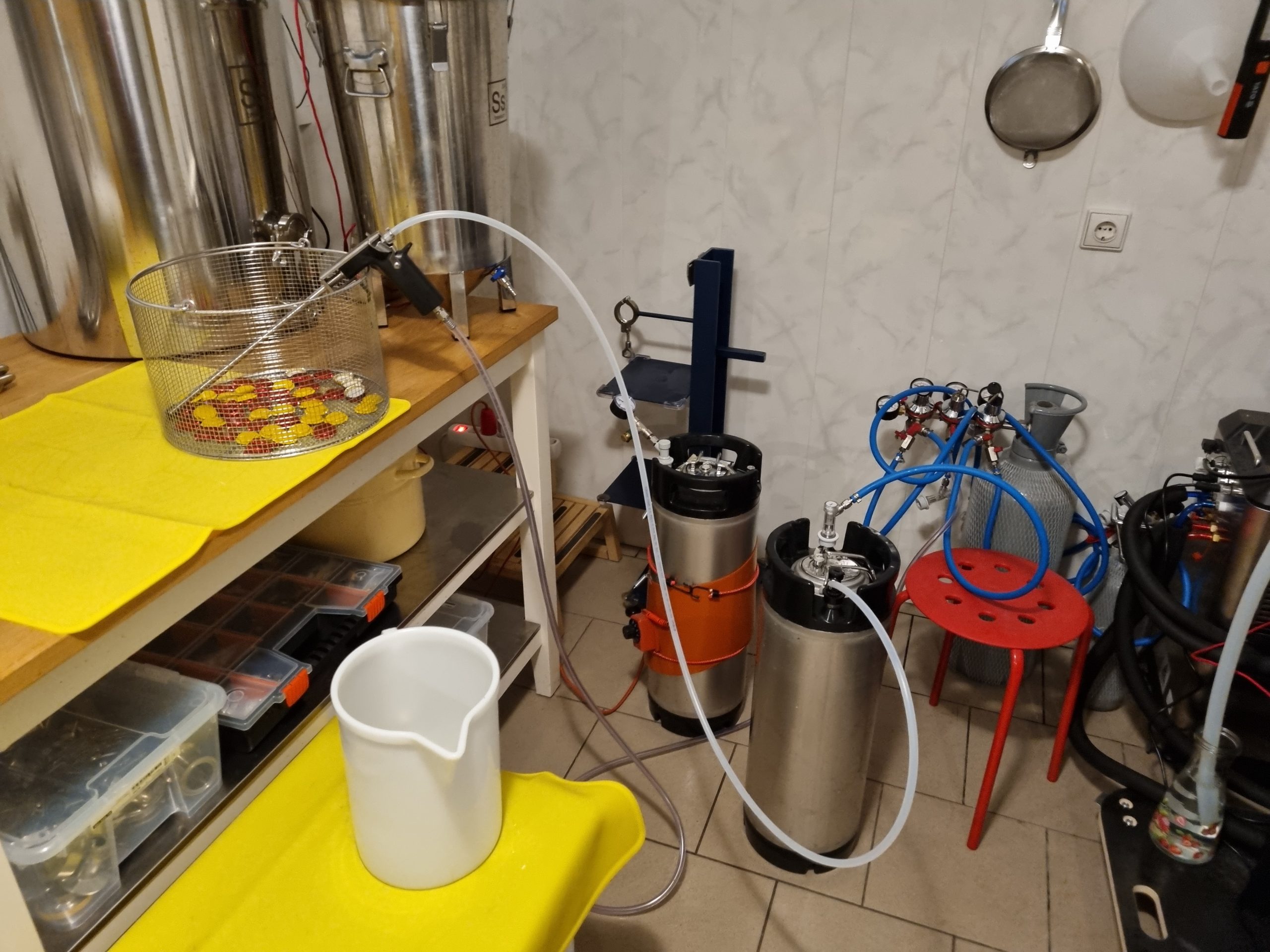
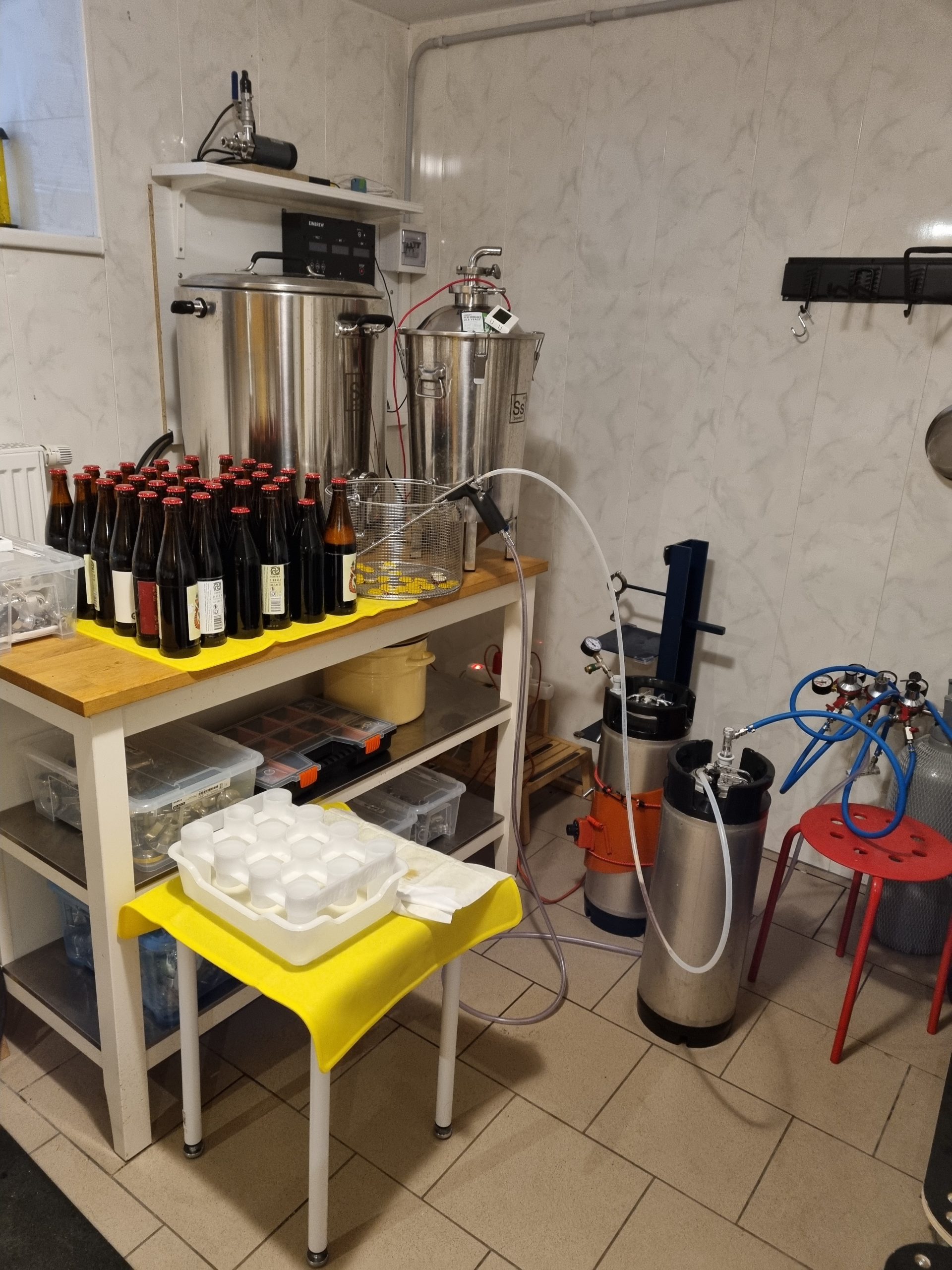
This beer was fermented was fermented at 12C using Lallemand Diamond lager yeast. From initial tastings this seem to me almost exact as using Nottingham yeast. Should be a good beer once matured. It takes at least a month for a stout to truly open. With this batch I first time used Blichmann beergun and keg for bottling. Also as seen from a pictures I had a small trouble with John Guest fittings, but lesson learned without too much spillage.
Black Notty (uncontrolled temperature fermentation)
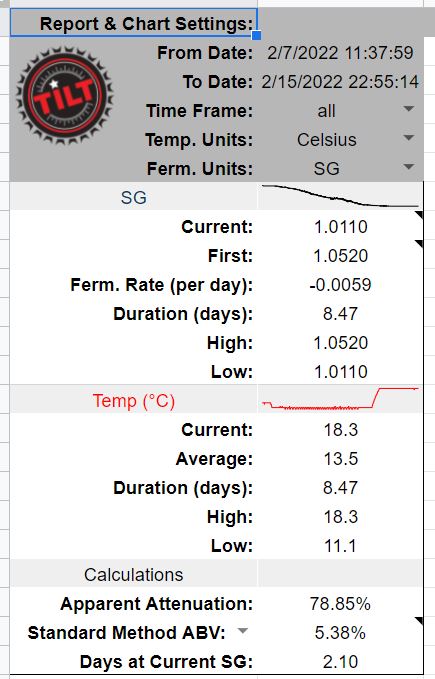
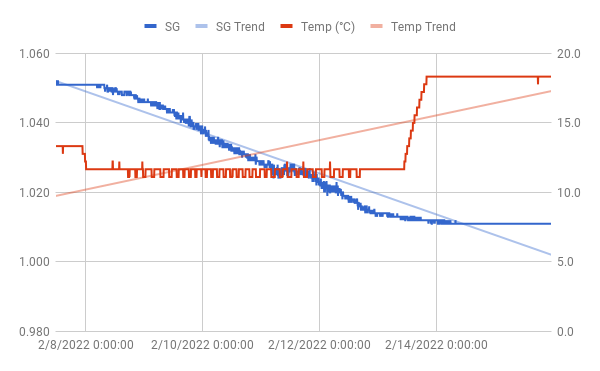
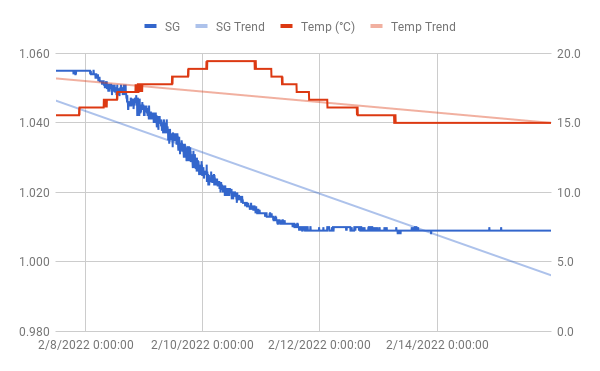
F.G. 1010, ABV 6.04%
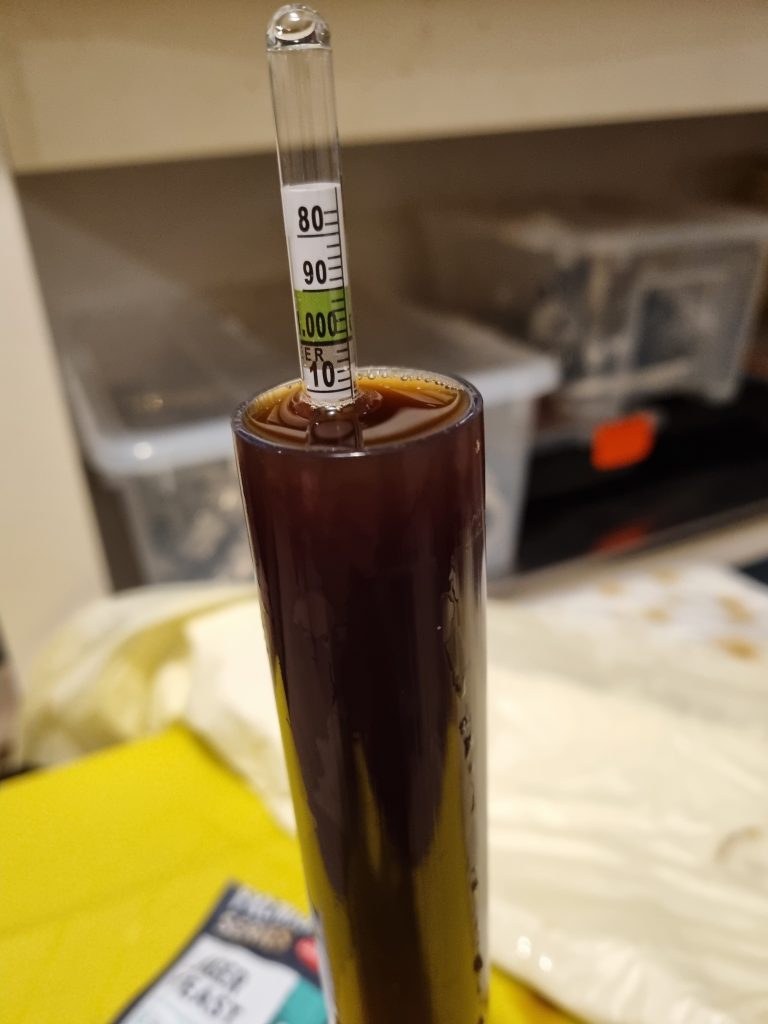
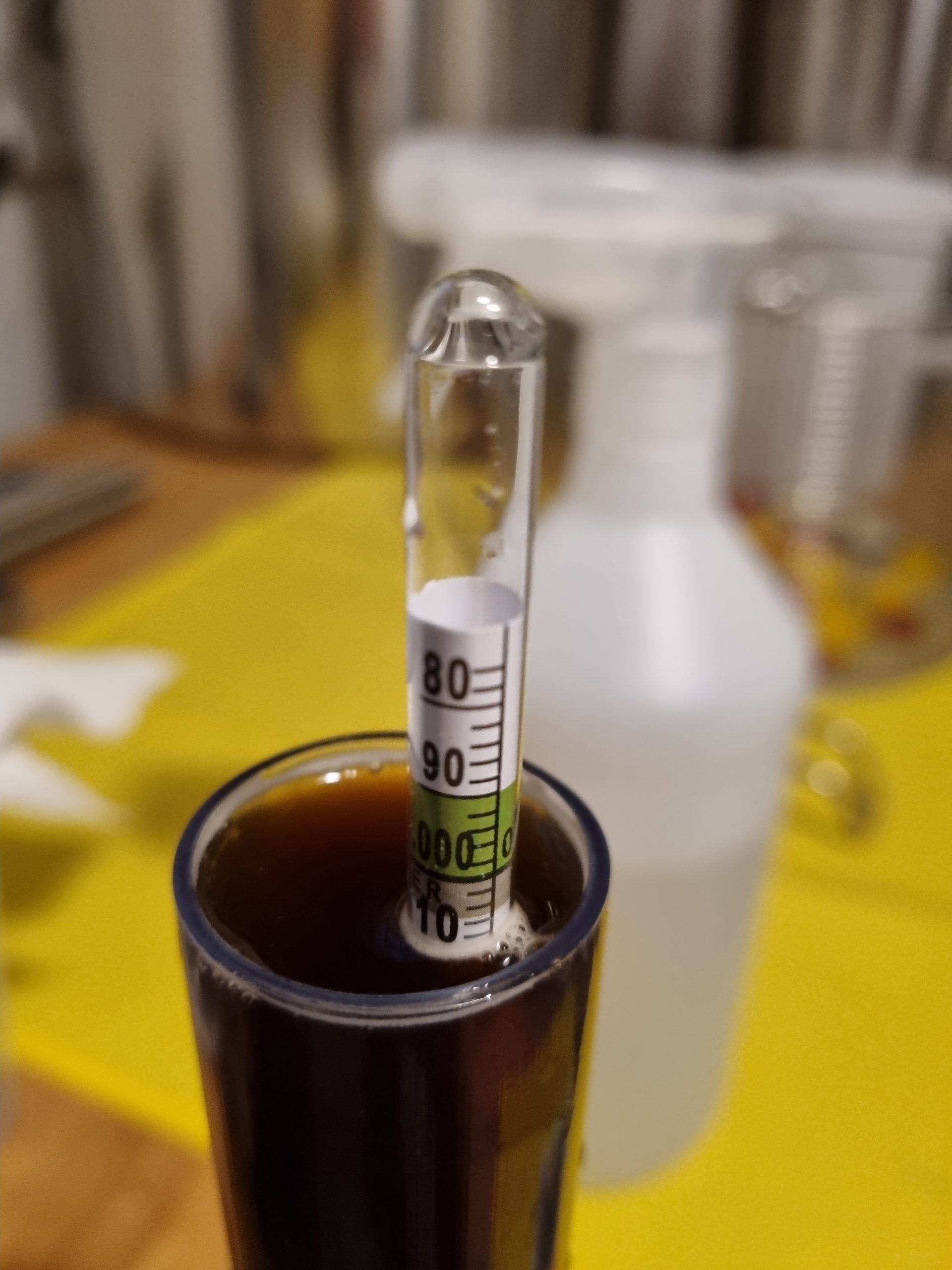
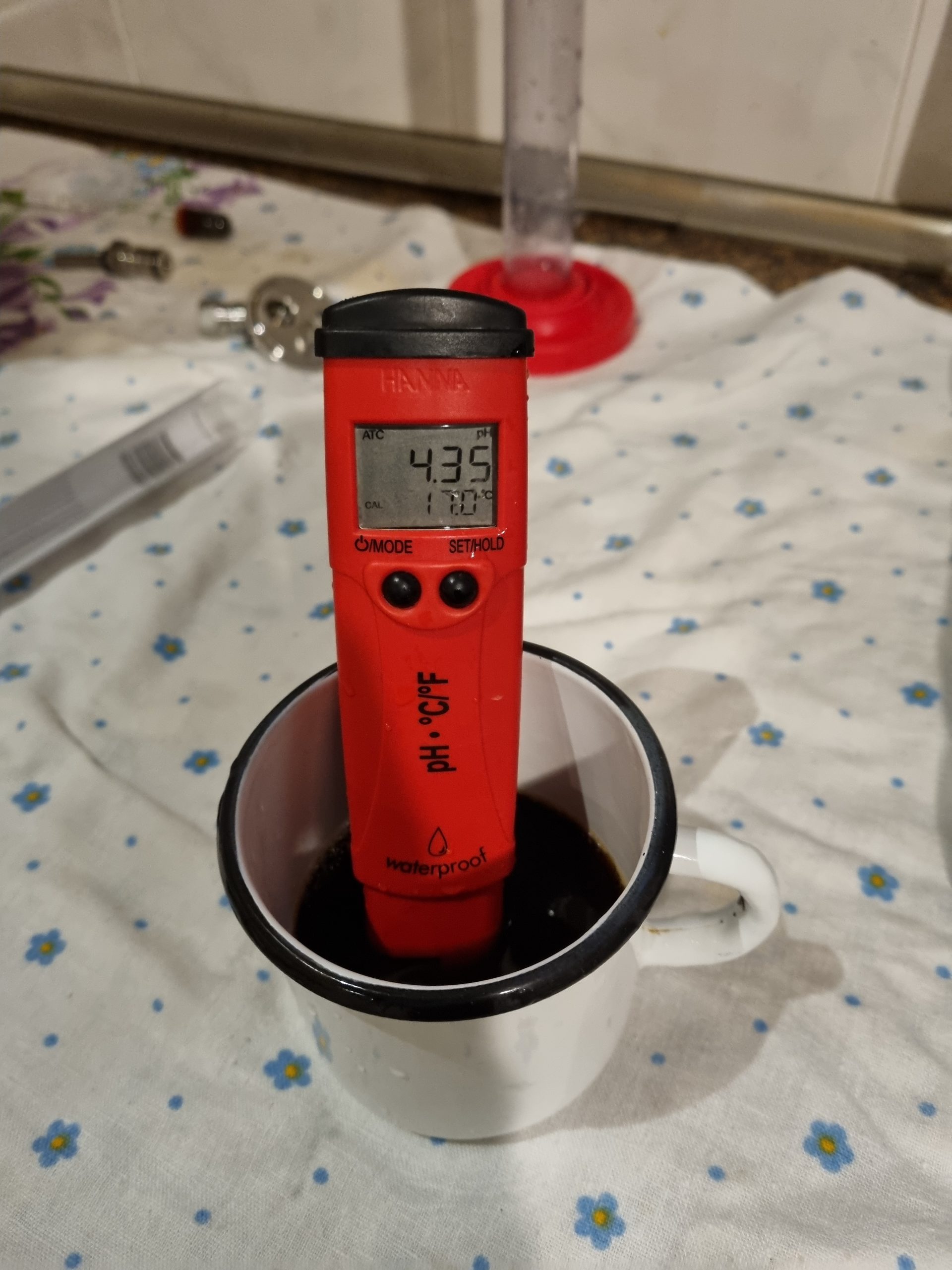
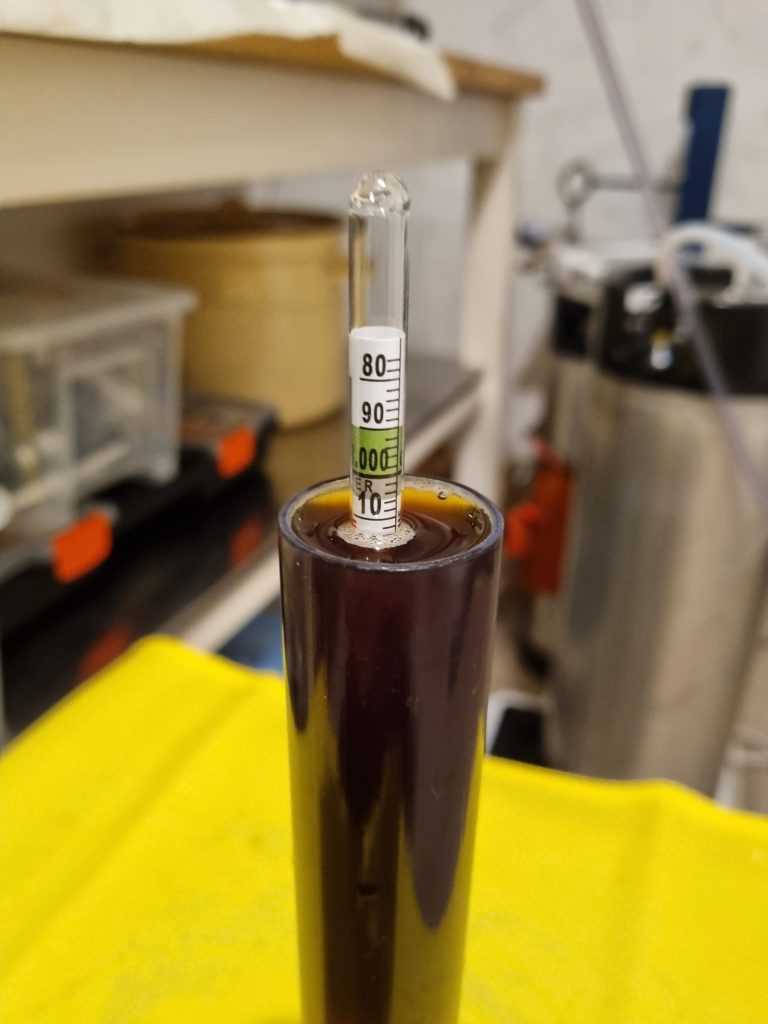
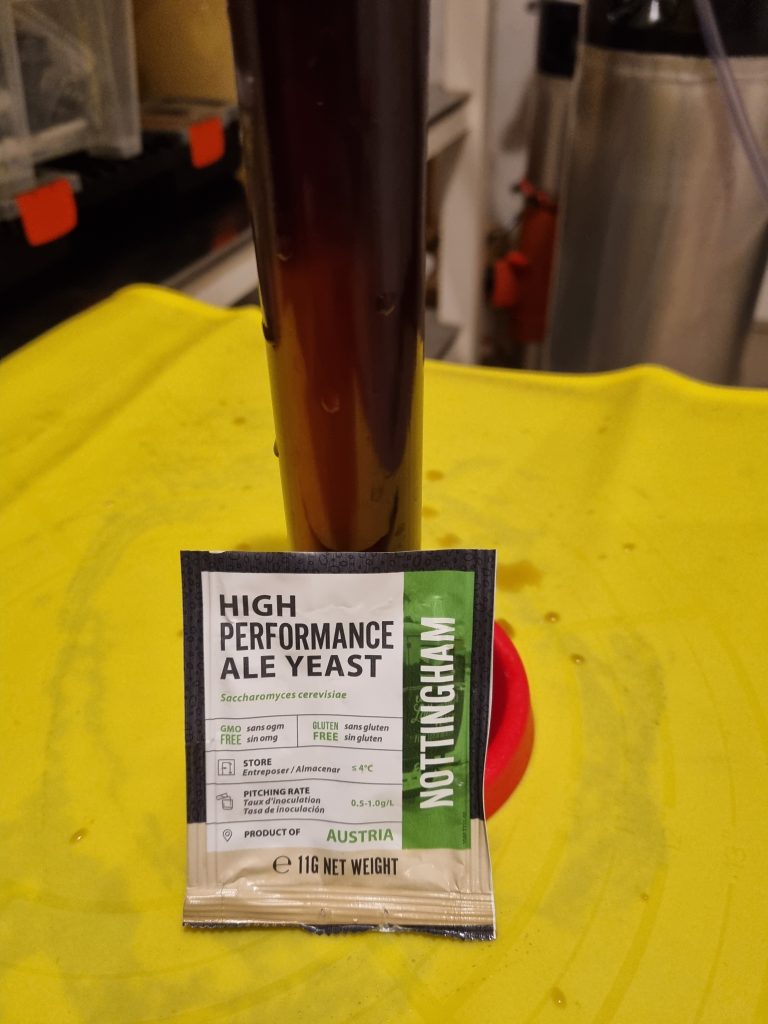
Fermented using Lallemand Nottingham yeast. Once again I’m amazed at how Tilt Hydrometers are accurate, the resulting ABV is the same as with regular hydrometer. This beer was left to ferment without any temperature control and actually from initial tastings this one is a candidate to be best of all four batches!
Black Notty (controlled fermentation)
F.G. ~ 1.014, ABV 5.51%
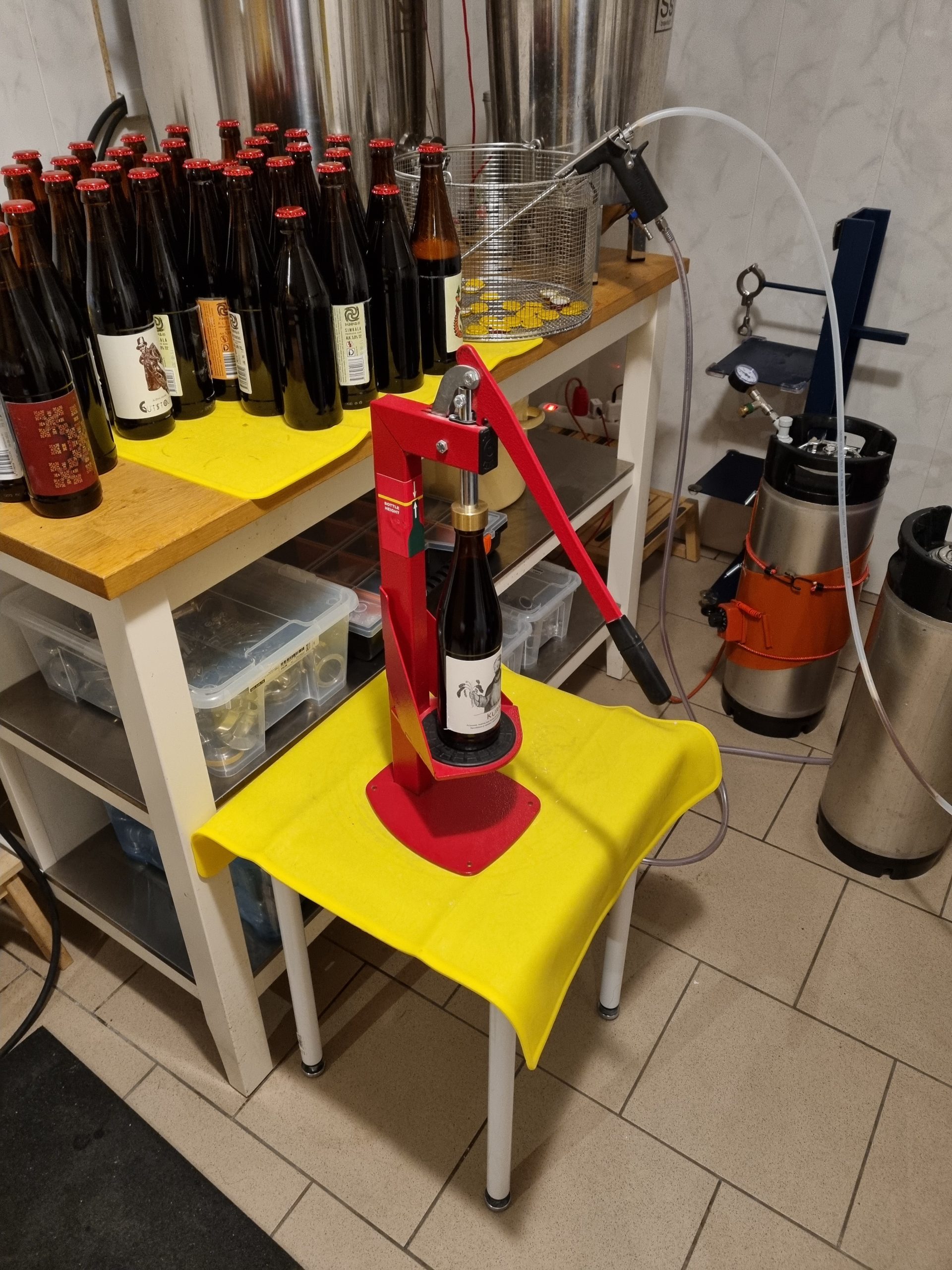
Fermented using Lallemand Nottingham yeast. This is a batch that was transferred while using inline aeration that resulted in a bucket of foam. So I was not sure how much there was. Turned out about 10 liters. Fermentation temperature was about 19C and it was kept constant. It’s interesting that this beer has highest S.G. out of all batches. It could be that I made a mistake while priming this beer, because I added sugar syrup after the keg was filled and did not stir. I still waited for some 15 minutes before bottling. So it is a possibility that sugar was not distributed equally and and this sample contained some of this priming sugar. I need to keep this batch somewhere save and watch out for over-carbonation. Let’s make this an experiment to see how consistent carbonation is. Bottles were capped in yellow caps.
Tasting notes
Black Kveik, the one I kegged, proved to to have the best aroma of them all, but only at first week or so. Later aroma subsided significantly. Even though it’s month and a half in the keg (in keggerator) it still pours foam. This is something I did not expected. But apart non existing carbonation (due to foam) it’s ok beer.
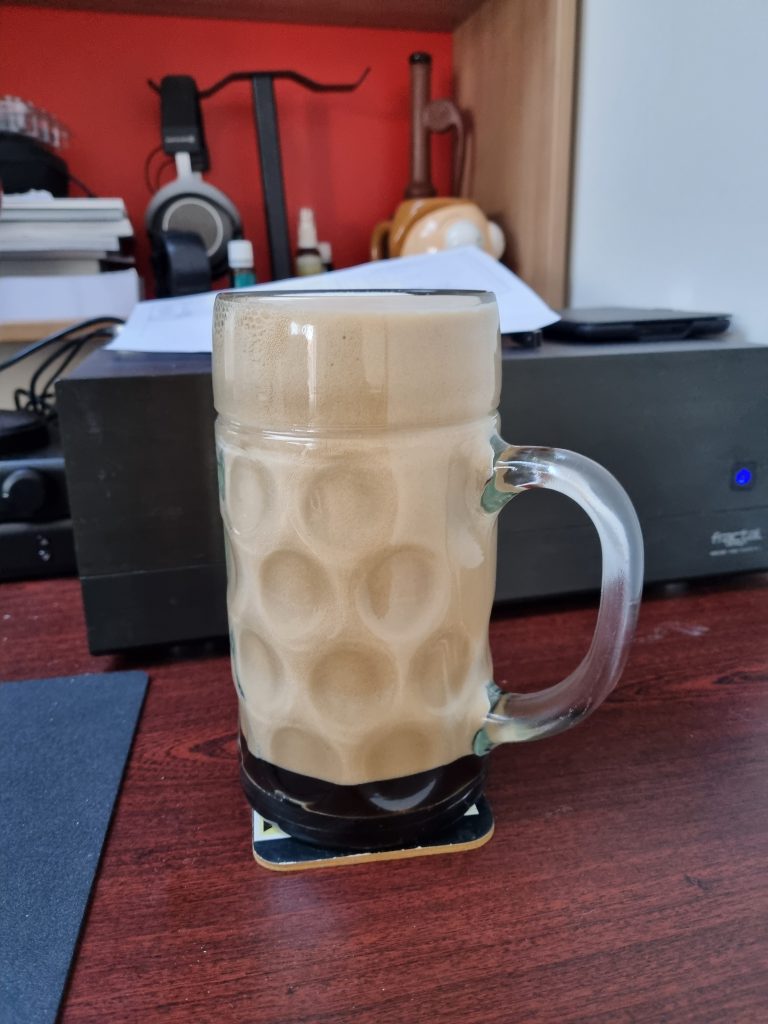
Black Diamond and Black Kveik turned out quite well. Probably not the best stouts I brewed, but alright. The difference between ale and lager fermentation is not very noticeable.
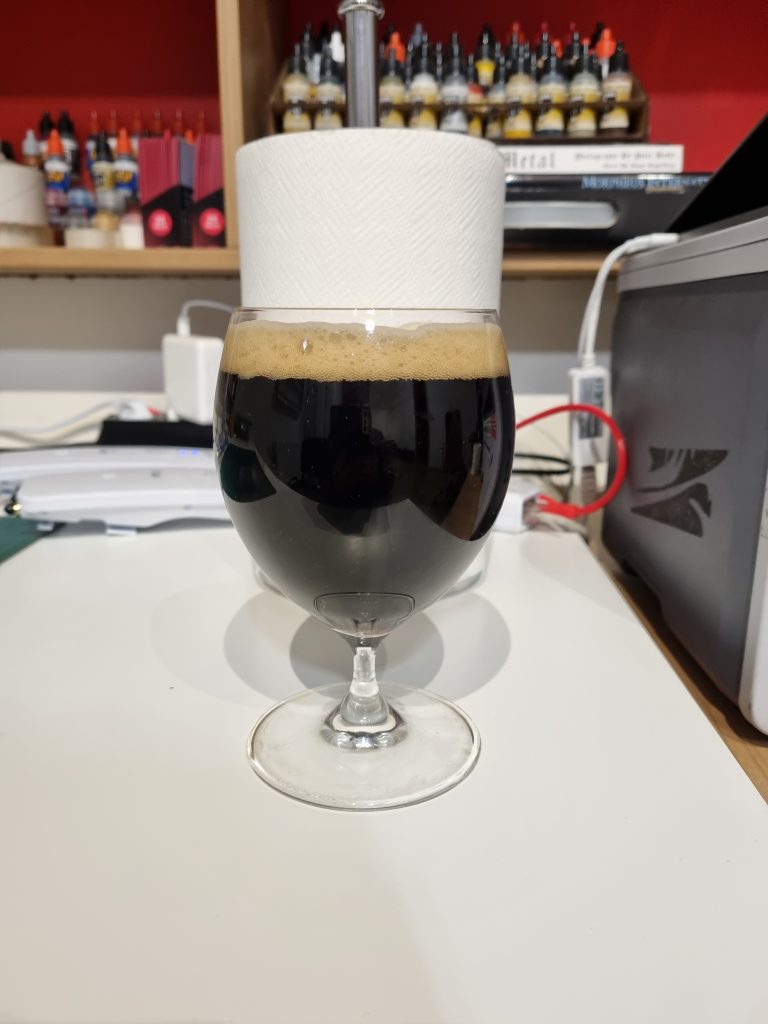
As I expected the Black Notty (controlled fermentation) had inconsistent carbonation. Couple of bottles were highly over carbonated.
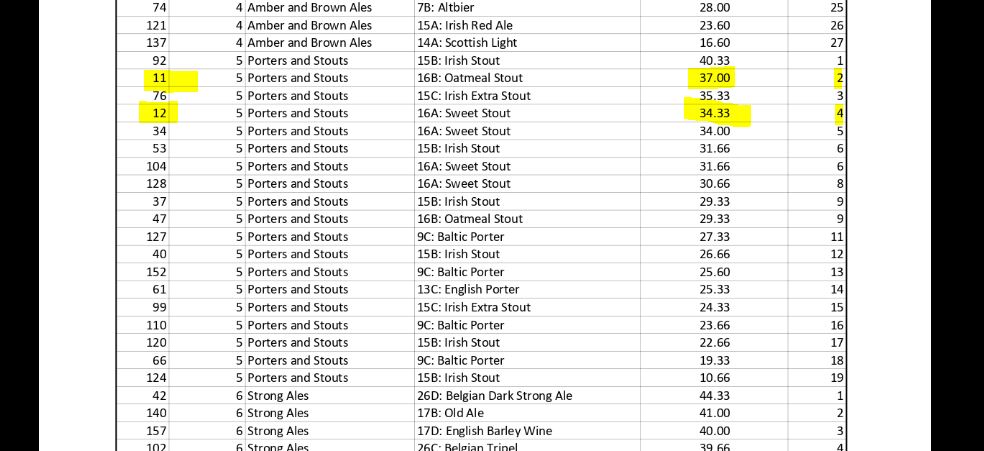
Aludarių taurė 2022
Took couple of months for beer to mature, but eventually turned out quite good.
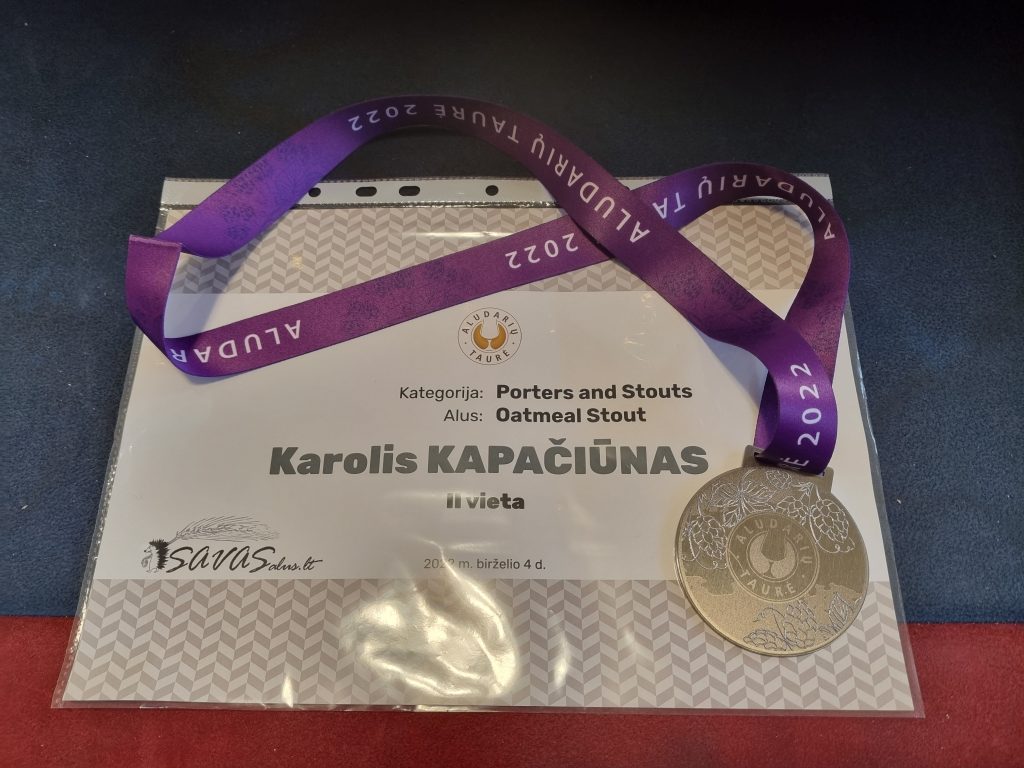
Other beer from the same batch (with Notty yeast) did not win IMHO just because I submitted it to wrong category. I was confused and did not knew that I can submit multiple beers to the same category, not just one. My bad.